The short version
- Groot Constantia has established a museum and plaques to acknowledge the enslaved people who built the estate, though it faces ongoing criticism regarding worker evictions.
- Historians note that slavery was central to the Cape wine industry's development, yet most estates avoid explicit acknowledgment of this past due to concerns over legacy and wealth.
- Industry leaders recognize deep social inequalities rooted in history, with some farms attempting redress through improved wages and housing for descendant communities.
The South African wine industry is undergoing a complex reckoning with its origins, as several estates begin to address the central role of enslaved labor in their establishment. While the sector generated billions in revenue last year, historians emphasize that its prosperity was built on the forced labor of thousands of people brought from Mozambique, Madagascar, India, Sri Lanka, and Indonesia. This historical reality is now coming into sharper focus at Groot Constantia, the country’s oldest wine farm, which has taken steps to memorialize this past through a dedicated museum and commemorative plaques.
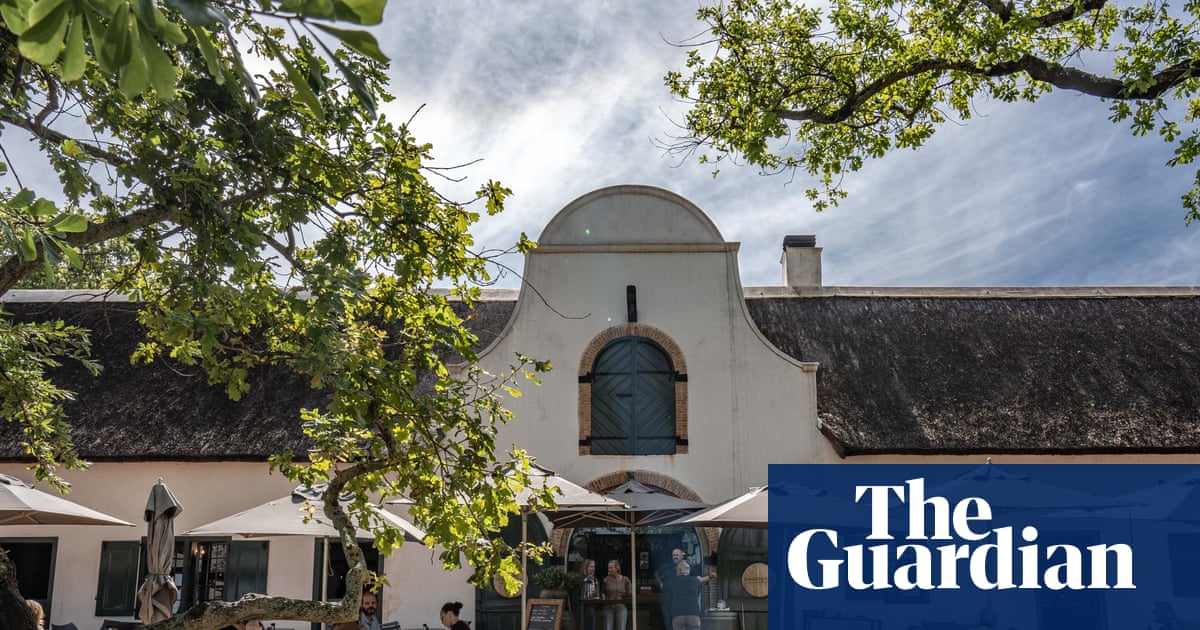
Groot Constantia attracts hundreds of thousands of visitors annually who come for its scenic vineyards and historic wines. Unusually among regional estates, it houses a museum run by Iziko Museums that explicitly details the lives of enslaved individuals who worked there from 1685 until abolition in 1834. The exhibits cover daily life, labor conditions, and diet, while plaques list names of those forcibly taken to the estate. Jean Naudé, the farm’s CEO, stated that acknowledging this history is essential, noting that while the foundation was unsound, the current management seeks to build something proper upon it.
Despite these efforts, Groot Constantia remains an outlier in its transparency. Historians agree that only a small number of estates explicitly acknowledge their enslavement history. Linda Mbeki, a curator at Iziko Museums, suggested that many owners avoid such memorials because acknowledging culpability or historical privilege can threaten generational wealth and legacy. The industry’s dependence on coerced labor was profound; by the 1820s, approximately eighty percent of workers in the sector were enslaved, with the remainder being dispossessed Indigenous people.
The tension between historical acknowledgment and contemporary labor practices is evident in recent conflicts at Groot Constantia. Unions and worker rights groups have criticized the estate for evicting at least ten families, mostly former workers, since July. Mercia Andrews of the Trust for Community Outreach and Education argued that claiming historical prestige while displacing descendants of those who built the sector is contradictory. Naudé defended the actions, stating that all evictions followed court orders and that the farm complies with relevant laws to ensure fairness and equity for all employees.
Broader industry bodies are also engaging with these issues. Rico Basson, CEO of South Africa Wine, acknowledged that slavery left deep social and economic inequalities that cannot be separated from current workplace dynamics. He emphasized that improving conditions for today’s workers is as important as acknowledging the past. This perspective aligns with academic research indicating that the wine industry was heavily dependent on enslaved labor from its inception in the mid-17th century, when Jan van Riebeeck established a colony for the Dutch East India Company.
Some estates are attempting more direct forms of redress beyond historical memorials. Solms-Delta, located in Franschhoek, has been cited as an example of a farm trying to address inequality through tangible improvements. Mark Solms, who purchased the estate in 2001, recognized that living in luxury on land where descendants of enslaved people remain impoverished is a direct result of historical injustices. He committed to renovating worker housing and raising wages above neighboring farms, aiming to bridge the gap between historical privilege and current economic disparity.
The response from workers at Solms-Delta has been cautious. Nico Jansen, an estate manager whose family has lived on the farm for three generations, initially doubted promises of renovation and wage increases when they were first made in 2001. This skepticism highlights the deep-seated mistrust that exists between landowners and descendant communities, rooted in centuries of exploitation. The challenge for the industry is not just to acknowledge history but to demonstrate consistent, equitable treatment in the present.
As South Africa’s wine industry continues to evolve, the conversation around slavery is moving from abstract historical principle to practical workplace ethics. The contrast between estates that remain silent and those that actively engage with their past underscores a broader national dialogue about dignity, opportunity, and fair treatment. Whether through museums, wage adjustments, or legal compliance, the sector is navigating a difficult path toward reconciling its profitable present with its oppressive origins.
The lack of complete data on enslavement across all estates complicates efforts to fully understand the scale of this history. However, the consensus among experts is clear: the industry’s success was inextricably linked to forced labor. As descendants of enslaved people continue to reclaim their history and demand recognition, the wine sector faces pressure to move beyond symbolic gestures toward substantive changes that address ongoing inequalities.
Future developments will likely depend on how effectively estates can balance historical acknowledgment with tangible improvements in workers’ lives. The experiences at Groot Constantia and Solms-Delta offer contrasting models of engagement, one focused on memorialization amidst controversy and the other on direct economic redress. These cases illustrate the complexity of addressing historical wrongs in an industry where legacy and wealth are deeply intertwined.
Sources behind this briefing
Go to the original reporting
- The Guardian US↗‘We built this land’: descendants of enslaved people are reclaiming their history across South Africa’s vineyards


