The short version
- Foreign Minister Ronald Lamola has recommended new parliamentary rules requiring former heads of state to disclose trip details for risk assessment.
- The proposal follows diplomatic embarrassment caused by ex-President Jacob Zuma's visit to India, where he met Ajay Gupta amid ongoing corruption allegations.
- South Africa recalled its high commissioner to India after the diplomat was photographed with Zuma and Gupta, though the official denies misconduct.
The South African government is introducing stricter regulations governing international travel by former heads of state, a move designed to prevent diplomatic incidents and protect national interests. Foreign Affairs Minister Ronald Lamola announced that his department has submitted recommendations to parliament and the president’s office for new protocols. These measures aim to ensure greater transparency regarding the activities of ex-leaders abroad, particularly when their actions may carry reputational, political, or security risks for the country.
Under the proposed framework, former presidents would be required to provide comprehensive details about upcoming foreign trips before receiving any state support. This information would allow officials to conduct an informed assessment of potential consequences. The initiative stems directly from recent controversies surrounding Jacob Zuma, the country’s seventh president, whose overseas visits have repeatedly sparked diplomatic friction and public outcry.
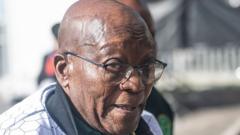
The immediate catalyst for this policy shift was Zuma’s visit to India last month, during which he met with Ajay Gupta at a temple in New Delhi. The encounter drew sharp criticism because Gupta is one of the central figures in the massive corruption scandal known as state capture, which played a significant role in undermining Zuma’s administration. Critics argued that the meeting signaled disrespect toward South Africa’s legal and political institutions, with one minister describing it as showing the middle finger to the nation.
The Gupta family has been accused of leveraging close ties with Zuma to influence government policy and secure lucrative contracts for their businesses over a decade ago. Although both parties denied wrongdoing at the time, a judicial commission concluded in 2022 that Zuma had appointed and removed key ministers based on the Guptas’ preferences. The family left South Africa in 2018 as investigations into alleged fraud intensified. While an arrest warrant for Ajay Gupta was eventually canceled, his brothers Atul and Rajesh remain in the United Arab Emirates, where extradition requests were rejected by local courts in 2023.
Diplomatic tensions escalated further when Anil Sooklal, South Africa’s high commissioner to India, was photographed alongside Zuma and Gupta. The image suggested official endorsement or at least tacit approval of the meeting, prompting the government to recall Sooklal for questioning. He has denied any wrongdoing, but the incident underscored the need for clearer boundaries between private engagements by former leaders and state representation abroad.
This is not the first time Zuma’s foreign travels have caused diplomatic headaches. Last year, he visited Morocco and publicly supported Rabat’s claim over Western Sahara, a territory whose sovereignty South Africa opposes. During that trip, Zuma was pictured standing in front of the South African flag while meeting with Moroccan officials, leading Pretoria to issue a formal protest against Morocco. The episode highlighted how former leaders can inadvertently complicate current foreign policy objectives.
Zuma’s political status has shifted significantly since leaving office. He was expelled from the African National Congress, the party he once led, and now heads the opposition uMkhonto we Sizwe (MK) movement. Despite no longer holding executive power, his continued visibility on the international stage poses challenges for the current administration. The new rules seek to mitigate these risks by ensuring that any state assistance provided to former presidents is contingent upon thorough vetting of their itineraries and contacts.
The implementation of these protocols remains pending parliamentary approval. If adopted, they would mark a significant change in how South Africa manages its relationship with former leaders. By mandating full disclosure and risk evaluation, the government aims to prevent future scenarios where private actions by ex-presidents undermine national diplomacy or legal proceedings. The outcome will likely set a precedent for handling similar situations involving other high-profile political figures in the future.
As debates continue within parliament, the focus remains on balancing respect for individual rights with the need to safeguard state interests. The controversy surrounding Zuma’s visits illustrates the complex interplay between personal freedom and public responsibility in post-presidential life. Whether these new measures will effectively curb diplomatic missteps or merely shift the nature of scrutiny remains to be seen as lawmakers deliberate on the final text.
Sources behind this briefing
Go to the original reporting
- BBC World↗South Africa plans new rules on ex-leaders' foreign trips after Zuma's visit to India

