The short version
- A network of social media profiles is charging migrants for guidance on crossing into Spanish territory from Morocco.
- Content shared by these accounts often depicts the journey as safe and successful, contradicting high mortality rates and deportation statistics.
- Platform operators have begun removing violating content, but algorithmic promotion continues to drive engagement with these deceptive posts.
A coordinated network of social media profiles is actively facilitating migration attempts from Morocco into the Spanish enclave of Ceuta by offering paid advice and promoting misleading narratives about the safety of the journey. An investigation using a dummy account revealed that anonymous operators are charging hundreds of pounds for information purportedly helping individuals cross the border, including details about using sewer pipes to bypass security measures. These transactions typically require upfront payment via specific money transfer services, with no guarantee of success or refund if the attempt fails.
The content shared by these accounts creates a deceptive impression of the crossing process. Videos and posts frequently depict young people swimming happily in the sea or walking freely through Ceuta, omitting critical context about the dangers involved. In some instances, original captions warning against migration were cropped out or altered to suggest that reaching the enclave is an easy step toward accessing mainland Europe. This curated imagery stands in stark contrast to the reality faced by many migrants, including numerous drownings and the rapid deportation of the vast majority of those who do arrive.
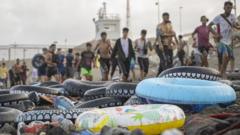
The scale of recent migration attempts underscores the urgency of this digital facilitation. Approximately 78,000 individuals arrived in Ceuta by sea over a short period last month, resulting in at least 100 deaths according to local officials. While the immediate influx has slowed, the underlying drivers remain active. The social media campaigns appear to exploit misinformation regarding Spanish immigration laws and perceived weaknesses in border controls, encouraging more people to attempt the perilous swim despite the high likelihood of failure or death.
Many of the profiles involved share distinct characteristics that suggest organized coordination. Nearly forty accounts identified in the investigation used variations of the term 'Haraga' in their names or handles, a colloquial reference to migrants who destroy identification documents upon arrival to avoid deportation. These profiles often feature Spanish flags and include phone codes for both Morocco and Spain in their descriptions. The consistency across these accounts indicates a structured effort to attract potential migrants and monetize their desperation through advice and logistical support.
The economic model behind these operations relies on charging fees for information that may be inaccurate or insufficient. When contacted, one operator claimed to have assisted many people previously and requested 5,000 dirhams for entry guidance. However, the same individual avoided questions about refunds if the crossing was unsuccessful and subsequently deleted messages from the investigation account. This pattern suggests a predatory approach where operators profit regardless of the outcome for the migrants, who face significant physical danger and legal consequences.
Platform responsibility remains a contentious issue as algorithms continue to promote this content. Although the social media company owning the platform stated it is monitoring the situation in real time and removing content that facilitates human smuggling, many profiles remain active. The algorithmic recommendation system appears to amplify aspirational posts, reaching vulnerable users who may be considering migration. This automated distribution mechanism complicates efforts to curb the spread of dangerous advice, as new accounts can emerge quickly after others are removed.
The diplomatic implications of this crisis extend beyond the immediate humanitarian concerns. Tensions between European Union nations have risen due to the strain on open border policies and differing responses to the influx. Spain faces criticism for its handling of the situation, while Morocco contends with the social and economic impacts of large-scale migration attempts. The role of digital facilitation adds a new layer of complexity to these international relations, as governments struggle to address non-state actors operating across borders through online platforms.
Efforts to counter this misinformation are ongoing but face significant challenges. Local authorities in Ceuta have attempted to dissuade migrants from arriving by highlighting the inability of the enclave to accommodate such numbers. However, these messages often compete with more visually appealing and emotionally resonant content promoted by the social media networks. The disparity between the reality of deportation and death versus the online portrayal of success creates a dangerous feedback loop that continues to drive migration attempts despite the evident risks.
Future developments will likely depend on the effectiveness of platform interventions and international cooperation. While some accounts have been removed following contact with the social media company, the persistence of similar profiles suggests that the underlying demand for such services remains high. Addressing the root causes of migration, including economic hardship and political instability in North Africa, is essential to reducing the appeal of these dangerous crossings. Until then, the digital facilitation of migration poses a continuing threat to human life and regional stability.
The investigation highlights the critical need for greater transparency and accountability in how social media platforms handle content related to migration. Current policies may not be sufficient to prevent the spread of deceptive advice that endangers lives. As technology evolves, so too do the methods used by those seeking to profit from human vulnerability. Ensuring that algorithms do not amplify harmful misinformation is a necessary step in protecting potential migrants and maintaining public safety.
Sources behind this briefing
Go to the original reporting
- BBC News↗Instagram accounts fuelling Ceuta crisis with paid advice for help to cross

