The short version
- The average number of people per dinghy has surged from seven in 2018 to over sixty-six in early 2026, marking a shift toward larger vessels.
- Undercover reporting indicates Chinese manufacturers are willing to supply large, uncertified boats in bulk to intermediaries who handle export logistics.
- Recent convictions of key suppliers suggest law enforcement pressure is driving criminal networks to adopt more efficient, albeit perilous, transport methods.
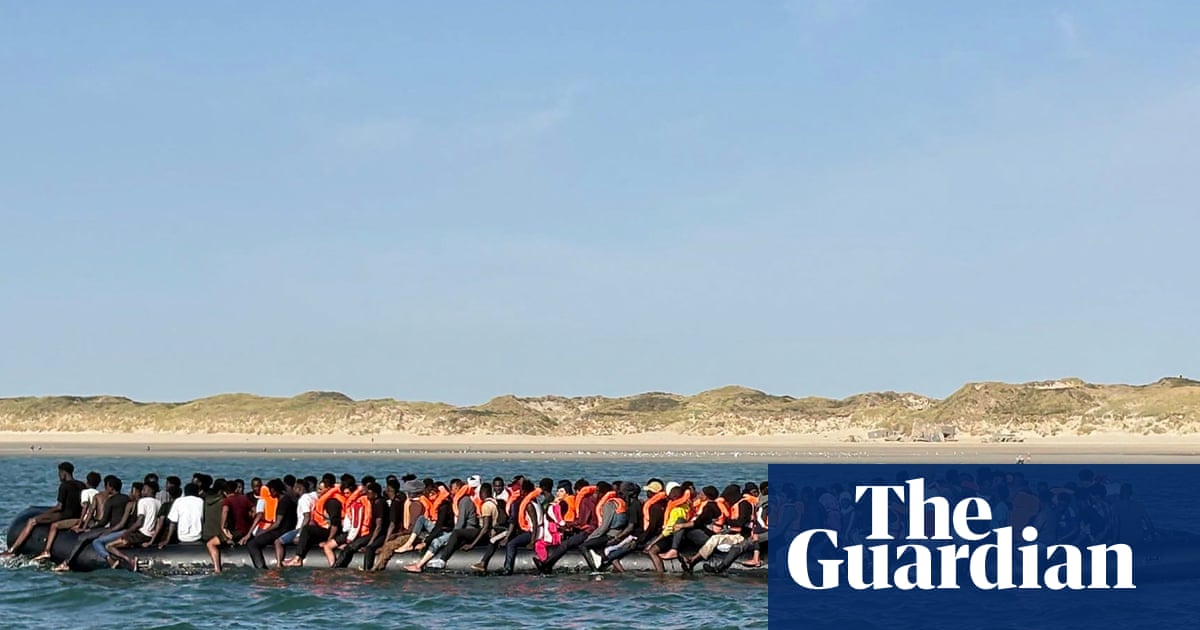
A significant and alarming shift has emerged in the methods used by organized crime groups to facilitate crossings of the English Channel. The trend involves the use of substantially larger vessels, often referred to as mega-dinghies, which carry hundreds of individuals at once. This development represents a stark departure from the smaller boats that characterized earlier years of migration across the waterway. Authorities in France have recorded eleven such large-scale crossings this year alone, highlighting the rapid adoption of this new model by smuggling networks.
The scale of these operations is illustrated by a recent incident in which a vessel carrying two hundred and thirty people arrived in the United Kingdom. This particular boat measured fifteen meters in length, far exceeding the dimensions of traditional small boats. The danger associated with these larger craft is evident; one such vessel carrying one hundred and seventy-three people capsized last week after its engine caught fire. These incidents underscore the perilous nature of the crossings, even as the capacity for transport increases.
Data from the Migration Observatory at the University of Oxford provides a clear trajectory of this escalation. In 2018, the average number of people traveling on a small boat was seven. By 2020, that figure had risen to thirteen, and it continued to climb to twenty-seven in 2021 and forty-one in 2022. In the first six months of 2026, the average reached sixty-six point five people per dinghy. This steady increase suggests a systematic change in strategy rather than isolated incidents.
Investigative efforts have traced the origin of these vessels to manufacturers in eastern China. An undercover reporter posing as a prospective client was offered large rigid inflatable boats by a sales manager at Wuxi Funsor Marine Equipment. The company, described on its website as a subsidiary of Weihai Yamar Outdoors Product Co Ltd, stated it could produce up to five hundred boats per month. They offered seven or eight-meter military-style dinghies for approximately one thousand six hundred dollars each, excluding engines.
These vessels lack CE certification, the mandatory mark indicating compliance with European Union health and safety standards. The sales manager indicated that such boats could only be sold to a warehouse in China, leaving the client responsible for exporting them and securing any necessary certifications. This arrangement allows manufacturers to distance themselves from the end use of the products while still supplying the materials needed by criminal networks.
Weihai Yamar, headquartered in Shandong province, was placed under economic sanctions by the United Kingdom last July. The sanctions were imposed after the company was accused of offering rigid inflatable boats on online retail platforms to organized crime gangs involved in people smuggling. Despite these measures, the largest shareholder of Weihai Yamar at the time of the sanctions is now the main shareholder of Wuxi Funsor Marine Equipment. The parent company has denied advertising lifeboats or vessels for migrants online.
The logistical chain for these boats has been illuminated by the recent trial of Adem Savas, a Turkish national identified as a key enabler of small boat crossings. Between 2019 and 2024, Savas supplied inflatable boats, outboard engines, and equipment to gangs across Europe. His operations enabled thousands of crossings, including roughly half of all Channel crossings in 2023, generating millions in profit. The equipment was sourced largely from China, transported through Turkey and Bulgaria, stored in Germany, and then distributed to networks in Belgium and France.
Savas pleaded guilty to people-smuggling and membership in an organized crime group in a court in Bruges. He received an eleven-year prison sentence and a fine of four hundred thousand euros. His co-defendants received combined sentences totaling thirty-eight years. A coordinated raid by Europol in December 2024 resulted in twenty-five searches in Germany and the seizure of equipment and cash, disrupting part of this supply chain.
Law enforcement officials view the shift to larger boats as a response to increased pressure on criminal networks. A spokesperson for Europol noted that changes in tactics often result from law enforcement actions. The agency maintains constant communication with authorities in France and the United Kingdom regarding this phenomenon. A dedicated operational taskforce is actively monitoring smuggling activities involving both small and large vessels.
Researchers suggest that the move to mega-dinghies makes economic sense for gangs facing supply chain disruptions. By transporting more people per trip, smugglers can maximize profit while minimizing the number of journeys required. This efficiency comes at a significant human cost, as larger, overcrowded boats are inherently less stable and more dangerous in choppy seas. The situation remains fluid, with authorities continuing to adapt their strategies to counter these evolving tactics.
Sources behind this briefing
Go to the original reporting
- The Guardian World↗How to buy a ‘mega-dinghy’: the perilous new model of Channel crossing

