The short version
- Lonnie Bunch, the departing head of the Smithsonian Institution, faced a standing ovation while defending the museum’s commitment to presenting complex historical narratives against claims of political bias.
- The Trump administration has launched a broad review of Smithsonian content and accused leadership of radical activism, ordering warning signs at nearby museums and threatening other cultural sites.
- Supporters have established a legacy fund to protect the National Museum of African American History and Culture’s independence, emphasizing the need for scholarship free from political interference.
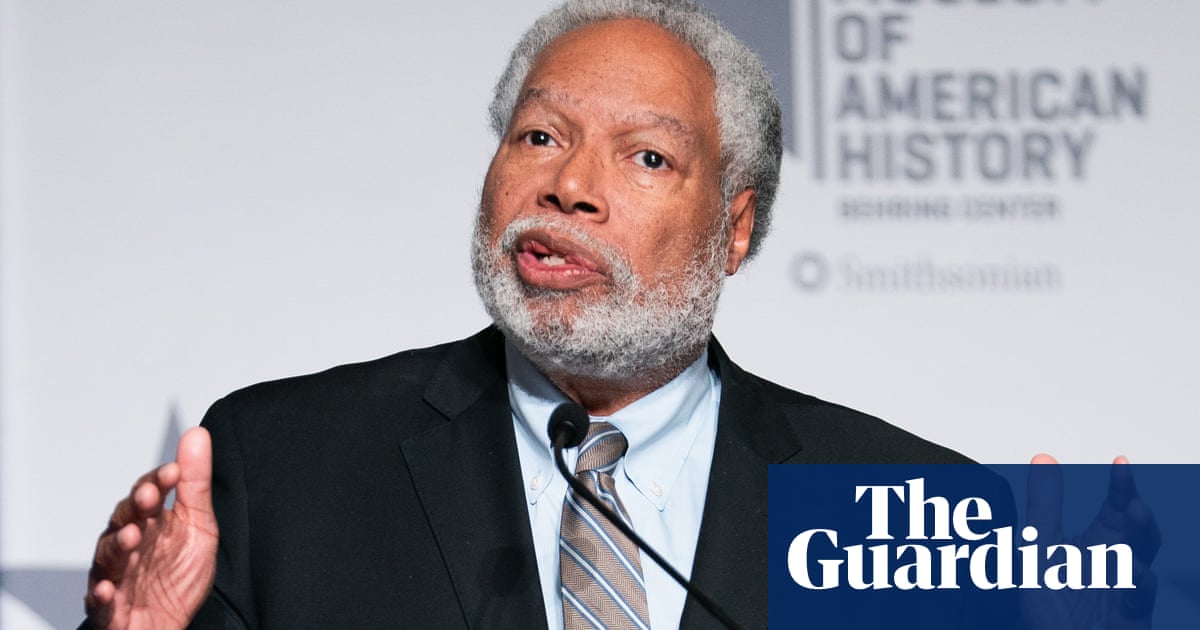
Lonnie Bunch, the outgoing secretary of the Smithsonian Institution, delivered a forceful defense of the museum system’s mission during an event marking the tenth anniversary of the National Museum of African American History and Culture. Speaking in Washington, Bunch rejected assertions that the institution’s exhibitions or staff lack patriotism, arguing instead that confronting difficult historical truths is an expression of deep respect for the nation. His remarks drew a standing ovation from hundreds of attendees, signaling strong support for his stance as he prepares to step down at the end of the year.
The confrontation between the Smithsonian leadership and the current administration has escalated significantly in recent months. The White House issued a report characterizing Smithsonian leaders as radical activists and initiated a comprehensive review of museum content ahead of the United States’ 250th anniversary. This scrutiny includes orders to place warning signs outside the National Museum of American History, reflecting a broader executive branch effort to challenge how federal cultural institutions present national history.
President Donald Trump has been vocal in his criticism, previously stating on social media that the Smithsonian is out of control for focusing excessively on slavery and perceived failures rather than success and future potential. He argued that the institution ignores brightness and accomplishment, framing its narrative as overly negative. These comments set the stage for Bunch’s rebuttal, which centered on the necessity of understanding the full scope of American history, including its darker chapters.
Bunch emphasized that slavery is foundational to comprehending the United States, challenging the notion that discussing it causes embarrassment or harm. He expressed admiration for the strength and belief of his enslaved ancestors, suggesting that their resilience offers a model for contemporary perseverance. By illuminating these difficult aspects of history, Bunch argued, the Smithsonian aims to foster a deeper understanding of how the nation was built and what values underpin its foundation.
The secretary insisted that museum curation must remain grounded in independent scholarship rather than succumbing to political pressure. He stated that one cannot understand the greatness of a country without acknowledging its totality, including the parts that are often obscured. This perspective positions the Smithsonian’s work not as an attack on national identity, but as an effort to tell the complete truth, which he described as an act of love for America.
Despite the hostile political environment, Bunch sought to reassure the audience that the African American museum would endure. He referenced specific artifacts, such as Emmett Till’s casket, as symbols of resistance and possibility that cannot be erased by external pressures. The museum, he noted, serves as a beacon that stands firm regardless of attempts to diminish its significance or alter its narrative.
In response to the ongoing tensions, supporters have mobilized to protect the institution’s independence. Television producer Shonda Rhimes pledged one million dollars to a newly launched legacy fund in Bunch’s honor, which was seeded by an anonymous donation and aims to raise at least ten million dollars. Acting museum director Shanita Brackett indicated that these funds will support the museum uniquely, ensuring it continues to reflect values of inclusion and independent scholarship without outside influence.
The Smithsonian Institution operates under a board of regents that includes Supreme Court Chief Justice John Roberts and Vice President JD Vance, placing it technically outside the direct control of the executive branch. However, the administration’s actions suggest an intent to exert significant pressure on its operations. Democratic Senator Alex Padilla praised Bunch for speaking truth to power, while conservative groups have signaled their intention to influence the selection of his successor, highlighting the polarized nature of the debate over cultural heritage.
Sources behind this briefing
Go to the original reporting
- The Guardian US↗‘Let’s tell the truth’: Smithsonian head given standing ovation as he hits back at Trump attacks

