The short version
- The Smithsonian has finished a nearly $1 billion, seven-year renovation of its National Air and Space Museum in Washington, DC.
- The final gallery to open, 'At Home in Space,' focuses on the transition from visiting space to establishing a permanent human presence there.
- Exhibits include a fully flown spacesuit, recovered debris from the Challenger and Columbia disasters, and a full-size mock-up of the International Space Station's Destiny module.
The Smithsonian Institution has concluded a major transformation of its National Air and Space Museum in Washington, DC, marking the end of a seven-year project that cost nearly $1 billion. The renovation, which had closed significant portions of the flagship building to the public, is now complete with the debut of the final gallery on October 30. This latest addition brings all space-related exhibits back online, restoring the museum’s comprehensive narrative of human exploration beyond Earth.
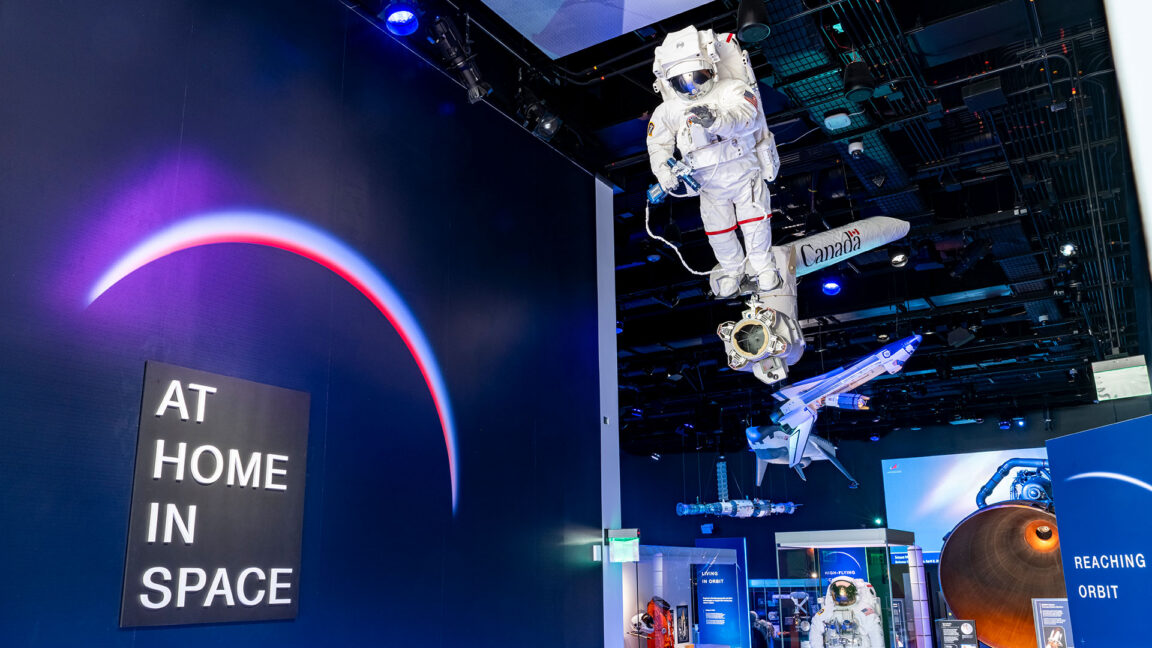
The newly opened exhibition, titled 'At Home in Space,' serves as the capstone to the renovation efforts. Curators designed this section to illustrate the evolution from short-duration missions to long-term habitation in orbit. The gallery traces the technological and operational developments that enabled humans to live aboard the International Space Station for over two decades. It also projects future ambitions, including the establishment of bases on the Moon and Mars.
Jennifer Levasseur, a curator involved in the project, described the exhibit as a bridge between early spaceflight achievements and future colonization efforts. The narrative begins with the preparation phases and the Space Shuttle program, which provided the foundational experience for sustained orbital presence. The middle section focuses on life aboard the ISS, while the conclusion outlines the next steps in extending human reach deeper into the solar system.
A central feature of the gallery is a large-scale mock-up of an astronaut attached to a robotic arm, set against a full-size photographic mural of the International Space Station. This visual anchor is intended to draw visitors into the story of orbital living. The exhibit also houses significant artifacts, including a Space Shuttle main engine and Robonaut 1A, a prototype humanoid robot developed for space operations.
Among the most notable items on display is an Extravehicular Mobility Unit (EMU) spacesuit that has been used in actual spacewalks. Curators noted that this may be the only fully flown set of such equipment available for public viewing worldwide. Unlike the custom-fitted suits used during the Apollo missions, the EMU was designed for reuse and adjustability, allowing components to be swapped to fit astronauts of various sizes. The suit on display lacks a functioning portable life support system backpack, as those units remain in active service with NASA.
The exhibition also highlights personal history through the inclusion of in-flight suits worn by Sally Ride and Guy Bluford. These garments represent the first American woman and the first African American to travel into space aboard the shuttle fleet. The display for Ride’s suit notably omits her jacket, a decision made after designers found that the visual contrast of the sleeveless outfit was more effective for the exhibit layout.
In a somber tribute to the costs of exploration, the gallery features recovered debris from the Challenger and Columbia disasters. This marks only the second time such artifacts have been displayed publicly, following an exhibit at the Kennedy Space Center Visitor Complex in Florida. Items include an elevon hinge from Challenger that washed ashore years after the accident, a wiring panel fragment from the shuttle’s payload bay, and a reinforced carbon-carbon panel from Columbia’s wing. A compact disc belonging to David Brown is also on loan from his family.
Visitors can walk through a full-size replica of the Destiny module, the United States’ national laboratory aboard the International Space Station. The mock-up allows guests to view equipment arranged on multiple levels, simulating the microgravity environment where work occurs in all directions. Designers made specific adjustments for accessibility, such as labeling floor areas to indicate that activities happen overhead and below, ensuring that cables and fixtures do not pose tripping hazards or cause confusion about their realism.
The completion of this renovation restores the museum’s ability to present a unified history of aerospace achievement. Previous phases of the project introduced galleries on lunar landings, robotic planetary exploration, and the impact of space technology on daily life. With 'At Home in Space' now open, the institution offers a complete arc from early rocketry to the current era of permanent orbital residence.
The reopening signals a return to full operations for one of the world’s most visited museums. The extensive overhaul addressed aging infrastructure and updated exhibit design to reflect modern understanding of spaceflight. As the museum resumes its mission, it aims to engage new audiences with both the technical details and human stories behind America’s space program.
Sources behind this briefing
Go to the original reporting
- Ars Technica↗"At Home in Space" opens, caps Air and Space Museum renovation
