The short version
- Emergency responders recovered six bodies from the rubble of a collapsed apartment building in Athens after a powerful explosion tore through the structure.
- Victims include four American tourists who missed their scheduled departure and an elderly couple residing on the upper floor, while three others were injured by debris.
- Authorities are investigating whether a gas leak caused the blast, sparking renewed debate over safety inspections for short-term rentals in the historic district.
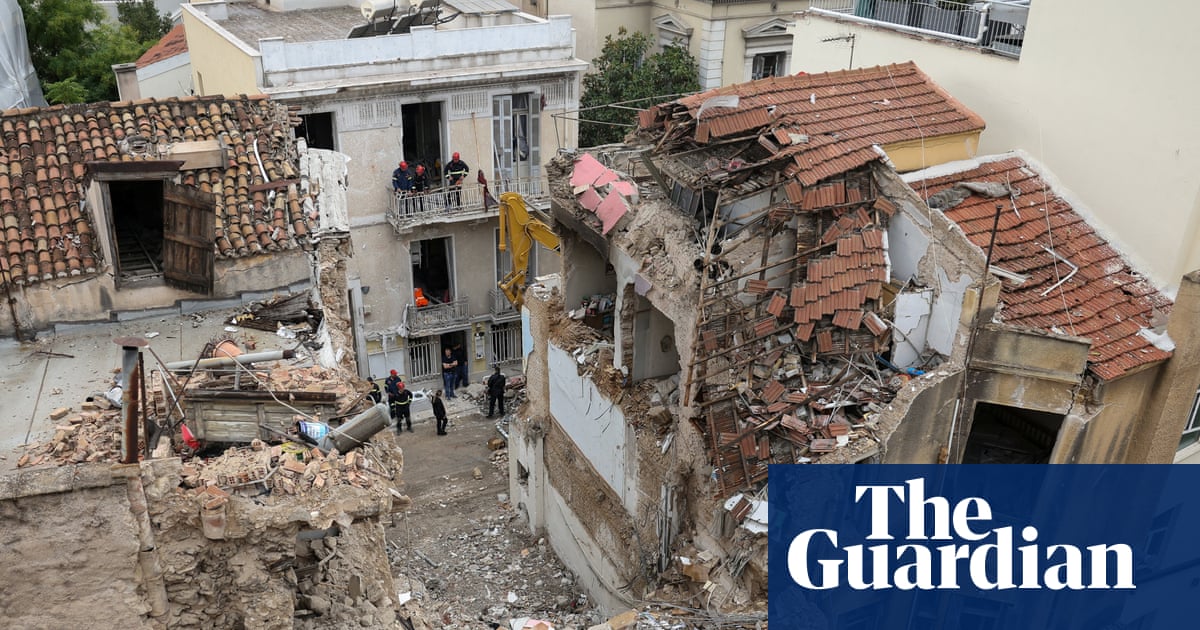
A powerful explosion leveled a two-story apartment building in the heart of Athens on Saturday morning, killing six people and injuring at least three others. The incident occurred around 7:30 a.m. in the Plaka district, a historic neighborhood situated at the foot of the Acropolis that attracts thousands of visitors daily. Emergency teams worked through the night to clear debris, using thermal imaging equipment, geophones designed to detect subsonic frequencies, and specialized search dogs to locate survivors within the ruins.
By Saturday afternoon, rescue operations had shifted from searching for survivors to recovering victims. Authorities confirmed that six bodies had been found and transported to a morgue for postmortem examinations. The deceased included three men and three women. Among the victims were four American tourists who had been staying in a short-term rental on the first floor of the building. Police indicated that these individuals were two brothers and their wives, all of whom were scheduled to fly back to the United States on Friday, shortly after the blast occurred.
The Americans’ absence from their flight provided a critical lead for investigators. When they failed to appear at the airport despite having checked into the accommodation only a day earlier, authorities grew concerned. This delay helped confirm that the group was likely inside the building when the explosion took place. The sheer force of the blast was described by witnesses as comparable to an earthquake or a bomb detonation, shattering windows in nearby structures and scattering debris across the narrow streets of the neighborhood.
Also among the dead were a British man and his Greek wife, aged 77 and 78 respectively, who lived on the second floor. The city’s vice-mayor, Paris Charlaftis, described the British victim as a talented artist with mobility issues, noting that it was highly probable he and his wife were in their apartment at the time of the collapse. The building itself was constructed in the mid-20th century and stood on Lysikratous Street, an area known for its neoclassical architecture and dense concentration of hotels and rental properties.
The explosion caused significant structural damage beyond the immediate site. A motorist driving down the street reported that his vehicle was lifted into the air by the shockwave. Emergency workers were seen removing two women on stretchers from an adjacent building after they were injured by flying debris. The suddenness of the collapse has left local officials and residents grappling with the cause. Vice-mayor Charlaftis emphasized that determining why the structure failed so rapidly is now the primary focus of the investigation.
While speculation regarding a gas leak has circulated widely, particularly concerning the first-floor rental unit, officials have stated that multiple theories are under consideration. No definitive cause has been announced. The incident has intensified scrutiny of safety standards in the Plaka district, where short-term rentals have become increasingly common. Greece’s center-right government has recently moved to restrict such accommodations in an effort to address a growing housing crisis, tightening regulations and limiting permits for new listings.
Local residents and experts argue that the tragedy highlights significant gaps in regulatory oversight. Giorgos Zafeiriou, an architect and head of the local residents’ committee, pointed out that while traditional hotels are subject to strict chamber regulations, many short-term rentals operate without adequate inspection. He noted that the incident would likely fuel further debate about who is responsible for ensuring the safety of these unregulated establishments, which are often viewed unfavorably by long-term residents.
Civil protection crews and disaster management teams have been ordered to remain at the scene until the cause of the explosion is fully determined. Athens Mayor Haris Doukas described the event as an unprecedented disaster, underscoring the severity of the loss. As investigations continue, the focus remains on understanding the mechanical or chemical failure that led to the collapse, while the community mourns the lives lost in one of the city’s most iconic and heavily trafficked areas.
Sources behind this briefing
Go to the original reporting
- The Guardian World↗Greek authorities seek answers after six killed in Athens apartment block explosion

