The short version
- Seven individuals are scheduled to appear in court facing charges of malicious damage with a terrorist connection regarding the vandalism of Donald Trump’s Turnberry resort.
- The indictment details extensive property destruction, including digging up turf, spraying weed killer on fairways, damaging irrigation systems, and painting political slogans on buildings and grass.
- Scottish officials previously condemned the vandalism, which occurred in March 2025, while noting that authorities were treating the incident with serious concern.
Seven individuals have been formally charged in connection with the vandalism of Donald Trump’s Turnberry golf resort in Scotland. The prosecution alleges that the malicious damage inflicted on the property was aggravated by a terrorist connection. This legal development marks a significant escalation in the response to an incident that occurred last March, transforming what began as a property crime into a matter involving national security concerns under Scottish law.
The defendants, who are due to appear in court on August 31, include Kieran Robson, Uzma Bashir, Ricky Southall, Autumn Taylor Ward, Rebecca Sian Davies, John Moxley, and Dylan Chiaramello. Their ages range from 22 to 58. The charges stem from a coordinated action that targeted both the physical infrastructure of the five-star hotel and resort and its prestigious golf course. The indictment outlines a series of deliberate acts designed to cause substantial harm to the facility.
According to court documents, the group dug up turf on the golf course and sprayed glyphosate or similar weed-killing substances onto the fairways and greens. They also damaged a sprinkler system, which resulted in flooding, and broke a light fixture. Beyond the structural damage, the perpetrators painted political and offensive slogans on buildings, walls, pillars, and signposts. Most notably, they scored and painted the phrase “Gaza is not 4 sale” onto the grass of the course.
The classification of the offense as having a terrorist connection suggests that prosecutors believe the vandalism was motivated by political or ideological aims intended to influence government policy or intimidate the public. This designation carries heavier penalties than standard malicious damage charges and reflects the severity with which authorities view acts of property destruction linked to broader geopolitical conflicts. The specific legal definition of terrorism in this context remains central to the upcoming trial.
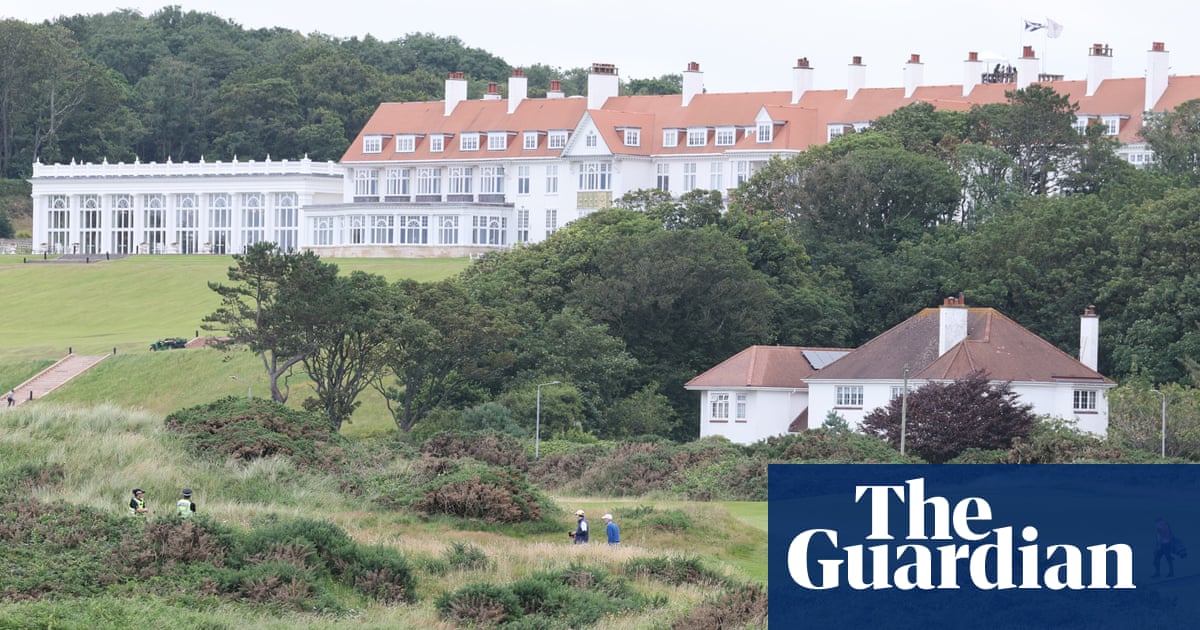
The incident took place on March 8 of last year, targeting the clubhouse at the Trump Turnberry hotel located on Scotland’s west coast. The resort is situated in Ayrshire and features the famous Ailsa golf course, which has hosted the Open Championship four times. Tee times for non-residents at the facility can cost up to £1,000 per person, underscoring the high-profile nature of the property and its significance in the luxury hospitality sector.
Donald Trump acquired the resort from a Dubai-based group in 2014 for an undisclosed sum. Since then, the property has remained a focal point of international attention due to its association with the former U.S. president. The vandalism incident drew immediate political response, highlighting the intersection of private property rights and public political expression in Scotland.
In a meeting held on March 13, shortly after the damage was discovered, Scottish First Minister John Swinney met with Eric Trump, the son of the resort’s owner. Records from the meeting indicate that officials expressed concern over the vandalism and condemned the damage caused. They offered reassurance that relevant authorities would continue to treat the incident seriously, signaling a firm stance against such acts of destruction.
As the case moves toward trial, the focus will likely shift to establishing the link between the physical damage and the alleged terrorist motivation. The defense may challenge the classification of the act as terrorism, arguing instead for a characterization based on political protest or civil disobedience. The outcome could set important precedents for how similar acts of politically motivated vandalism are prosecuted in Scotland.
The resort has since undergone repairs to restore the golf course and clubhouse to their previous condition. However, the legal proceedings continue to cast a shadow over the property’s reputation. For the defendants, the charges represent a serious legal jeopardy, with potential consequences extending far beyond fines or community service. The case remains under active judicial review as preparations for the August 31 hearing proceed.
Observers note that the escalation of charges reflects broader trends in how governments respond to acts of vandalism tied to international conflicts. By invoking terrorism statutes, authorities signal a zero-tolerance approach to property damage motivated by geopolitical grievances. This stance may deter similar actions but also raises questions about the boundaries of political expression and protest in public spaces.
Sources behind this briefing
Go to the original reporting
- The Guardian World↗Seven charged with damaging Trump’s Scottish golf course accused of ‘terrorist connection’

