The short version
- Seven people died and twenty-three were injured after a teenager opened fire at his home and school near Bangkok.
- The attacker killed his grandparents and five educators before taking his own life, leaving more than thirty rounds unused.
- Officials describe the attack as well-planned, renewing calls for stricter enforcement of Thailand's existing gun control regulations.
A violent incident that began in a private residence escalated into a school shooting on the outskirts of Bangkok, resulting in seven deaths and twenty-three injuries. The attacker, identified by authorities as a fourteen-year-old student at Debsirin School in Nonthaburi, first killed his grandparents before moving to the educational facility. There, he fatally shot five teachers before turning the weapon on himself. Thai Prime Minister Anutin Charnvirakul confirmed the death toll and noted that the gunman had more than thirty bullets remaining when he died, suggesting the attack could have caused further casualties.
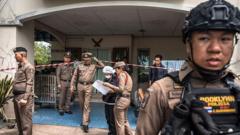
The sequence of events unfolded shortly after 10:00 local time on Thursday. Police forces were deployed to the scene during the active shooting phase. National police chief Kittiratt Phanphet stated that forensic analysis indicated the shooter’s aim was precise, with several shots striking vital areas of the victims' bodies. The prime minister characterized the incident as well-prepared, citing clear steps and specific goals in the attacker's actions. Investigators are continuing their work, having removed computer equipment and other items from the home where the initial killings occurred.
Witnesses described a chaotic and terrifying scene inside the school building. One seventh-grade student recounted standing directly in front of her teacher when the gunman appeared and fired. She described seeing only a cloud of dust as the shots rang out. Another student reported initially mistaking the gunshots for firecrackers, noting the distinct pattern of loud bangs followed by silence before the noise resumed. Students and staff were seen fleeing the premises, while those waiting outside appeared visibly distressed by the unfolding tragedy.
Emergency protocols were activated immediately following the breach. Authorities warned the public to stay away from the area and instructed anyone trapped inside the building to hide and wait for rescue teams. Several schools in the vicinity suspended classes early to allow students to return home safely. The Debsirin School administration later issued a call for blood donations via social media, reflecting the severity of the injuries sustained by those present during the attack.
The condition of the injured remains a significant concern for medical personnel and families. Nine of the twenty-three wounded individuals are currently in critical condition. The school, founded in 1885, is one of Thailand's most prestigious secondary institutions, with alumni including diplomats, athletes, and former prime ministers. The attack has cast a shadow over this historic institution, disrupting the daily lives of students and staff who had no prior indication of the danger.
Authorities have not yet publicly named the attacker or disclosed a definitive motive for the violence. However, Prime Minister Anutin suggested that academic stress may have played a role in the boy's actions. This speculation remains unconfirmed as investigations continue. The lack of a clear motive has left many questions unanswered regarding the planning and execution of the attack, particularly given the precision noted by police officials.
The incident marks the second school shooting in Thailand this year, intensifying public pressure on the government to address firearm safety. Thailand maintains strict gun laws that penalize illegal possession with up to ten years in prison. Despite these regulations, enforcement has been inconsistent. The weapon used in this attack belonged to the shooter's grandfather, and police have not indicated that it was obtained illegally.
Thailand has one of the highest rates of civilian gun ownership in Southeast Asia. Estimates suggest that approximately forty percent of firearms in the country are illegal. Prime Minister Anutin expressed deep sorrow over the tragedy, stating that such an event should not have occurred. He emphasized the government's stance against citizen firearm possession, highlighting the tension between legal frameworks and practical enforcement challenges.
As investigations proceed, the focus remains on understanding how a minor gained access to a lethal weapon and planned such a coordinated attack. The community is grappling with the aftermath of the violence, while policymakers face renewed scrutiny over their ability to prevent similar incidents. The coming days will likely see increased calls for legislative review and improved enforcement mechanisms to ensure public safety.
The Debsirin School community continues to recover from the trauma of the event. Students who escaped by climbing fences or hiding in classrooms are dealing with the psychological impact of the attack. The incident serves as a stark reminder of the vulnerabilities within educational settings and the urgent need for effective gun control measures. The government's response will be closely watched as it seeks to balance security concerns with civil liberties.
Sources behind this briefing
Go to the original reporting
- BBC News↗Seven killed after teen shooter opens fire at home and school in Thailand

