The short version
- The Student List secured an absolute majority in parliament, ending fourteen years of authoritarian rule by Aleksandar Vučić and his Serbian Progressive Party.
- Despite the decisive electoral win, the movement lacks a formal hierarchy or designated leader, raising questions about how it will appoint a prime minister and manage cabinet responsibilities.
- Early priorities include purging police forces linked to organized crime, depoliticizing the judiciary, and increasing transparency in state contracts to reverse systemic corruption.
Serbia is entering an uncharted political era as the Student List movement prepares to form a government following a decisive electoral victory that ended fourteen years of increasingly authoritarian nationalist rule. The non-hierarchical coalition, which swept into power after former president Aleksandar Vučić conceded defeat late Sunday, now holds 141 seats in the 250-seat parliament. This commanding majority, representing approximately 53 percent of the vote according to projections from the Centre for Free Elections and Democracy, marks a seismic shift in Balkan politics. The result caps two years of sustained anti-government protests that were initially triggered by the collapse of a canopy at the Novi Sad railway station, an incident that killed sixteen people and exposed deep-seated public frustration with state safety standards and accountability.
The path forward for the new administration is complicated by its deliberate structural ambiguity. Unlike traditional political parties, the Student List operates without a formal hierarchy or a single designated leader. This collective decision-making model has left observers uncertain about who will assume the role of prime minister or how cabinet positions will be distributed among candidates that include academics, actors, farmers, and students. Prominent figures such as cardiologist Ilija Srdanović, former central bank governor Dejan Šoškić, and chemistry professor Radomir Saičić have emerged as key voices, but the movement has yet to clarify its internal governance mechanisms. This lack of established leadership presents a significant logistical challenge as the group transitions from protest organizers to state administrators.
The incoming government faces the daunting task of overhauling public institutions that remain staffed by civil servants loyal to the outgoing regime. Analysts note that this situation mirrors challenges faced by other recent democratic transitions in the region, such as Hungary’s Tisza party ending Viktor Orbán’s tenure. The Student List must navigate a bureaucracy entrenched with personnel appointed during Vučić’s era, which has been characterized by extensive control over media, the judiciary, and state enterprises. Ana Mirković, a university educationalist and psychologist on the candidate list, described the election result not as an acquisition of privilege but as a historic debt to the Serbian people. She emphasized that the movement’s first priority is the social and psychological detoxification of the country, aiming to dismantle what she termed a system of intimidation that fostered fear and polarization.
Policy platforms released by the movement center on restoring the rule of law and combating corruption through structural reforms. Key proposals include the creation of an independent police unit accountable directly to prosecutors rather than the interior ministry, alongside a purge of officers linked to organized crime. The coalition also aims to ban the appointment of party loyalists to state-owned companies and establish new independent bodies to scrutinize major infrastructure contracts. These measures are designed to curb the misuse of public funds and ensure financial accountability. Mirković stated that the goal is to rebuild society from the ground up, ensuring full disclosure of financial flows and strengthening the judiciary to prevent future state capture.
Despite the domestic focus, international relations remain a sensitive backdrop to the transition. The Student List deliberately kept divisive foreign policy issues, including relations with the European Union and Russia, in the background during the campaign. However, the Kremlin quickly responded to the election results, expressing hope that new leaders would understand that cooperation with Russia remains in Serbia’s interests. Domestic analysts suggest that the movement’s insistence on addressing internal political issues first is a strategic choice to avoid fracturing its base. Dušan Vučićević, an analyst, noted that the group has prioritized the literal dismantling of institutions from the national to the local level, viewing this as a prerequisite for any meaningful foreign policy engagement.
The speed and efficiency of the new government’s decision-making processes are likely to be tested immediately. Nikola Burazer, program director at the Centre for Contemporary Politics in Belgrade, pointed out that the movement’s candidate selection process took months, raising concerns about whether such deliberative methods can sustain the pace required for governance. While the collective model allowed for broad consensus building during the campaign, the complexities of running a state may demand faster responses to economic and social crises. The movement has acknowledged the weight of this responsibility, with candidates expressing a clear understanding that their lack of prior government experience could hinder initial administrative efforts.
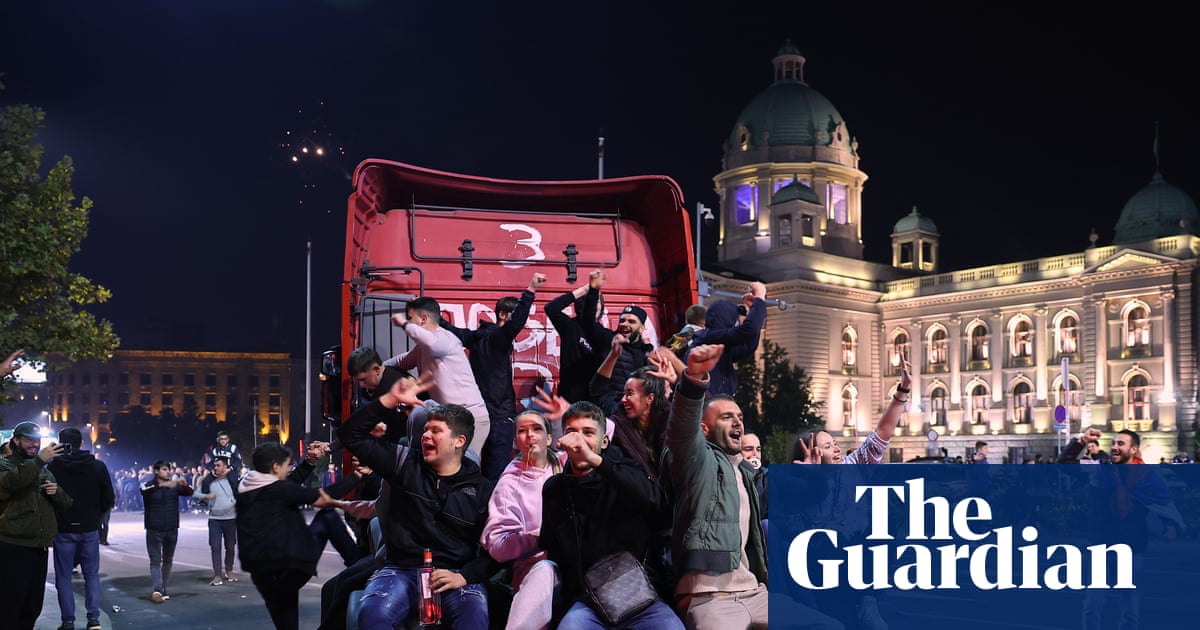
The victory in Serbia offers a potential template for other grassroots movements across Europe, though experts caution against direct comparisons. While the Student List secured more than half of the vote through an experiment in grassroots democracy, analysts remain uncertain whether this specific model is replicable in other political contexts. The movement’s success was driven by unique local grievances and a unified opposition to Vučić’s long-standing dominance. As supporters took to the streets in celebration on Monday, the mood was one of cautious optimism mixed with recognition of the arduous work ahead. The coming weeks will reveal whether the coalition can translate its moral authority into effective legislative action.
Looking ahead, the immediate challenge is to stabilize public institutions while implementing promised reforms without causing administrative paralysis. The movement must balance its desire for transparency and accountability with the practical need to maintain essential government functions. If successful, the Student List could redefine political engagement in the Balkans, demonstrating that non-traditional actors can achieve significant democratic change. However, the absence of a clear leader and the entrenched nature of the existing bureaucracy mean that the transition will be fraught with obstacles. The international community will be watching closely to see if this historic shift leads to lasting institutional renewal or if the complexities of governance overwhelm the movement’s idealistic foundations.
Sources behind this briefing
Go to the original reporting
- The Guardian World↗Serbia’s Student List preparing for talks on forming government despite no clear leader