The short version
- The Student List movement emerged after the Novi Sad station collapse killed sixteen people, channeling public anger into a formal electoral challenge.
- Aleksandar Vučić resigned as president to seek re-election as prime minister, triggering a snap parliamentary vote amid rising anti-authoritarian sentiment.
- Polling data remains mixed regarding whether the decentralized student coalition can overcome the established dominance of the Serbian Progressive Party.
Serbia faces a pivotal political moment this Sunday as parliamentary elections bring together a historic incumbent and an unprecedented grassroots challenger. The contest centers on Aleksandar Vučić, who has dominated the nation’s political landscape for twelve years, and the Student List, a decentralized movement that has transformed from protest organizers into a formal electoral force. This election represents more than a routine change of administration; it is a test of whether a leaderless, direct-democracy model can displace an entrenched system accused of creeping authoritarianism.
The origins of the Student List lie in a national tragedy that occurred two years ago. On November 1, 2024, a concrete canopy at the railway station in Novi Sad collapsed, killing sixteen people. Among the victims was six-year-old Sara Firic, who died while sitting with her grandfather and older sister. The disaster exposed severe failures in infrastructure maintenance and sparked immediate public outrage. Critics pointed to botched refurbishment work linked to a controversial deal involving a Chinese consortium, suggesting corruption played a role in the structural failure.
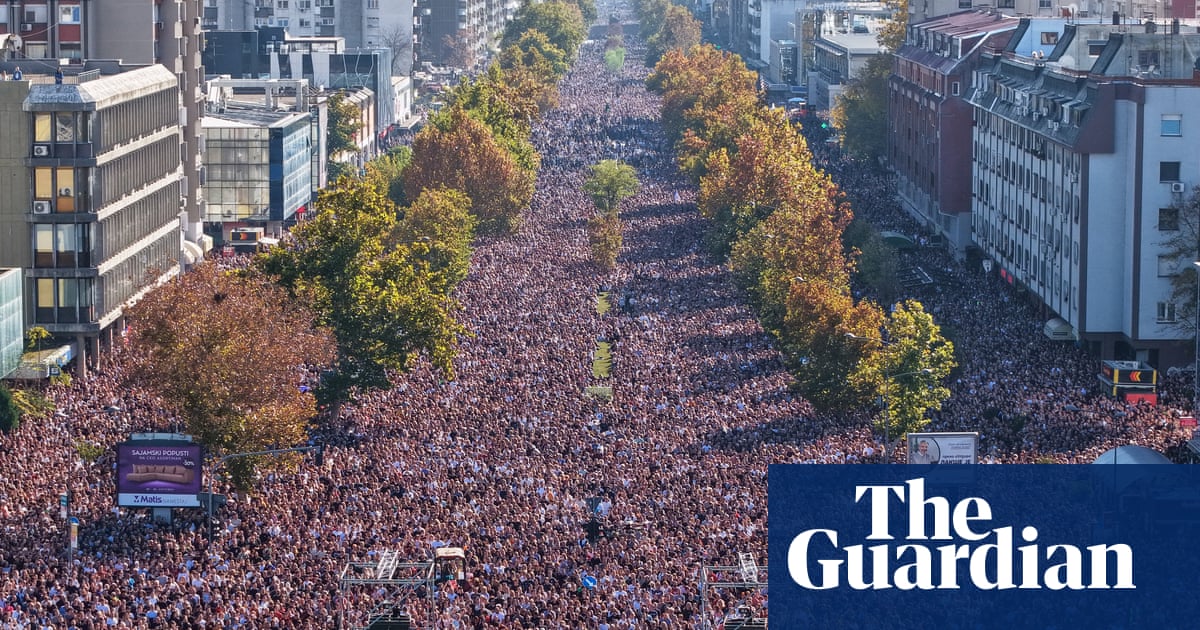
In the aftermath of the collapse, students organized organic protests, blocking nearby intersections for minutes corresponding to the number of lives lost. The government response was harsh, with authorities suppressing demonstrations and Vučić labeling protesters as Western-backed terrorists. Rather than dissipating, however, the movement gained momentum. What began as grief and anger over a specific incident evolved into a broader demand for accountability and inclusive governance. The students became symbols of resistance against state cover-ups and systemic corruption.
Vučić initially expected the protests to fade, but sustained pressure forced him to resign from his presidential post. He called a snap parliamentary election in an effort to consolidate power by transitioning to the role of prime minister, a move reminiscent of strategies used by allies in neighboring countries. This shift has intensified scrutiny of his leadership style and policies. The election is now viewed as a critical juncture for Serbian democracy, with observers watching closely to see if the public will reject or reaffirm his long-standing control.
The Student List has responded by fielding 250 candidates, including academics, artists, musicians, and farmers. Each candidate was approved through citizens’ assemblies, reflecting the movement’s commitment to direct democracy. Unlike traditional parties with hierarchical structures, this coalition operates without a single leader, relying instead on collective decision-making. Participants describe the campaign as a bold experiment in grassroots politics, aiming to mobilize disaffected voters who feel excluded from conventional political processes.
Campaign efforts have included door-to-door data collection and targeted outreach to rural areas, where Vučić’s Serbian Progressive Party traditionally holds strong support. A program called “A student in every village” seeks to engage communities that might otherwise remain on the sidelines. Organizers believe that increasing voter turnout among these groups could tip the balance in their favor. The movement’s strategy hinges on turning apathy into participation, leveraging the energy of younger generations to challenge established power structures.
Polling results offer conflicting signals about the likely outcome. Some surveys suggest the Student List is gaining ground, while others indicate that Vučić’s party is consolidating its base. Correspondents in Belgrade report a sense of uncertainty, noting that anything could happen on election day. The tight race reflects deep divisions within Serbian society and the unpredictable nature of grassroots mobilization. As voting approaches, both sides are preparing for a closely contested result.
This election carries implications beyond Serbia’s borders. Observers draw parallels with recent political shifts in neighboring Hungary, where Viktor Orbán faced challenges to his dominance. If the Student List succeeds, it could inspire similar movements across Central Europe, potentially creating a domino effect against authoritarian tendencies. Conversely, a victory for Vučić would reinforce his grip on power and signal resilience for entrenched political machines. Regardless of the outcome, the election underscores the growing influence of youth-led activism in shaping democratic futures.
As Serbia prepares to vote, the stakes extend beyond individual candidates or parties. The contest embodies a broader struggle between centralized authority and decentralized participation. It raises questions about how modern democracies can adapt to new forms of civic engagement and whether traditional institutions can accommodate radical experimentation. For now, all eyes remain on the ballot boxes, waiting to see which vision of Serbia will prevail.
The coming days will reveal not only who wins but also what kind of political culture emerges from this moment. Whether the Student List achieves its goals or falls short, its impact has already reshaped the national conversation. By forcing a reckoning with corruption and accountability, the movement has demonstrated that even without formal leadership, collective action can challenge powerful incumbents. The results will provide valuable insights into the future of democracy in Europe and beyond.
Sources behind this briefing
Go to the original reporting
- The Guardian World↗Friday briefing: How a leaderless student group is challenging power in Serbia