The short version
- President Aleksandar Vučić has resigned his post to lead the Serbian Progressive Party in an early October election, bypassing constitutional limits on presidential terms.
- The vote serves as a critical test of public support following nearly two years of protests sparked by a deadly infrastructure failure and widespread allegations of corruption.
- Ana Brnabić will serve as acting president until the new parliament is formed, while analysts note that Vučić retains significant influence despite the formal shift in executive power.
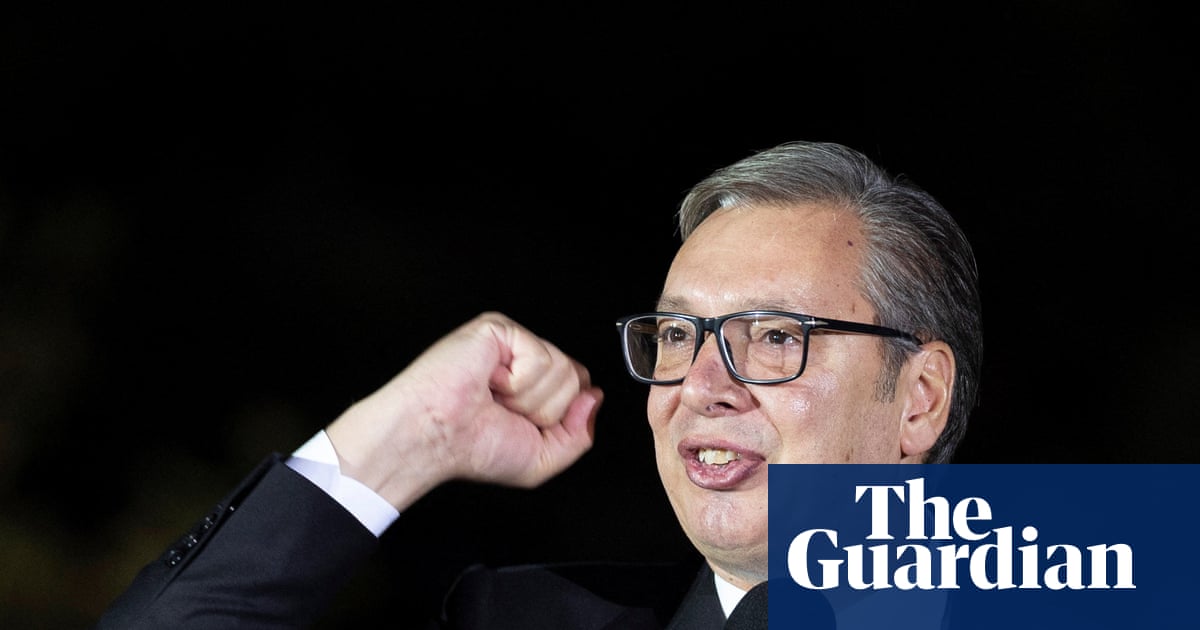
Aleksandar Vučić, the long-serving leader of Serbia, has formally resigned from the presidency to position himself for the role of prime minister. This strategic maneuver allows him to lead his rightwing Serbian Progressive Party (SNS) in an early parliamentary election scheduled for October 25. The decision comes as his second five-year presidential term was set to conclude in May of next year. Under the country’s constitution, Vučić is barred from seeking a third term in the highest office, making this pivot a necessary step to maintain his political dominance.
The upcoming ballot represents a significant challenge for the governing populists. For nearly two years, Serbia has experienced sustained public unrest driven by a youth-backed movement. These protests were initially triggered by a tragic collapse of a train station canopy in Novi Sad in November 2024, which resulted in sixteen deaths. University students who first demanded accountability for that disaster have since broadened their agenda to include demands for justice and an end to systemic corruption.
This opposition movement aims to oust Vučić’s government after fourteen years of continuous rule. During this period, Vučić has held either the presidency or the premiership, accumulating substantial influence over state institutions. Although the prime ministerial role is formally more powerful than the presidency in Serbia’s system, Vučić exercised dominant control during his previous terms. He frequently presided over government sessions and announced major policy decisions, effectively blurring the lines between ceremonial and executive authority.
In recent weeks, Vučić has engaged in an intensive campaign tour across the country, with extensive coverage on pro-government media outlets. His efforts have included opening new infrastructure projects, distributing financial assistance, and promoting cheaper medicines. He has also visited voters directly in their homes, attempting to bolster support ahead of the high-stakes vote. This activity has drawn criticism from independent bodies, including the Bureau for Social Research, which filed a complaint alleging that Vučić abused public institutions to promote his party.
The anti-corruption authorities, which remain under government control, have not responded to these allegations. Critics accuse the SNS of rampant corruption, links to organized crime, and a systematic clampdown on democratic freedoms, including restrictions on critical media. Since taking power in 2012, the party has gradually consolidated control over state institutions while denying any abuse of office and repeatedly pledging to combat corruption.
The political atmosphere is tense, with authorities responding to protesters through police violence and detentions. Vučić has accused his opponents and independent media of attempting to destabilize the state under foreign influence, though he has provided no evidence to support these claims. He recently warned on state television that unidentified actors planned to incite unrest on election night, framing the contest as a defense of national sovereignty against external threats.
Ana Brnabić, a close ally and former prime minister who currently serves as speaker of parliament, will assume the role of acting president. Once the new parliament is elected, its newly appointed speaker will take over from Brnabić, appoint the prime minister, and schedule a presidential vote. This transitional period underscores the continuity of Vučić’s network within the state apparatus, even as he shifts his formal title.
Analysts describe the election as having a referendum-like quality, with polling indicating a close race between Vučić’s party and the student-backed opposition list. The opposition coalition features little-known experts, professors, teachers, and athletes who have campaigned on bicycles across the country, advocating for the rule of law. Also participating are Vučić’s Socialist allies, a pro-EU opposition alliance, and several smaller groups.
The outcome of this election will likely determine the trajectory of Serbia’s relationship with the European Union. Accession efforts have stalled under Vučić due to democratic backsliding and his refusal to join sanctions against Russia regarding the war in Ukraine. The vote thus serves as a pivotal moment for the Balkan nation, testing whether citizens will endorse continued authoritarian consolidation or embrace a shift toward greater accountability and European integration.
As the October deadline approaches, the stakes remain high for both the incumbent leadership and the emerging opposition. The resignation of the president is not an exit from power but a recalibration of strategy. Whether this move secures another term for Vučić’s faction or empowers the protest movement will depend on voter turnout and the ability of the opposition to unify its diverse base against a well-resourced establishment.
Sources behind this briefing
Go to the original reporting
- The Guardian World↗Serbia’s populist president Aleksandar Vučić resigns to run for prime minister

