The short version
- The election pits President Aleksandar Vučić’s ruling party against a decentralized student movement that has capitalized on widespread anti-government sentiment.
- Conflicting polls and allegations of electoral irregularities suggest the results may be contested, raising fears of civil unrest or institutional paralysis.
- The outcome will significantly influence Serbia’s trajectory regarding European Union integration and its balancing act between Western allies and Eastern powers.
Serbia is approaching a pivotal parliamentary election on October 25 that could fundamentally reshape the nation’s political landscape. The contest is defined by intense polarization, with approximately 6.5 million citizens voting amid a backdrop of civil unrest and allegations of systemic irregularities. This election represents more than a routine change in governance; it serves as a referendum on the direction of an EU candidate country that has long balanced complex relationships with Western institutions, Russia, and China. The stakes are elevated by the potential for far-reaching consequences, both domestically through possible mass protests and internationally through shifts in diplomatic engagement.
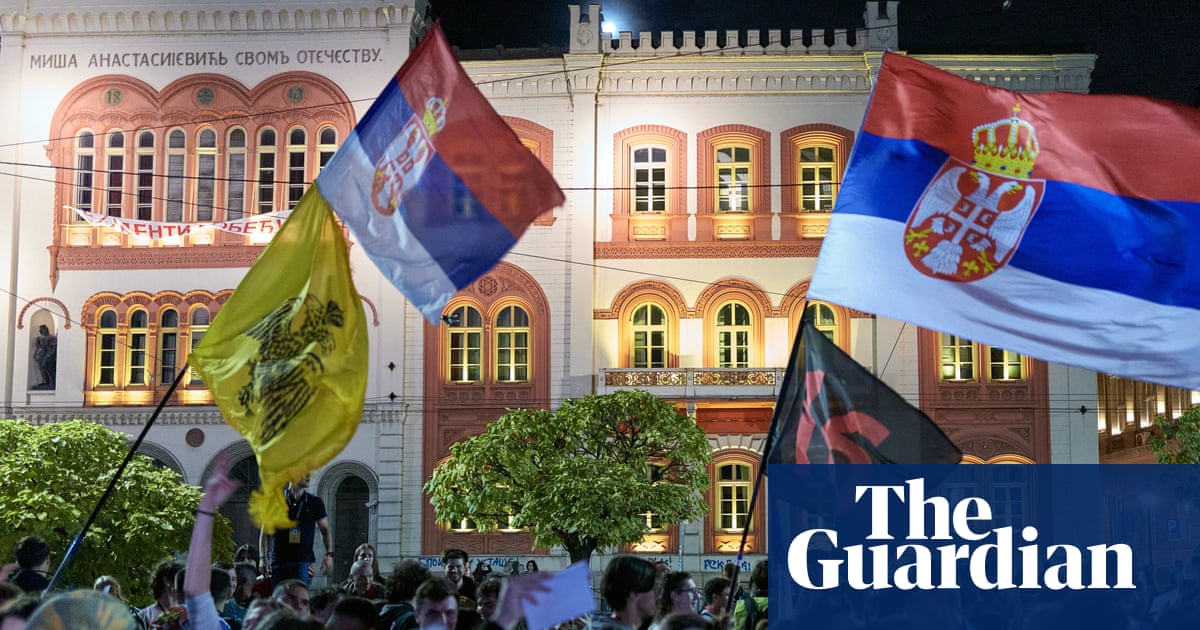
Two major events have framed the current political climate leading up to this vote. First, the collapse of the Novi Sad railway station canopy in November 2024, which resulted in sixteen deaths, exposed deep-seated corruption within government institutions and ignited a sustained period of anti-government demonstrations. Second, the recent funeral of Ratko Mladić, the general convicted of orchestrating severe war crimes during the Bosnian conflict, was conducted with military honors in Belgrade. This event sparked international outrage while simultaneously galvanizing nationalist pride among segments of the Serbian population. These contrasting incidents highlight the deep societal divisions that candidates are navigating.
President Aleksandar Vučić, who has dominated Serbian politics for fourteen years, resigned from his executive post to lead the ruling Serbian Progressive Party (SNS) list in a bid to become prime minister. His party anchors the United Serbia coalition, relying on control of public resources, favorable media coverage, and strong nationalist support. However, the campaign has been marred by accusations of voter manipulation and state violence against opposition activists. Concerns regarding electoral integrity persist, including allegations of government interference with voter registration lists and overseas voting arrangements, which cast a shadow over the legitimacy of any potential victory.
Opposing the established power structure is the Student List, a grassroots coalition that has evolved from spontaneous protests following the Novi Sad disaster into a serious parliamentary challenger. This movement eschews traditional party hierarchies and single figureheads, instead operating through university networks and featuring locally respected academics and professionals. Their campaign strategy, characterized by humor and rapid mobilization, has successfully engaged disaffected voters who previously remained on the sidelines. The rise of this decentralized force has significantly marginalized traditional opposition parties, whose collective support has reportedly declined from thirty percent to between ten and fifteen percent.
The political landscape is further complicated by fragmentation within the right-wing nationalist bloc. Disagreements have weakened these groups, exacerbated by the withdrawal of the We the Power of the People party over allegations of Russian influence. Some nationalist voters may shift their support to the SNS, while others remain undecided. Meanwhile, traditional opposition parties face an uncertain future, with some switching allegiance to the Student List and others, such as European Serbia, potentially failing to meet the three percent electoral threshold required for parliamentary representation. This realignment underscores a significant departure from historical voting patterns.
Opinion polls offer conflicting projections, with some placing the SNS ahead, others favoring the Student List, and many forecasting a tight race. The unreliability of these surveys, combined with concerns about electoral manipulation, means that any result claiming a majority in the 250-seat parliament is likely to be contested. Analysts from the European Council on Foreign Relations have outlined several possible scenarios, ranging from a decisive SNS victory to an inconclusive outcome requiring smaller parties to act as kingmakers. In some cases, the election might need to be re-run if no coalition secures a clear mandate.
The immediate aftermath of the election will depend heavily on whether voters accept the results as legitimate. A victory for either side marred by obvious irregularities could lead to civil unrest, violent clashes, and institutional paralysis. Even if the Student List achieves a peaceful transfer of power, governing will present significant challenges, akin to the difficulties faced by reformers in other post-authoritarian transitions. Reforming fourteen years of centralized control under the SNS will require navigating entrenched bureaucratic structures and addressing deep societal divisions.
Internationally, the election outcome will force the European Union to reassess its strategy toward Serbia. An irregular victory for Vučić could compel Brussels to decide between continuing transactional diplomacy or freezing integration funds. Conversely, a clear mandate for the Student List could set Serbia on a different course, potentially accelerating EU accession talks. The coming days will be critical in determining whether this watershed moment leads to stability and reform or further instability and regional tension.
Sources behind this briefing
Go to the original reporting
- The Guardian US↗What are the key issues in Serbia’s election – and its potential consequences?