The short version
- Patrick Vieira has been selected to lead Senegal despite the absence of a signed contract and ongoing administrative disputes within the national federation.
- The appointment faces potential invalidation from the Court of Arbitration for Sport, which is reviewing the legitimacy of the current federation leadership.
- Vieira must navigate immediate financial demands from his predecessor while preparing a squad transitioning away from its recent championship-winning core.
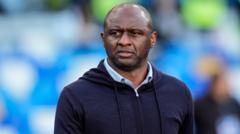
Patrick Vieira has been identified as the new head coach of the Senegal national football team, marking a significant return for the former Arsenal and France captain to the country of his birth. However, the announcement is accompanied by substantial uncertainty regarding the finalization of his employment terms. The Senegalese Football Federation (FSF) confirmed that discussions concerning administrative and contractual details are still ongoing, meaning Vieira has not yet signed an agreement. Consequently, the date for his official presentation remains undetermined, leaving the status of his appointment in a state of flux even as the team prepares for upcoming international fixtures.
The decision to appoint Vieira comes at a moment of intense instability within Senegalese football governance. The FSF leadership is currently isolated, lacking support from both the government and the general public. This isolation stems from a contested election that has been challenged for the past year. A ruling from the Court of Arbitration for Sport (CAS) in Lausanne is expected by Friday, which could fundamentally alter the landscape of the federation. If the CAS determines that the current hierarchy lacks legitimacy, it may call into question not only the authority of the FSF officials but also the validity of Vieira’s selection as head coach.
Compounding the administrative turmoil is a financial dispute involving Pape Thiaw, the manager who was dismissed following Senegal’s exit from the FIFA World Cup against Belgium. Thiaw’s termination occurred without formal endorsement from the Senegalese government, which provides funding for the national team. He is currently demanding payment for several months of outstanding wages and various bonuses, with reports indicating the total amount approaches $815,000. The resolution of this dispute remains unresolved, adding another layer of complexity to the transition period as the federation attempts to stabilize its operations.
Vieira was unanimously approved by the FSF at a meeting on Monday to succeed Thiaw. Other candidates considered for the role included former Netherlands international Patrick Kluivert, Vieira’s compatriot Patrice Carteron, and two ex-Senegal internationals, Habib Beye and Oumar Daf. Vieira had previously signaled his interest in the position through high-profile coverage of his recent holiday in Senegal. Despite the unanimous vote, the lack of a signed contract suggests that the federation is acting under pressure to fill the vacancy quickly rather than through a fully settled administrative process.
The timing of the appointment is critical due to the immediate competitive schedule facing the Teranga Lions. Senegal is set to play in qualifiers for the 2027 Africa Cup of Nations starting on September 23, when they travel to Mozambique for their Group J opener. This will be followed shortly by a match against Ethiopia. The federation has little choice but to move forward with preparations despite the legal and contractual ambiguities surrounding the coaching position. The calendar does not allow for delays, forcing the team to operate under conditions of significant institutional uncertainty.
Beyond the immediate logistical challenges, Vieira faces the sporting task of rebuilding a squad that is transitioning from one of its most successful eras. Senegal won back-to-back Africa Cup of Nations titles in 2021 and 2022, establishing a formidable legacy. However, the team is now moving away from the core group that included stars such as Sadio Mane, Edouard Mendy, Kalidou Koulibaly, and Idrissa Gana Gueye. While promising young talent is emerging, these players must carry the weight of expectations set by the previous generation. Vieira’s ability to integrate new faces while maintaining competitive standards will be a key test of his managerial capabilities.
Vieira’s connection to Senegal is deeply symbolic, given that he was born in Dakar in 1976 before moving to France at age eight. He maintained ties with the country throughout his career, notably investing in the Diambars Institute, which has become a leading football academy in Africa. The institute produced several players who contributed to Senegal’s recent success, including Gueye, Bamba Dieng, and Abdoulaye Seck. This historical link adds emotional significance to his appointment, even as his managerial record has been less impressive than his playing career. He won 22 of 74 games in charge of Crystal Palace, a statistic that may influence perceptions of his tactical approach.
The broader context of Senegalese football includes the controversy surrounding the most recent Africa Cup of Nations final. Thiaw called his team off the pitch after a controversial penalty was awarded to hosts Morocco in stoppage time, leading to a dispute over the trophy’s destination. The CAS is also expected to address this issue, further entangling the federation in legal proceedings. As Vieira steps into this volatile environment, he must navigate not only sporting challenges but also the fallout from recent political and legal conflicts within the sport. The outcome of the CAS rulings will likely determine whether his tenure begins on a stable foundation or remains subject to ongoing institutional challenges.
Sources behind this briefing
Go to the original reporting
- BBC Sport↗Questions remain over Vieira deal amid Senegal uncertainty
