The short version
- Inverclyde Council aims to attract legal migrants and refugees to counteract a projected sixteen percent population loss over the next twenty years.
- New residents are drawn by affordable housing but often commute for work, raising concerns about long-term settlement and local economic integration.
- Longtime inhabitants express skepticism that immigration alone can revitalize the town without addressing the underlying shortage of local employment opportunities.
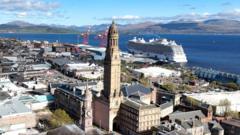
Greenock, a coastal town in western Scotland, is attempting an unconventional approach to reverse decades of demographic decline by actively encouraging migrants and refugees to settle in the area. The local authority has identified population loss as its most urgent challenge, noting that no other council in Scotland has experienced such severe depopulation. With resident numbers dropping significantly since 1981 and projections indicating a further sixteen percent decrease over the next two decades, officials are prioritizing strategies to retain existing residents while attracting new ones from abroad.
The town’s changing character is visible on its High Street, where new businesses catering to African communities have opened in recent years. Shops selling ingredients like yams, plantain, and okra now sit alongside traditional storefronts, reflecting a shift in the local population composition. Five years ago, it was uncommon to see Black residents in Greenock; today, hundreds of Africans and refugees have moved into the area. This influx is partly driven by affordable housing costs, which attract individuals who may work or study in nearby cities like Glasgow or Paisley but choose to live in Greenock due to lower living expenses.
Despite the council’s efforts to foster a welcoming environment, the lack of local employment remains a critical barrier to sustainable growth. Many newcomers arrive on skilled work visas, particularly those supporting the health and care sectors, yet they often commute for their jobs rather than finding work within Greenock itself. Local business owners note that while residents are generally friendly and accommodating, immigrants tend to follow job opportunities. Without a robust local labor market, there is concern that new arrivals may not put down permanent roots, limiting the long-term impact of the repopulation strategy.
Longtime residents express mixed feelings about the demographic changes. Some elderly community members acknowledge the friendliness of newcomers but question the viability of attracting more people when local job prospects are scarce. At community centers and cafes, conversations often turn to the town’s industrial past, once known as a major hub for sugar refining and shipbuilding. The closure of significant employers, including an IBM campus in 2016 and recent cuts at the local shipyard, has left many feeling that the town is emptying out. These historical losses have contributed to a sense of despondency among those who remember a more vibrant commercial district.
The economic stagnation affects both new arrivals and established residents. Younger locals struggle to find employment that accommodates childcare responsibilities, leading some to consider moving to neighboring areas with better opportunities. One resident noted that the town feels like a ghost town, with few shops or activities to sustain daily life. This sentiment is echoed by others who feel that without tangible improvements in job availability, any increase in population will be temporary. The council’s plan requires hundreds of new immigrants annually just to maintain current population levels, a goal that seems increasingly difficult to achieve without addressing the root causes of economic decline.
Political attention has begun to focus on Greenock’s challenges, with Scotland’s First Minister scheduled to visit the area to hear directly from residents. The visit underscores the broader implications of demographic shifts in post-industrial communities across the UK. While the council’s strategy highlights a proactive approach to repopulation, it also exposes the limitations of migration as a standalone solution. Critics argue that without concurrent investments in local industries and job creation, the town risks becoming a dormitory suburb for workers employed elsewhere, rather than a thriving community in its own right.
The situation in Greenock illustrates the complex interplay between housing affordability, labor markets, and demographic trends. As other towns face similar pressures, the experiment in Inverclyde offers a case study in the difficulties of reversing long-term decline. Success will likely depend on whether local authorities can align immigration policies with economic development initiatives. Until then, residents remain caught between hope for renewal and frustration over persistent unemployment, leaving the future of this historic Scottish town uncertain.
Community leaders continue to advocate for comprehensive solutions that go beyond population metrics. They emphasize the need for infrastructure improvements, educational opportunities, and business incentives to create a self-sustaining local economy. While the arrival of new cultural elements has added diversity to Greenock, the fundamental question remains whether this diversity can translate into economic vitality. The coming years will test whether the council’s bold strategy can overcome the structural challenges that have defined Greenock’s recent history.
Sources behind this briefing
Go to the original reporting
- BBC News↗The town whose council wants migrants to move in

