The short version
- The Scottish government spent nearly £100,000 on travel for ministers attending the World Cup in the United States.
- First Minister John Swinney and senior aides flew business class, exceeding standard guidelines for flights under ten hours.
- Opposition figures criticized the expenditure as irresponsible, while government officials defended it as necessary for effective diplomacy.
The Scottish government has come under fire after revealing that public funds totaling £98,442 were used to cover travel expenses for ministers and officials attending the World Cup in the United States. The expenditure includes flights, accommodation, and incidental costs associated with trips taken by First Minister John Swinney, Sports Minister Maree Todd, and their respective teams. While the delegation aimed to support the national football team and engage in trade discussions, the specific allocation of resources has sparked debate regarding fiscal responsibility and adherence to official travel protocols.
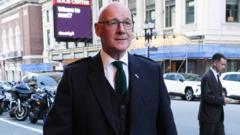
Central to the controversy is the decision to book business-class tickets for Swinney and two senior aides. The first minister flew to Boston for Scotland’s opening match in June, followed by trade talks in Kentucky. His private secretary and a special adviser also traveled in premium cabins. In contrast, Sports Minister Todd and several other accompanying officials utilized significantly cheaper economy-class fares. This disparity in travel standards has drawn particular attention from observers questioning the consistency of cost-saving measures applied across different levels of government personnel.
Financial records indicate that Swinney’s flight to Boston cost £17,893, with his private secretary’s ticket priced identically. The special adviser’s business-class fare amounted to £9,864. Additional expenses included £11,800 for economy flights for other staff and over £10,000 for car rentals during the first minister’s visit. Todd’s trip to Miami for Scotland’s final game involved five individuals traveling on tickets totaling £5,485. These figures represent a substantial portion of the overall budget allocated for the international engagement.
Government travel regulations generally restrict business-class usage to flights exceeding ten hours unless specific exceptions are granted. Direct routes from Edinburgh to Boston typically last approximately seven hours, falling well below this threshold. Despite this guideline, officials justified the premium bookings by citing the need for ministers to arrive in a condition suitable for immediate work. Justice Secretary Neil Gray argued that ensuring leaders are fresh upon arrival is a proportionate use of funds, particularly given the demanding nature of their schedules.
Swinney addressed the criticism by acknowledging that time pressures often lead to higher booking costs. He stated that the administration attempted to minimize expenses wherever possible but emphasized the logistical challenges involved in coordinating high-level diplomatic visits alongside sporting events. The government framed the trips as opportunities to enhance Scotland’s soft power and foster international connections in trade, tourism, culture, and investment sectors.
Supporters within the ruling party echoed these sentiments. Economy Secretary Stephen Flynn suggested that expecting politicians to endure cramped economy seating before engaging with foreign officials would reflect poorly on their professionalism. He argued that such expectations would yield undesirable outcomes for political representation abroad. The defense rests on the premise that effective diplomacy requires a certain standard of comfort and readiness, which business-class travel purportedly provides.
Critics, however, view the expenditure as emblematic of broader fiscal mismanagement. Conservative MSP Stephen Kerr condemned the spending, asserting that while supporting the national team is commendable, the costs should have been borne personally by the ministers involved. He characterized the trips as an escape from domestic challenges and accused the administration of failing to control expenses. The opposition argues that public funds should be reserved for essential services rather than premium travel experiences for elected officials.
The incident highlights ongoing tensions between diplomatic ambitions and budgetary constraints in Scottish governance. As the government continues to promote international engagement, the scrutiny over travel costs underscores the sensitivity surrounding public spending. Future decisions regarding ministerial travel may face increased examination, with stakeholders demanding greater transparency and adherence to established guidelines. The debate reflects broader concerns about accountability and the prioritization of resources in a challenging economic climate.
While the World Cup provided a platform for cultural and economic outreach, the financial implications of the delegation’s presence remain a point of contention. The government maintains that the trips yielded significant benefits in terms of international visibility and networking opportunities. Nevertheless, the disparity between the costs incurred and the standard travel rules has left many questioning whether the ends justified the means. As political discourse continues, the focus remains on balancing diplomatic effectiveness with fiscal prudence.
The release of these expenses comes at a time when public trust in government spending is closely monitored. The details surrounding the flights, accommodations, and ancillary costs provide a clear picture of how resources were allocated during this high-profile event. Whether the perceived benefits outweigh the financial outlay remains a subject of ongoing debate among politicians, analysts, and the general public. The episode serves as a case study in the complexities of modern political travel and its associated controversies.
Sources behind this briefing
Go to the original reporting
- BBC News↗John Swinney defends £45,000 business-class flights to World Cup

