The short version
- Scottish and Welsh leaders told Prime Minister Andy Burnham that decisions regarding local devolution are exclusively within the jurisdiction of Holyrood and the Senedd.
- Tensions surfaced after Defense Secretary Wes Streeting criticized the Scottish government for retaining powers rather than distributing them to local authorities, a claim dismissed by Scottish officials as lecturing.
- The absence of Northern Ireland’s first minister due to political instability highlights the fragmented nature of UK-wide devolution efforts under the new administration.
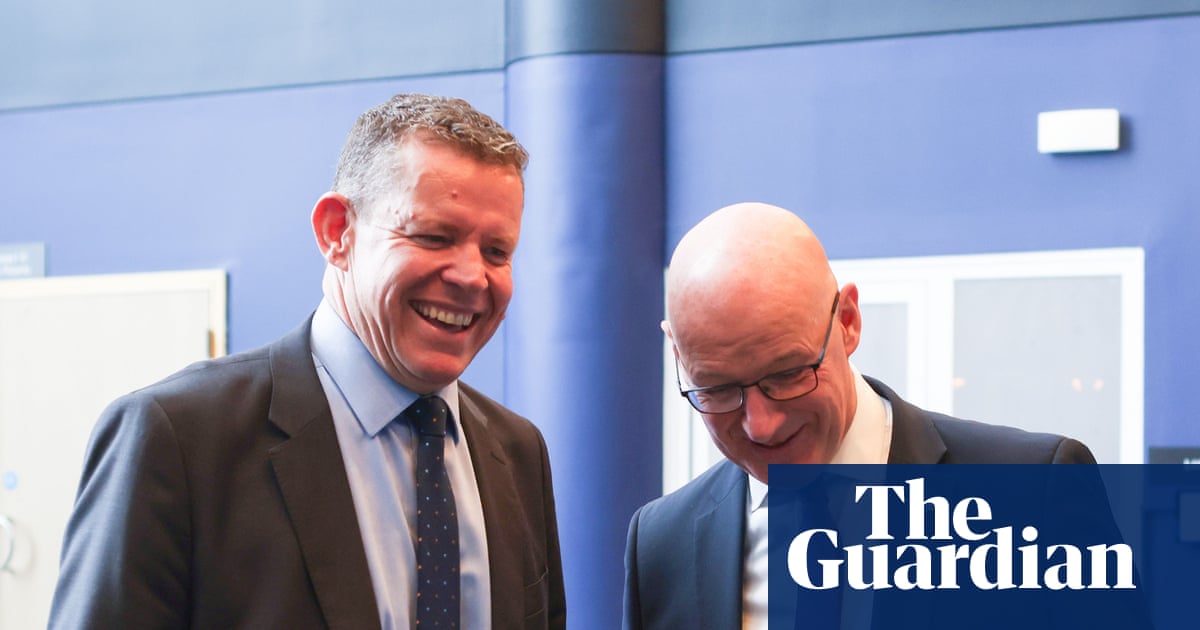
Prime Minister Andy Burnham’s initiative to standardize regional governance across the United Kingdom has encountered immediate resistance from Scotland and Wales, where leaders have firmly asserted their autonomy over local power structures. During recent discussions in Glasgow, First Ministers John Swinney and Rhun ap Iorwerth made it clear that any further devolution of authority to local governments must be determined by their respective parliaments, not by Westminster. This stance directly challenges the prime minister’s vision of a unified approach to regional empowerment, which seeks to replicate the mayoral models seen in English cities across the entire UK.
The friction stems from Burnham’s desire to accelerate devolution efforts following his recent budget proposals, which granted enhanced tax revenue powers to mayors in England. The prime minister expressed concern that Scotland and Wales might fall behind in this administrative shift, stating he did not want any part of the UK left out of these developments. However, both Swinney and ap Iorwerth maintained that while they are open to collaborative discussions on employment and reindustrialization, the structural changes regarding local governance remain strictly within their legislative domains. Ap Iorwerth specifically emphasized that further devolution within Wales is a matter for the Senedd alone.
Underlying these diplomatic exchanges are deeper political tensions regarding the distribution of resources and authority. Defense Secretary Wes Streeting recently criticized the Scottish government for what he described as hoarding powers transferred from Westminster, arguing that Holyrood should be doing more to devolve responsibilities to local councils. This characterization has drawn sharp rebuke from Scottish officials, who view such comments as condescending interference in their constitutional arrangements. One Scottish official described Streeting’s remarks as lecturing on devolution, highlighting the sensitivity surrounding the balance of power between Edinburgh and London.
The political landscape in Wales adds another layer of complexity to these negotiations. Plaid Cymru, which secured victory in the recent Senedd elections, has formally requested that Wales receive the same devolved powers currently held by Scotland. This demand underscores a growing nationalist sentiment across the UK’s Celtic nations, where all three now have nationalist-led governments for the first time. Ap Iorwerth used his meeting with Burnham to press for greater powers for the Welsh government, while also reiterating that internal devolution decisions rest solely with Cardiff Bay. The Welsh government has also criticized Burnham’s initial budget as amounting to a real-terms funding cut, suggesting a lack of serious commitment to Wales.
Northern Ireland’s absence from these high-level talks further illustrates the difficulties in achieving a cohesive UK-wide strategy on devolution. First Minister Michelle O’Neill was scheduled to attend the summit but withdrew following a political dispute between Sinn Féin and the Democratic Unionist Party. Burnham described her absence as disappointing, noting that he hoped all four nations would move at a similar pace regarding local governance reforms. The instability in Northern Ireland contrasts with the more structured, albeit tense, dialogues occurring in Scotland and Wales, where institutional frameworks for devolution are already established.
Critics of Burnham’s approach argue that applying English regional models to other parts of the UK is fundamentally flawed due to differing political geographies. Lee Waters, a former minister in the Welsh government, pointed out that English regions typically cover densely populated areas with populations between 1.5 and 3 million people, whereas Welsh regions are far less dense. He argued that transposing an English mayoral worldview onto Wales ignores these demographic realities and fails to account for the fact that many functions championed by metro mayors in England are already performed by the Welsh government.
Despite the firm boundaries set by Scottish and Welsh leaders, Downing Street has characterized the recent talks as constructive. Swinney noted that Burnham assured him he would not bypass the Scottish parliament in any future devolution endeavors, a promise that appears to have eased immediate concerns about Westminster overreach. However, the underlying disagreement remains: whether devolution should be driven by a central government seeking uniformity or by regional parliaments prioritizing local needs and constitutional traditions.
As the new administration pushes forward with its budget measures and regional empowerment plans, the divide between London’s ambitions and the realities of devolved governance is likely to persist. The insistence by Scottish and Welsh leaders that they control the pace and scope of local devolution suggests that any significant changes will require careful negotiation rather than top-down imposition. This dynamic sets the stage for ongoing political friction as the UK grapples with how to balance national cohesion with regional autonomy.
The situation highlights a broader challenge for Burnham’s government: integrating diverse political systems under a single national strategy without alienating key partners. While the prime minister aims to prevent any region from being left behind, the leaders of Scotland and Wales are determined to protect their legislative independence. The outcome of these negotiations will likely shape the future of UK governance, determining whether devolution becomes a more coordinated effort or remains a patchwork of distinct regional arrangements.
Looking ahead, the focus will shift to how these differing visions translate into practical policy implementation. With Plaid Cymru seeking parity with Scotland and Scottish officials resisting external pressure, the path forward requires delicate diplomacy. Burnham’s ability to navigate these complex relationships will be tested as he seeks to deliver on his promises of regional empowerment while respecting the constitutional boundaries established by devolved administrations.
Sources behind this briefing
Go to the original reporting
- The Guardian World↗Local devolution decisions rest solely with Scotland and Wales, first ministers tell Burnham