The short version
- The Shanghai Cooperation Organization summit in Kyrgyzstan serves as a platform for Russia and Iran to bolster ties with non-Western partners amid ongoing conflicts.
- India participates primarily for strategic signaling and regional visibility, balancing its rivalry with China and Pakistan against the need to monitor geopolitical shifts.
- Despite rhetoric about an alternative world order, the organization lacks unified political or military structure, with members holding distinct and often competing interests.
Heads of state from across Eurasia gathered in Bishkek, Kyrgyzstan, for the annual summit of the Shanghai Cooperation Organization, an alliance increasingly positioned as a counterweight to American global influence. The event brought together leaders from China, Russia, and India, among others, marking a significant moment for diplomatic engagement in a region defined by shifting power dynamics. While the organization presents itself as a unified front against Western dominance, the proceedings underscored both the growing assertiveness of non-Western powers and the inherent fragility of their coalition.
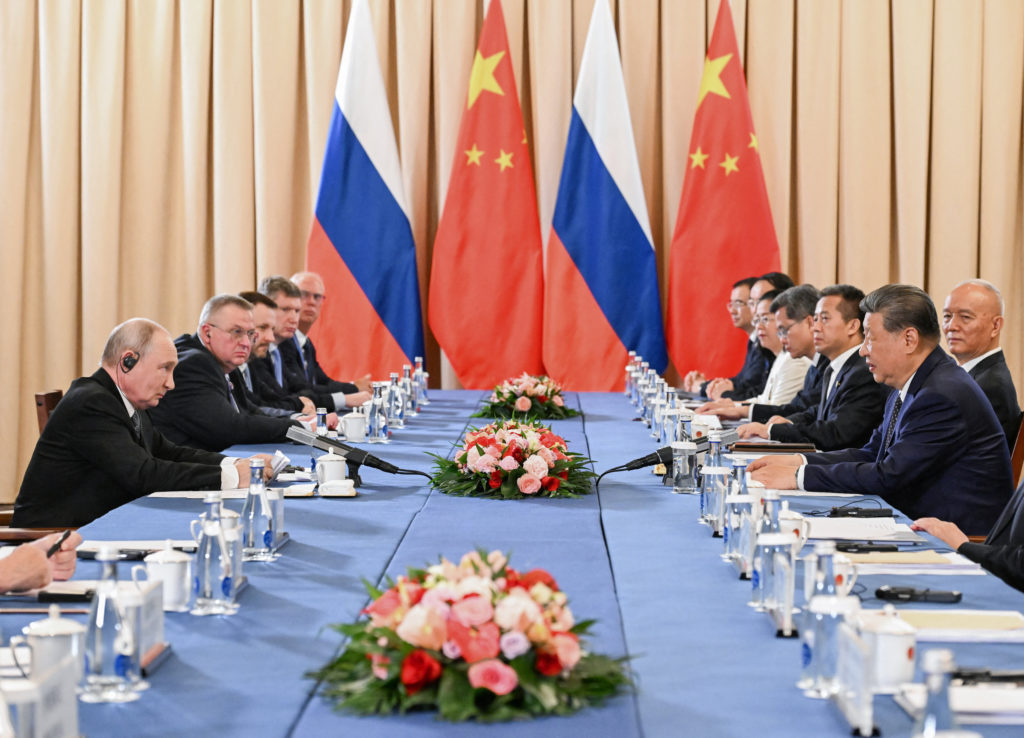
Russian President Vladimir Putin utilized the summit to reinforce bilateral relationships with key partners. In separate meetings, he discussed making visa-free travel with China permanent and highlighted the strengthening ties between Moscow and New Delhi. These interactions occurred against a backdrop of prolonged conflict; Russia remains engaged in its invasion of Ukraine, while Iran is involved in hostilities with the United States and Israel. For these nations, the SCO provides a critical venue to maintain and deepen connections with allies outside the Western sphere.
Indian Prime Minister Narendra Modi addressed the issue of the war in Ukraine during his discussions with Putin. Through a translator, he emphasized the necessity of transitioning from prolonged conflict to a cessation of hostilities, framing this resolution as vital for global stability. This stance reflects India’s complex position within the bloc. While New Delhi seeks to project itself as a responsible stakeholder and reliable partner, it must navigate its membership in an organization heavily influenced by Beijing and including Pakistan, both of which are strategic rivals.
Analysts suggest that for India, participation in the SCO is driven more by optics and strategic signaling than by expectations of substantive policy outcomes. The forum offers New Delhi a seat at the table in a region increasingly shaped by competition among major powers. It allows Indian officials to track geopolitical currents, protect national interests, and hedge their positions relative to other global actors. This engagement enables India to maintain visibility and influence without fully committing to the bloc’s broader ideological goals.
Turkey also seeks to leverage its dialogue partner status within the SCO to enhance its regional standing. President Recep Tayyip Erdogan has expressed a desire for full membership, viewing it as part of a balanced foreign policy that preserves traditional NATO ties while expanding influence in Eurasia. This strategy comes as Turkey’s bid for European Union membership remains stalled after more than two decades. The country aims to use the platform to strengthen its position in Central Asia and beyond, despite its close trade relationships with the EU.
The Shanghai Cooperation Organization was established in 2001 by China, Russia, and four Central Asian states as a security forum. Over the past twenty-five years, it has expanded to include ten member nations: Russia, China, India, Iran, Pakistan, Belarus, Kazakhstan, Kyrgyzstan, Tajikistan, and Uzbekistan. Many other countries hold dialogue partner status. Despite its growth in size, the organization’s goals remain vague, and its brand recognition is relatively low compared to Western-aligned groups like the G7.
China has consistently promoted the SCO as an alternative to Western-dominated institutions, pledging development and financial assistance to expand its scope and influence. Beijing describes the organization as having successfully explored a new path for regional cooperation. However, experts note that the SCO is not a unified political or military bloc. Its members possess significant disagreements and distinct national interests, limiting the group’s ability to act cohesively on major international issues.
Security measures in Bishkek were extensive during the summit. Major shopping malls, markets, and other public sites were closed for the duration of the event. Commercial flights to and from Manas Airport faced restrictions, and traffic in central areas was regularly limited. Authorities urged residents to leave the city, postponed the start of the school year until mid-September, and declared a non-working day for public sector employees. These disruptions highlight the high profile of the gathering and the host nation’s commitment to ensuring the safety of visiting dignitaries.
The summit illustrates the broader trend of nations seeking to diversify their diplomatic engagements in an increasingly multipolar world. While the SCO may not offer a cohesive alternative to Western institutions, it provides a platform for countries to signal independence from traditional alliances. The interactions in Bishkek reflect the complex interplay of cooperation and competition that defines contemporary international relations, with each member pursuing its own agenda within the framework of the organization.
As the summit concluded, the focus shifted to the practical implications of the agreements and statements made. While no major breakthroughs were announced, the event reinforced the importance of regional diplomacy in addressing global challenges. The SCO’s future trajectory will depend on its ability to reconcile the diverse interests of its members while maintaining relevance in a rapidly changing geopolitical landscape. For now, it remains a significant, if imperfect, forum for non-Western cooperation.
Sources behind this briefing
Go to the original reporting
- PBS NewsHour↗Leaders of China, Russia, India among world leaders meeting at summit to counter U.S. influence

