The short version
- The AfD leads polls in Saxony-Anhalt with support between 40 and 42 percent, raising the possibility of its first absolute majority at the state level.
- Mainstream parties face a strategic dilemma as they attempt to block an AfD-led government through coalitions or minority arrangements without crossing political firewalls.
- The party has outlined sweeping policy changes including education reforms, migration enforcement, and environmental restrictions if it assumes power.
Germany faces a pivotal moment in its domestic politics as voters in Saxony-Anhalt head to the polls this Sunday. The state election is widely viewed as a critical test for the federal government led by Chancellor Friedrich Merz, whose term has been defined by a series of political setbacks. With approximately 1.7 million eligible voters participating, the outcome could significantly alter the national political landscape and set the stage for two additional state elections in Mecklenburg-Vorpommern and Berlin later this month.
Current polling data indicates that the Alternative for Deutschland (AfD) is on track to make substantial gains. Surveys place the party’s support between 40 and 42 percent, positioning it within reach of an absolute majority. Such a victory would mark the first time since the Nazi era that a far-right party has governed a German state. This development carries significant weight because state governments hold considerable influence over national policy through their representation in the Bundesrat, the upper house of parliament, which oversees matters including education, culture, and domestic security.
The AfD’s potential rise to power presents a complex challenge for mainstream political parties. Traditionally, these groups have maintained a strict firewall against collaborating with the far-right. However, this barrier becomes irrelevant if the AfD secures an outright majority. If the party falls short of that threshold, the CDU and other established parties must determine whether they can form a coalition or support a minority government to prevent an AfD-led administration. The Social Democrats and Greens have indicated they may join forces with the CDU if necessary, while the far-left Die Linke might offer support primarily to avoid being blamed for enabling the AfD.
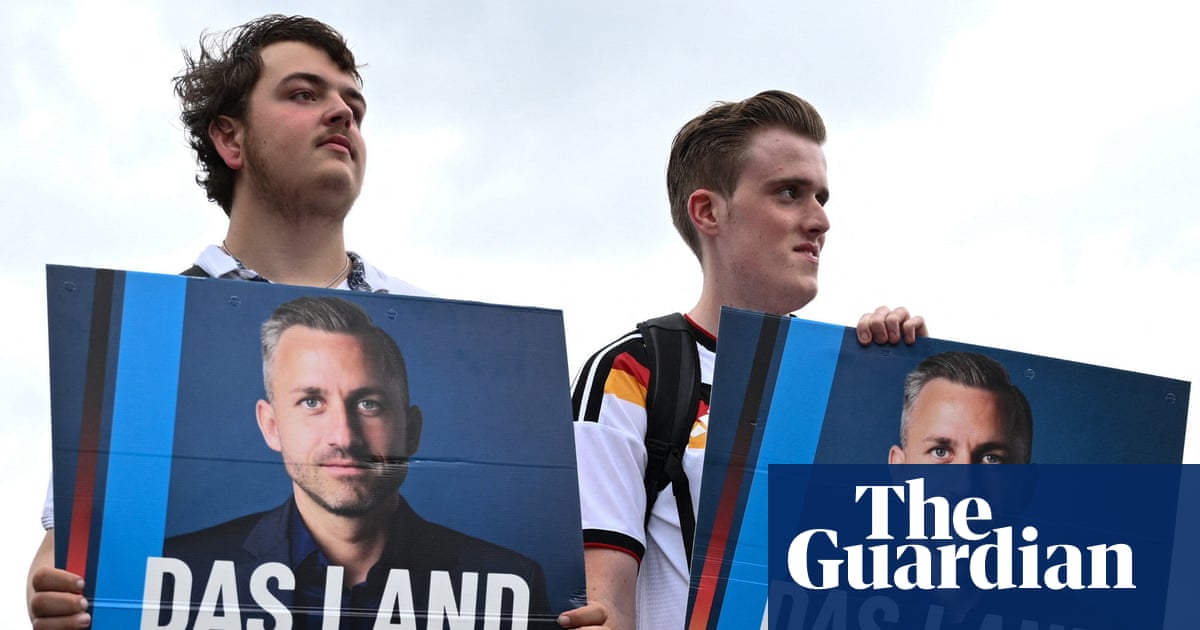
Ulrich Siegmund, the party’s prominent candidate, has emerged as a central figure in this campaign. A 36-year-old former air freshener salesman with a background in business psychology, Siegmund has cultivated a significant following on social media platforms like TikTok. His charismatic style and use of nostalgic imagery, such as riding a pre-unification era moped, have resonated with supporters who view him as a refreshing alternative to traditional politicians. Despite being labeled by some media outlets as a dangerous figure, he has leveraged this attention to boost his profile at rallies across the state.
If elected, the AfD has pledged to implement a wide range of policy changes that reflect its nationalist and anti-immigrant platform. On migration, the party intends to begin deporting irregular migrants immediately. It also plans to replace the state’s current promotional slogan with one emphasizing German identity and restrict funding for public broadcasters it considers biased. In education, proposals include removing rainbow flags from schools, mandating national anthem singing, and separating children of asylum seekers into distinct classes.
Further educational reforms proposed by the AfD involve allowing homeschooling, a practice previously banned in Germany as a reaction to the Nazi period. The party also seeks to revise history curricula to reduce focus on the Nazi era and expand Russian language instruction. Additionally, programs aimed at combating right-wing extremism would be eliminated. These changes represent a significant shift from current state policies and reflect the party’s broader ideological goals.
On environmental issues, the AfD advocates for banning wind farms, contradicting Germany’s ongoing efforts to transition to renewable energy sources. In contrast, the party supports family-friendly measures such as providing financial incentives for couples with children, reducing childcare costs, and offering free school meals. These policies aim to boost the birthrate and appeal to voters concerned about demographic changes.
Security policy is another area where the AfD proposes major reforms. The party wants to overhaul the domestic intelligence agency, which has classified its Saxony-Anhalt branch as right-wing extremist. It also suggests creating citizen watch groups to assist police in combating left-wing extremism. Critics have drawn parallels between these proposals and auxiliary police structures established during the Nazi regime, raising concerns about the potential erosion of civil liberties.
The complexity of German election law adds another layer of uncertainty to the outcome. The AfD’s ability to form a government depends not only on its own vote share but also on whether smaller parties meet the 5 percent threshold required for parliamentary entry. If these parties fail to qualify, the AfD could potentially govern with less than 50 percent of the vote. This scenario underscores the delicate balance of power and the strategic calculations facing all political actors in Saxony-Anhalt.
As the election approaches, the stakes extend beyond Saxony-Anhalt. The results will likely influence the trajectory of German politics leading up to the next federal election in 2029. For the AfD, success at the state level serves as a springboard for national ambitions. For mainstream parties, it represents an opportunity to demonstrate resilience and unity in the face of growing far-right support. The coming days will reveal whether the political firewall holds or if Germany enters a new era of governance.
Sources behind this briefing
Go to the original reporting
- The Guardian US↗All eyes on Saxony-Anhalt – what will AfD do if it wins German state poll?

