The short version
- The Saudi-led coalition has initiated Operation Dawn of Yemen, deploying approximately one hundred fighter jets to strike Houthi targets across multiple regions.
- Southern Transitional Council-aligned forces have joined the offensive on the ground, signaling a diplomatic thaw between Riyadh and Abu Dhabi after months of tension.
- Houthi officials deny reports of retreat and highlight their capacity to threaten Saudi infrastructure, while international partners discuss defense cooperation.
A significant military escalation has unfolded in Yemen as the Saudi-led coalition announced the commencement of a broad air campaign against Houthi rebels. Designated as Operation Dawn of Yemen, the initiative involves roughly one hundred fighter jets targeting positions along the Red Sea coastline and extending northward to the capital, Sana’a. Coalition officials state that the operation aims to provide air protection for the strategic Bab al-Mandab strait while destroying hundreds of rebel targets. The strikes represent a concerted effort to support Yemen’s internationally recognized government against the Iran-backed Houthi movement, which has made rapid territorial gains in recent weeks.
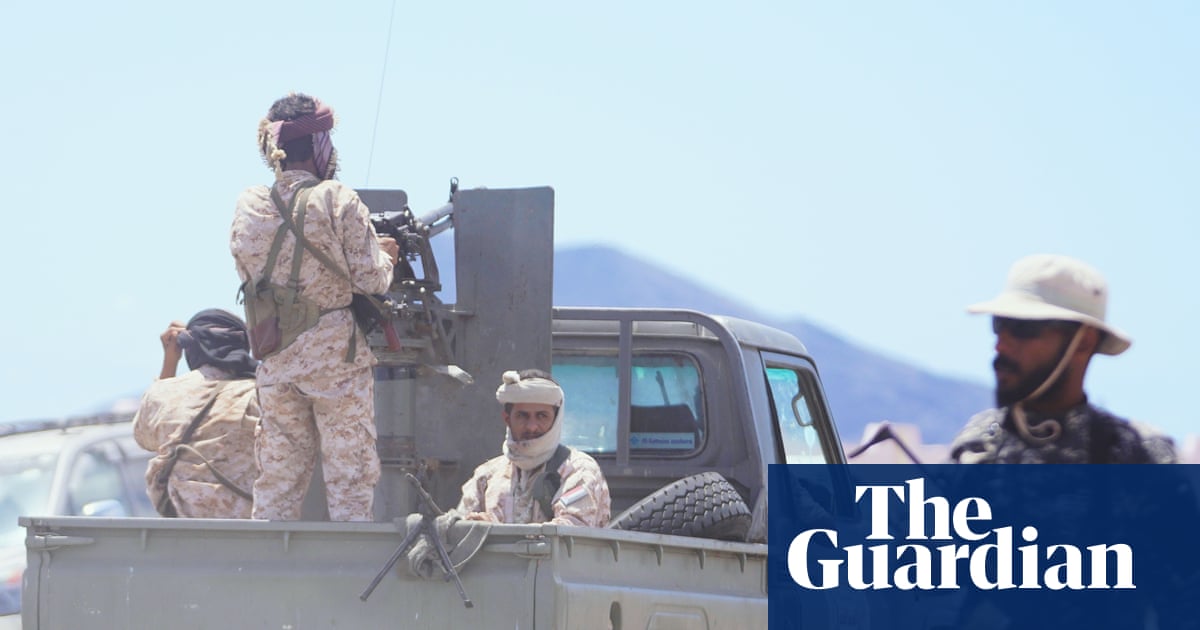
On the ground, forces allied with the recognized government have launched an offensive on the eastern flank of coastal areas recently seized by the Houthis. These troops, known as the Giants Brigades, claim to have severed the road link between Mocha and Dhubab, a district near the strait. Coalition spokesperson Maj Gen Turki al-Maliki reported that hundreds of Houthi fighters are besieged in Dhubab, including near the airport, with some rebels reportedly fleeing across the Red Sea by boat. Residents in affected areas have remained indoors as fighting intensifies, and government forces assert that Houthi units are deserting the city of Mocha.
The involvement of the Giants Brigades marks a notable shift in regional dynamics. These southern forces, linked to the Southern Transitional Council, had previously been at odds with Saudi Arabia. In January, Saudi airstrikes on UAE arms shipments destined for STC-backed forces triggered a diplomatic rift, leading to the UAE’s withdrawal from Yemen and the dissolution of the STC. The current cooperation suggests a political agreement between Saudi Arabia and the United Arab Emirates, allowing for coordinated military action. However, it remains unclear what concessions, if any, Riyadh has made regarding the future governance of southern Yemen or the status of the secessionist movement.
Airstrikes have also been reported in Sana’a and Saada, a northern stronghold of the Houthi movement. Targets included command and control centers, military camps, and weapons depots. The Houthis, who captured Sana’a in 2014, have recently advanced down the west coast, reaching the Bab al-Mandab strait and seizing strategic islands. Despite coalition claims of territorial losses, Houthi sources denied reports of a retreat on Monday. Instead, they pointed to recent explosions at a Saudi Aramco plant in Riyadh as evidence of their continued ability to inflict damage on exposed oil installations and potentially disrupt the global economy.
International involvement in the conflict appears to be expanding. Houthi officials alleged that British fighter jets were supporting the Saudi air force with refueling operations, a claim consistent with prior announcements from the UK Ministry of Defence. Meanwhile, senior ministers from Pakistan, Turkey, and Saudi Arabia convened in Riyadh to discuss defense cooperation. The three nations have formed a joint defense pact aimed at protecting Saudi Arabia from Houthi threats, though the operational details of this agreement remain undisclosed.
The political implications of this offensive are complex. Rashad al-Alimi, president of the Saudi-backed government, declared that patience with the Houthis had run out, describing the current phase as decisive for the nation’s history. However, historical precedents suggest caution regarding coalition claims of territorial gains, which have often been partial or overstated in previous statements. While some footage appeared to corroborate reports of Houthi retreats near the seashore, the overall situation remains fluid and contested.
The cooperation between Saudi air power and southern ground forces represents a remarkable turnaround from earlier hostilities. The Giants Brigades have emphasized that no other ground forces supporting the recognized government are involved in this specific offensive. This exclusivity may reflect negotiated commitments regarding political influence in the south, even if the UAE does not formally return to Yemen. Supporters of Aidarous al-Zubaidi, the exiled leader of the STC, have vowed to hold demonstrations later this month advocating for a separate southern state, indicating that internal divisions within Yemen persist despite the current military alignment.
As the campaign progresses, the focus remains on securing the Bab al-Mandab strait, a critical chokepoint for global trade. The coalition’s ability to maintain air superiority and coordinate with ground forces will determine the immediate outcome of the offensive. However, long-term stability depends on resolving underlying political disputes between northern Houthi forces and southern separatists, as well as managing regional rivalries involving Saudi Arabia, the UAE, and Iran. The coming days will likely reveal whether this military push leads to a decisive shift in control or merely prolongs the conflict with renewed intensity.
Sources behind this briefing
Go to the original reporting
- The Guardian US↗Yemen air campaign against Houthis under way, says Saudi-led coalition

