The short version
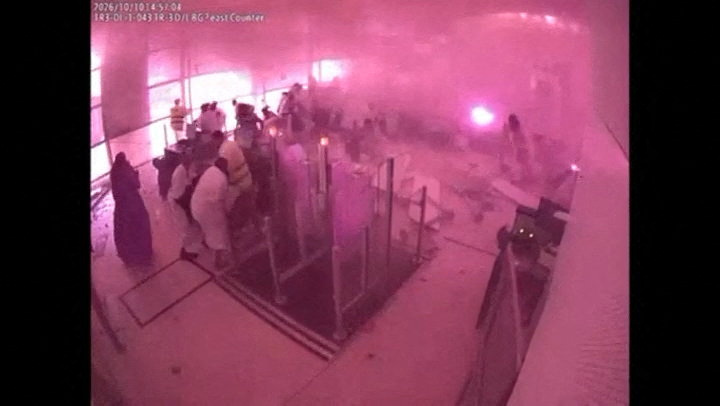
- Saudi officials launched an investigation after Houthi forces successfully struck Riyadh airport with missiles and drones, killing at least 13 people and injuring more than 300 others.
- The breach highlights vulnerabilities in Saudi air defense systems against advanced weaponry capable of altering flight paths, prompting calls for deeper U.S. involvement despite domestic political risks.
- Regional tensions have intensified as Gulf states seek unified security measures while the conflict threatens critical oil shipping lanes and complicates diplomatic efforts amid broader Middle East hostilities.
Saudi Arabia has initiated a formal investigation to determine why its air defense networks failed to intercept a coordinated barrage of missiles and drones launched by Iran-backed Houthi rebels. The probe follows a devastating strike on King Khalid International Airport in Riyadh that resulted in at least 13 deaths and injured over 300 individuals. Two regional officials, speaking on condition of anonymity due to restrictions on public commentary, indicated that initial findings suggest the Houthis employed a layered attack strategy. This involved firing multiple drones first to saturate or distract defenses, paving the way for cruise and ballistic missiles to reach their target.
The technical aspects of the breach are central to the ongoing inquiry. Officials noted that the Houthi arsenal includes advanced systems fitted with warheads capable of changing direction during flight. These maneuverable munitions pose significant challenges to existing interceptor technologies, such as Patriot missile systems used by Saudi forces. A key question for investigators is why early warning systems did not detect the incoming threat sooner, given that the projectiles traveled more than 1,000 kilometers from Yemen to reach the Saudi capital. The failure to stop the attack has exposed critical vulnerabilities in the kingdom’s defensive infrastructure.
This incident represents a dangerous escalation in a conflict that has expanded significantly over the past seven months, following the onset of hostilities between the United States and Israel against Iran. The successful penetration of Riyadh’s airspace signals a shift in the balance of power, demonstrating that Houthi forces can project lethal capability deep into Saudi territory. Prince Abdul Aziz bin Salman, the Saudi Energy Minister, addressed the severity of the situation at the World Petroleum Energy Congress in Riyadh. He stated that recent events are serious and emphasized that the kingdom’s response must be equally robust, though he did not specify what measures would be taken.
The attack has intensified pressure on Washington to increase its direct involvement in the region. While the United States has provided intelligence sharing, target identification, and planning support for Saudi-led operations, it has thus far refrained from conducting direct strikes against Houthi positions. President Donald Trump indicated that he is considering the possibility of U.S. attacks against the Houthis following the deadly airport strike. However, any expansion of American military engagement carries significant risks, particularly regarding regional stability and domestic political fallout.
Domestic political considerations in the United States complicate the decision to escalate. With midterm elections approaching, President Trump faces scrutiny over persistent inflation and high gas prices, which have been exacerbated by the ongoing conflict with Iran. Widespread American disapproval of the war has grown, and further military involvement could stoke additional resentment among voters. The potential for U.S. intervention is also weighed against the risk that it might prompt Houthi forces to intensify efforts to disrupt shipping through the Bab el-Mandeb Strait, a critical chokepoint at the southern end of the Red Sea.
Global energy markets are already strained by Iranian attempts to restrict flow through the Strait of Hormuz, through which approximately one-fifth of the world’s oil passed before the current conflict began. The Houthis seized key areas along the Bab el-Mandeb last month, and a Saudi-led coalition supporting Yemen’s internationally recognized government has been attempting to reclaim these positions. Any further disruption to shipping lanes could restrict the flow of oil out of the Persian Gulf, leading to higher energy prices and economic instability worldwide. The intersection of military conflict and energy security remains a primary concern for international markets.
In response to the escalating threats, Gulf states are calling for greater regional cooperation. Anwar Gargash, a diplomatic adviser to the rulers of the United Arab Emirates, argued that Iran and its allies have incorrectly assessed Gulf Arabs as the weakest link in the broader conflict. He emphasized that security in the region is indivisible and that all Gulf countries are now targeted. Gargash called for joint Gulf action to defend against attacks by Iran and its allied groups, suggesting a shift toward more unified regional defense strategies rather than relying solely on external powers.
The immediate aftermath of the attack has disrupted daily life in Riyadh. The airport remained closed as of Monday, and workers in the capital’s financial district were instructed to work from home. Despite the security crisis, Saudi authorities proceeded with the second day of the World Petroleum Congress, signaling an attempt to maintain normalcy in key economic sectors. Meanwhile, Houthi-run health officials reported that Saudi airstrikes on a government complex and a residence in the northern province of al-Jawf killed nine people, including five children and a woman. Additional strikes on the Yemeni capital of Sanaa reportedly killed one person and wounded twelve others.
The situation remains fluid as both sides continue to exchange fire. Saudi state-run media reported that the military was responding to new attacks involving drones and cruise missiles, though specific details were not provided. The Center for International Communication, which oversees foreign media in Saudi Arabia, did not immediately respond to requests for comment regarding the defense probe. As the investigation unfolds, the focus remains on understanding how the defenses failed and what steps will be taken to prevent similar breaches in the future, while balancing the need for security with the risks of further regional escalation.
The broader implications of this event extend beyond immediate military tactics. The breach underscores the limitations of current air defense systems against asymmetric threats employing advanced maneuvering technology. It also highlights the interconnected nature of Middle Eastern conflicts, where actions by non-state actors can have profound impacts on national security and global economics. As Saudi Arabia seeks to bolster its defenses and potentially deepen ties with U.S. military assets, the region faces a precarious period where diplomatic solutions appear distant and military posturing continues to rise.
Sources behind this briefing
Go to the original reporting
- PBS NewsHour↗Saudis probe how defense systems failed to stop deadly Houthi attack on Riyadh airport