The short version
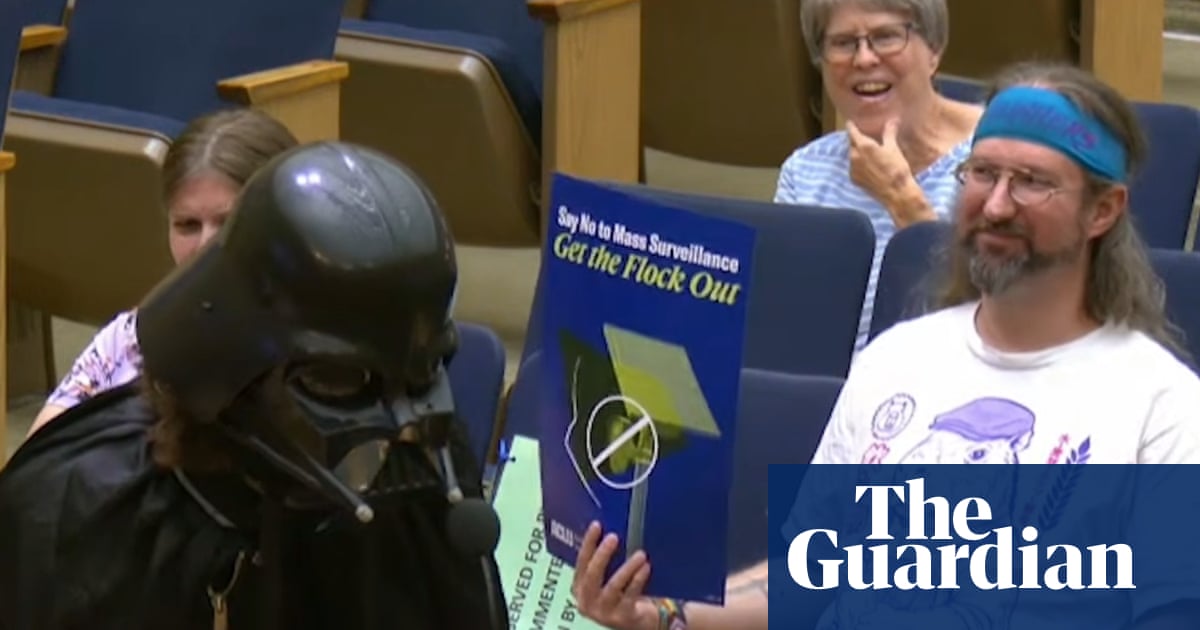
- An individual dressed as Darth Vader addressed the San Diego City Council to dramatize concerns about Flock Safety’s automated license plate reader technology.
- Critics point to wrongful arrests and misuse cases, while approximately one hundred municipalities have recently canceled or rejected contracts with the company.
- Flock Safety has introduced new audit requirements for law enforcement agencies, though legal experts argue these measures may not adequately address privacy risks.
A theatrical protest at a San Diego public safety committee meeting this week brought renewed attention to the controversy surrounding Flock Safety’s automated license plate reader network. An individual wearing a Darth Vader costume addressed council members, using the Star Wars villain persona to critique the surveillance infrastructure that the city continues to fund and operate. The performer framed the technology as a tool for oppressive monitoring, suggesting it enables authorities to track citizens with the same intensity depicted in science fiction narratives about imperial control.
The speaker emphasized fears that the cameras could be used to monitor innocent daily activities, such as children moving between playgrounds, pools, and gyms. The performance also highlighted potential for personal misuse, referencing a recent case in Louisiana where a sheriff’s deputy was terminated after using the system to track his former fiancée’s vehicle thousands of times. By adopting this dramatic approach, the protester sought to illustrate how easily surveillance tools designed for public safety could be repurposed for stalking or harassment.
Flock Safety, headquartered in Atlanta, markets its network as a critical asset for law enforcement operations. The company highlights successes in recovering stolen vehicles and locating missing persons on its official website. San Diego officials voted in December to maintain their contract with the provider, indicating continued institutional support for the technology despite growing public skepticism. City leaders appear to prioritize the operational benefits of rapid vehicle identification over the privacy concerns raised by community members and advocacy groups.
However, recent incidents have intensified scrutiny of the system’s reliability and ethical implications. In San Diego itself, a man was incarcerated for one month after a Flock camera incorrectly linked his vehicle to an attempted violent carjacking. This wrongful detention underscores the serious consequences that can arise from false positives in automated recognition systems. Such errors challenge the assumption that technological efficiency equates to justice, raising questions about due process when algorithms make initial determinations of criminal activity.
The backlash against Flock Safety is expanding beyond San Diego. According to DeFlock, a grassroots organization dedicated to opposing mass surveillance, approximately one hundred municipalities have deactivated, canceled, or rejected contracts with the company as of August 2026. This trend reflects a broader shift in local governance attitudes toward privacy-preserving policies. Some communities are choosing to distance themselves from vendors associated with controversial data collection practices, signaling a potential decline in market share for automated license plate reader providers.
In response to mounting criticism, Flock Safety announced new policy measures in August aimed at reducing misuse of its platform. These updates include a requirement for law enforcement agencies to implement an audit assistance feature by the end of the year. The company frames these changes as steps toward greater accountability and transparency in how surveillance data is accessed and utilized. However, legal experts have expressed skepticism about the effectiveness of these reforms, describing them as insufficient to fully mitigate privacy risks or prevent unauthorized access.
The tension between security objectives and civil liberties remains unresolved. While some residents view the cameras as essential for solving crimes and protecting vulnerable populations, others see them as instruments of pervasive government oversight. The Darth Vader protest serves as a cultural marker of this divide, translating abstract policy debates into tangible imagery that resonates with public anxieties about freedom and privacy. As more cities evaluate their surveillance contracts, the outcome in San Diego may influence decisions elsewhere.
What comes next depends on how local governments balance these competing interests. If Flock Safety’s new audit features fail to satisfy critics, pressure for further restrictions or complete removal of the cameras could intensify. Conversely, if no significant improvements are perceived, support for the technology may erode among both voters and elected officials. The situation illustrates the complex challenges of integrating advanced surveillance tools into democratic societies without compromising fundamental rights.
The identity of the protester remains unknown, adding an element of mystery to the event but also emphasizing the widespread nature of dissent. Whether organized by a specific advocacy group or undertaken by an independent citizen, the stunt succeeded in drawing media attention to issues that might otherwise remain buried in technical committee discussions. As public discourse evolves, the role of symbolic protest in shaping policy outcomes will likely continue to be tested.
Ultimately, the debate over Flock Safety cameras reflects larger societal questions about the acceptable limits of state surveillance in the digital age. Residents demand transparency and accountability from both technology providers and law enforcement agencies. Until these concerns are adequately addressed, conflicts between security measures and privacy protections are expected to persist, influencing legislative actions and community engagement across the country.
Sources behind this briefing
Go to the original reporting
- The Guardian World↗‘Darth Vader’ comes out in favor of Flock cameras at San Diego city council meeting