The short version
- Luca Olmetto was extracted alive after being trapped for approximately 26 hours following a rockslide that sealed the cave entrance.
- His girlfriend escaped unharmed and alerted authorities, prompting a response involving dozens of speleological experts and firefighters.
- The incident underscores the dangers of exploring largely unmapped natural cavities in Italy's rugged mountain ranges.
A thirty-one-year-old explorer has been successfully rescued from a cave on the Italian island of Sardinia after being trapped underground for roughly twenty-six hours. The incident occurred on Sunday afternoon when a rockslide struck the Gorroppeddu cave, located within the Urzulei mountain range in central-eastern Sardinia. Luca Olmetto was positioned approximately ten meters below ground level when the collapse happened, which completely sealed the entrance to the cavity.
Olmetto had been exploring the site with his girlfriend at the time of the accident. She was situated a few meters behind him and narrowly avoided being caught in the debris. After escaping unharmed, she immediately raised the alarm, initiating a rapid response from local emergency services. The timing of her escape proved critical, as it allowed authorities to begin assessing the situation before conditions deteriorated further for the trapped caver.
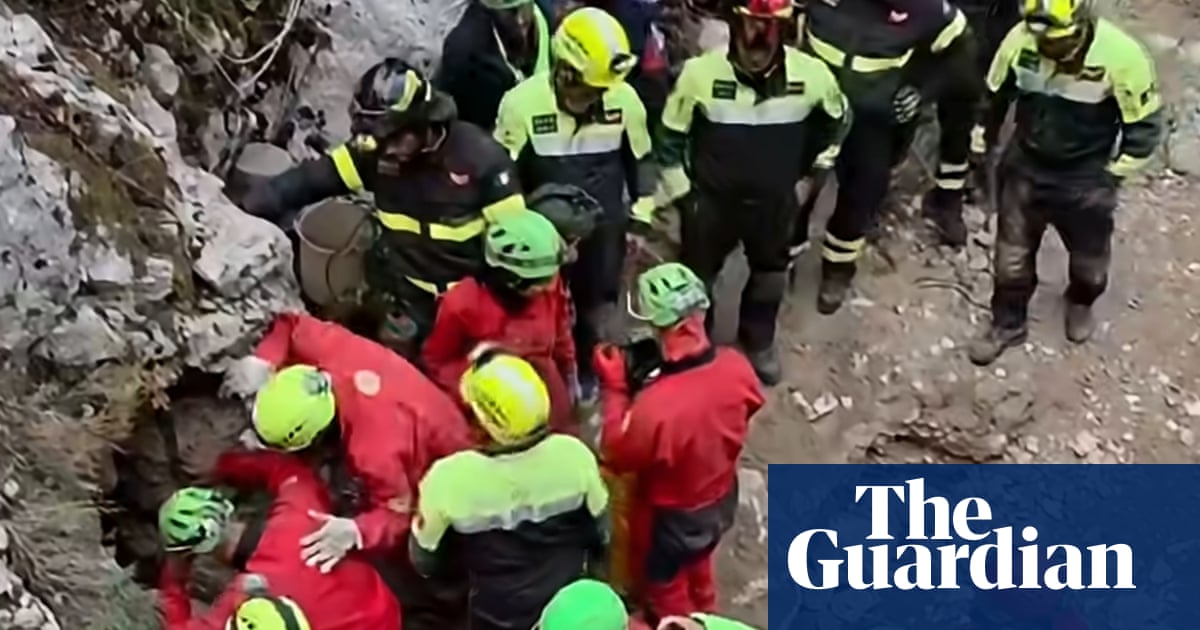
The rescue effort required a significant deployment of personnel and resources. Approximately forty-eight specialists from Sardinia’s Alpine and Speleological Rescue Corps joined forces with thirty firefighters and civil protection staff. These teams worked continuously over two days to navigate the hazardous environment. A helicopter was also utilized to transport necessary materials and equipment to the remote site, ensuring that rescuers had the tools needed to secure the area and proceed with the extraction.
Accessing Olmetto proved difficult due to the narrow passages and the volume of rubble blocking the way. Rescuers spent hours manually removing earth and rocks to create a viable path. By late Monday afternoon, they reached the explorer, who remained conscious and responsive throughout the ordeal. Medical personnel stabilized him at the scene before he was airlifted to a hospital just after 6 p.m. Central European Time.
The Gorroppeddu cave is described as a largely unexplored natural cavity, which likely contributed to the complexity of the operation. Unlike well-mapped tourist sites, such locations often lack established safety protocols or clear exit routes. The rugged terrain of the Urzulei range further complicated logistics, requiring specialized knowledge in both alpine and speleological rescue techniques.
Local officials expressed deep concern during the crisis. The council of Codrongianos, the town in north-west Sardinia where Olmetto resides, stated that the community experienced significant anxiety over the past twenty-four hours. In a social media message, they conveyed their support for Olmetto and his family while thanking the rescuers for their tireless efforts. The statement reflected the widespread attention the incident garnered among residents.
This event echoes a similar high-profile rescue in Italy from December 2024. At that time, Ottavia Piana, a thirty-two-year-old explorer, became trapped in the Bueno Fonteno caves near Bergamo in northern Italy. She remained underground at a depth of roughly six hundred meters for seventy-five hours before being freed. Her rescue involved one hundred sixty specialists and resulted in serious injuries, including fractured vertebrae, ribs, and facial bones.
While Olmetto’s ordeal was shorter and less severe in terms of physical trauma reported so far, both incidents highlight the inherent dangers of caving in Italy. The country’s diverse geological landscape offers numerous opportunities for exploration but also presents significant risks. Authorities continue to monitor such activities closely, emphasizing the need for proper preparation and communication when venturing into uncharted territories.
As Olmetto recovers, the focus shifts to analyzing the causes of the rockslide. Geological factors, weather conditions, or natural erosion could have played a role in the collapse. Understanding these elements may help prevent future incidents in similar environments. For now, the successful rescue stands as a testament to the coordination and skill of Italy’s emergency response teams.
The incident serves as a reminder of the unpredictable nature of outdoor adventures. Even experienced explorers can face sudden dangers when entering unstable or unmapped areas. Public awareness campaigns may benefit from highlighting these risks, encouraging safer practices among enthusiasts. Meanwhile, the community of Codrongianos awaits further updates on Olmetto’s health and recovery.
Sources behind this briefing
Go to the original reporting
- The Guardian US↗Man rescued from cave on Sardinia after being trapped by rockslide for 26 hours