The short version
- Senator Bernie Sanders announced he will not support Chuck Schumer for re-election as Senate Democratic leader, citing a need for generational change.
- A coalition of incoming senators from swing states has joined the call for new leadership, though no clear successor has yet emerged to challenge Schumer directly.
- Schumer remains confident in his position, asserting that the caucus is united behind his agenda despite growing internal pressure for a leadership transition.
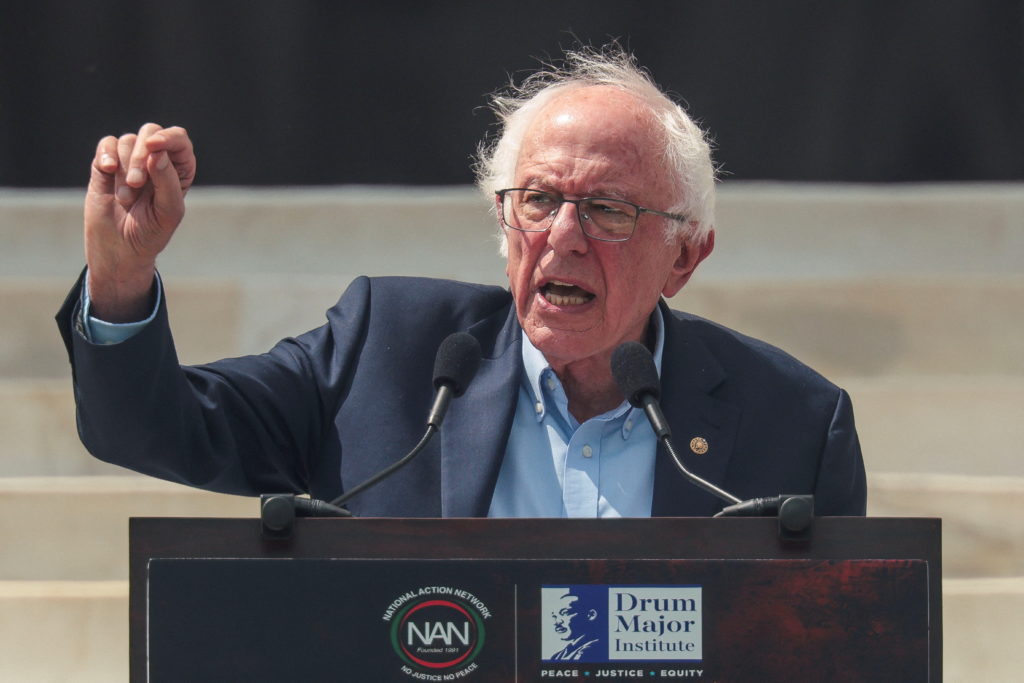
Senator Bernie Sanders declared on Tuesday that he will not endorse Chuck Schumer for re-election as the Senate Democratic leader, marking a significant escalation in internal party tensions following the Democrats’ sweeping victory in the midterm elections. The Vermont independent, who caucuses with the Democratic Party, joined Senator Elissa Slotkin of Michigan at a Capitol news conference to argue that the electoral mandate requires a fresh approach to governance and party direction.
Sanders emphasized that while he respects Schumer’s work ethic, the political landscape has shifted dramatically. He stated that the campaign was fundamentally about change and that the Democratic Party must now move in a bold new direction. This public break from the current leadership sets the stage for what analysts describe as a seismic confrontation within the caucus, particularly given the party’s expanded majority.
The push for leadership change is not limited to the progressive wing of the party. Slotkin, a moderate from a key battleground state, indicated that she would withhold support until potential leaders present comprehensive plans for the new majority. She noted that voters clearly signaled a desire for change on election night, suggesting that the current leadership structure may no longer align with the electorate’s expectations.
A growing number of incoming senators have echoed these sentiments, signaling their intent to back candidates other than Schumer. This group includes Abdul El-Sayed from Michigan, Adam Hamilton from Kansas, Annie Andrews from South Carolina, Chris Pappas from New Hampshire, Troy Jackson from Maine, and Peggy Flanagan from Minnesota. Many of these newly elected officials defeated candidates backed by Schumer or his allies in primary contests, further fueling arguments that the party’s base is seeking different representation.
Senator Chris Van Hollen of Maryland has emerged as a potential contender for the leadership role, though he has not formally announced a campaign. Van Hollen stated that he is currently reaching out to colleagues to gauge interest and support for a leadership transition. He argued that the election results should not be treated as an automatic coronation for Schumer, but rather as an opportunity for the caucus to engage in democratic deliberation about its future.
Despite the mounting pressure, Schumer has shown no signs of stepping aside. The New York senator expressed confidence that he will retain his position, asserting that the caucus remains united behind his priorities. He emphasized the need to focus on practical legislative goals, including reducing costs, combating corruption, and addressing foreign policy challenges such as ongoing conflicts abroad.
Kirsten Gillibrand, chair of the Democratic Senatorial Campaign Committee, offered a strong defense of Schumer’s leadership. She highlighted the gratitude many in the caucus feel toward his efforts in securing the majority, noting that his strategic recruitment of high-profile candidates played a crucial role in flipping seats in states like Ohio and North Carolina. Her comments underscore the divide between those who credit Schumer with the victory and those who believe the win belongs to a broader movement for change.
The leadership contest is expected to intensify as Democrats begin formal discussions ahead of elections scheduled for later this month. While Republicans have already convened behind closed doors to select their leaders, Democrats are just beginning these conversations. The outcome will likely shape the party’s legislative agenda and its approach to governing in a new Congress where progressives hold significant influence.
Uncertainty remains regarding how much backing any challenger can muster against Schumer’s entrenched position. Van Hollen acknowledged that it is unclear whether he has sufficient support to win, while Slotkin made clear she is not actively seeking the job herself. The coming weeks will be critical in determining whether the party embraces a new generation of leadership or maintains the status quo under Schumer’s guidance.
This leadership struggle reflects broader questions about the Democratic Party’s identity and strategy in the post-midterm era. With a larger majority than initially anticipated, Democrats have the opportunity to pursue ambitious policy goals. However, internal divisions over who should lead that charge could complicate efforts to unify the caucus and deliver on campaign promises.
Sources behind this briefing
Go to the original reporting
- PBS NewsHour↗'The time is now for change.' Bernie Sanders won't support Schumer for Senate Democratic leader
- The Guardian World↗Bernie Sanders says he will not back Schumer for Senate Democratic leader


