The short version
- The deadline for extending Temporary Protected Status for Salvadorans passed without a public announcement from the Trump administration, creating confusion among affected families and legal advocates.
- While some hope for an automatic six-month extension under existing law, officials warn that protections could be terminated abruptly or at any time without prior notice.
- The decision carries significant economic weight for El Salvador, which relies heavily on remittances from the United States, even as its government has cooperated with U.S. deportation efforts.
A critical deadline regarding the immigration status of roughly 200,000 people from El Salvador passed without a definitive statement from the federal government, leaving these individuals and their employers in a state of suspended animation. The Department of Homeland Security has remained silent on whether it will extend Temporary Protected Status beyond the September expiration date, issuing only vague assurances that an announcement will come at an appropriate time. This lack of clarity has generated both cautious optimism among some advocates, who hope for another six-month extension, and deep anxiety among those who fear sudden termination of their legal standing.
Legal experts emphasize that the current silence does not constitute an official extension or a final decision by the department. Ben Johnson, director of the American Immigration Lawyers Association, clarified on social media that the administration is leaving TPS holders in limbo. Attorneys are warning clients that the government could eliminate protections without issuing a public statement or announce a decision at any moment. This ambiguity stands in contrast to the clear terminations issued for other nationalities during President Donald Trump’s second term, where over one million people from more than a dozen countries lost their protected status.
For many Salvadorans who have lived in the United States for decades, this uncertainty is personally devastating. Doris Landaverde, who entered the country illegally in 2000 before obtaining TPS status, now works legally as a cleaner at Harvard University to support herself and her two U.S.-born daughters. She describes the situation as frustrating and painful, noting that her family’s housing and healthcare depend entirely on her income. Without her work permit, she faces the prospect of losing her job and destabilizing her household, despite having followed all legal requirements for years.
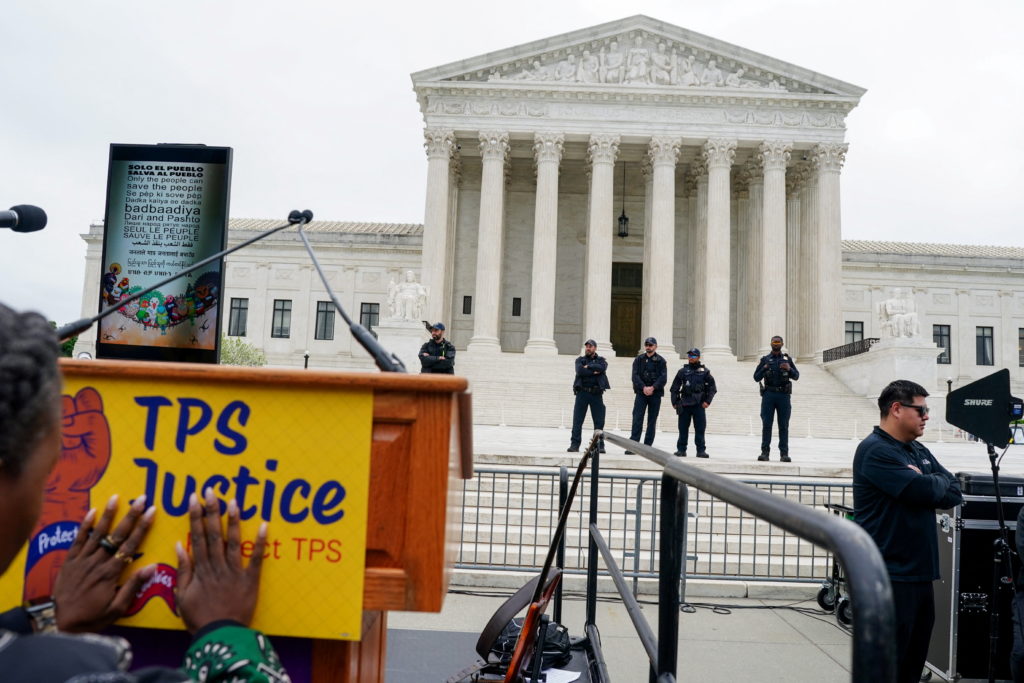
The broader context involves a significant shift in U.S. immigration enforcement under the current administration. Homeland Security has ended TPS for nationals from Venezuela, Haiti, Honduras, Nicaragua, Afghanistan, and Syria, among others. A major legal victory for the administration came in June when the Supreme Court ruled that it acted within its authority by ending protections for approximately 350,000 Haitians and 6,000 Syrians. Tom Homan, a senior border official, stated that the decision regarding El Salvador rests with Homeland Security Secretary Markwayne Mullin, arguing that TPS is inherently temporary and that conditions in El Salvador have improved significantly.
El Salvador’s transformation from one of the most violent nations in the Americas to one of the safest has been driven by President Nayib Bukele’s aggressive crackdown on organized crime since 2022. Homan cited this safety improvement as justification for ending protections, noting that the country is safer than it has ever been under its new leadership. However, human rights organizations have raised serious concerns about the methods used in this crackdown, citing reports of mass arbitrary arrests, torture, and disappearances within the prison system. These allegations complicate the assessment of whether conditions are truly safe for return.
The economic implications of a potential termination are substantial for El Salvador. Remittances from Salvadorans living in the United States totaled $9.9 billion last year, accounting for 24 percent of the country’s gross domestic product according to its central bank. Mass deportations could severely shock this economy, despite the cooperative relationship between Bukele and Trump. The two leaders have met twice in Washington since April, and El Salvador was among the first countries to receive deportees under the current administration, housing them in a large prison facility known as CECOT.
Under U.S. immigration law, TPS is automatically extended for six months if the government takes no action before the expiration date. This provision offers a glimmer of hope for those waiting for clarity, but attorneys caution that relying on this automatic extension may be risky given the administration’s track record. The status was originally granted to El Salvador following two devastating earthquakes in 2001 that left hundreds of thousands homeless. President Joe Biden extended it for 18 months just before leaving office, setting the current expiration date.
As the days pass without a formal announcement, the burden falls on individuals and their legal representatives to navigate an increasingly unpredictable landscape. While some remain protected from deportation under TPS, including approximately 103,000 people from Ukraine, Sudan, and Lebanon, the Salvadoran community faces a unique period of waiting. The outcome will depend on Secretary Mullin’s determination regarding current conditions in El Salvador and the administration’s broader immigration priorities. Until a decision is made, thousands of families remain unable to plan for their future with any degree of certainty.
Sources behind this briefing
Go to the original reporting
- PBS NewsHour↗200,000 Salvadoran immigrants hope for protection amid Trump administration silence

