The short version
- Aryna Sabalenka lost in the fourth round of the Cincinnati Open to unseeded Czech player Sara Bejlek, ending her title defense preparations early.
- The defeat places Sabalenka's world number one ranking in jeopardy, with Elena Rybakina poised to take the top spot if she reaches the final.
- Bejlek secured her first victory against a top-ten opponent and will advance to face Madison Keys in the quarter-finals.
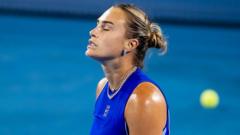
Aryna Sabalenka’s campaign to defend her US Open title encountered a severe setback on Wednesday, as the Belarusian star was eliminated from the Cincinnati Open by Sara Bejlek. The loss marks another stumble for the world number one during a period of inconsistent play that has raised concerns among observers and competitors alike. Sabalenka entered the match with high expectations given her status as the top seed, but she crumbled under pressure in a contest that saw Bejlek overturn significant deficits to secure a 7-6 (9-7) 6-4 victory.
The match itself was characterized by dramatic swings in momentum. Sabalenka appeared to be in control early on, leading 5-1 in the first-set tiebreak and holding a 4-1 advantage in the second set. However, Bejlek demonstrated remarkable resilience, rallying back on both occasions to win the crucial points. The Czech player’s ability to maintain composure while Sabalenka faltered highlighted a shift in form that has become increasingly evident over recent weeks. This performance was particularly notable because it represented Bejlek’s first-ever victory against a top-ten opponent.
For Bejlek, ranked 35th in the world, this result is a career milestone. The twenty-year-old advanced to her first WTA 1000 quarter-final, a stage of competition that few players reach in their early careers. Her path to this point has been unconventional; she won the Abu Dhabi hard court title in February as a qualifier, showcasing her potential on similar surfaces. Following the match, Bejlek expressed disbelief at her success, attributing her win to belief and persistence rather than tactical superiority. She emphasized that keeping faith in her game was the decisive factor in overcoming a much higher-ranked adversary.
The implications for Sabalenka are significant both immediately and in the longer term. Her position as world number one is now precarious. Elena Rybakina has the opportunity to replace Sabalenka at the top of the rankings if she manages to reach the final of the Cincinnati tournament. This potential shift underscores the volatility of the current tour landscape, where points accumulated in major events can rapidly alter the hierarchy. For Sabalenka, who is aiming to become the first woman since Serena Williams in 2014 to win three consecutive US Open titles, this loss removes a critical opportunity to build momentum before the New York major begins on August 30.
Sabalenka’s recent form has been far from ideal. Since securing the Sunshine Double at Indian Wells and Miami in March, she has reached only one semi-final, which ended in a loss to Jessica Pegula in Berlin. The pattern of early exits in both Cincinnati and Toronto suggests a deeper issue with consistency or preparation. Analysts have noted that her build-up to the US Open has been fraught with difficulties, contrasting sharply with the dominance she displayed earlier in the year. The inability to convert leads into wins in high-stakes matches is a recurring theme in these recent defeats.
In the men’s draw, another significant upset occurred as American Tommy Paul defeated top seed Alexander Zverev. The match was interrupted for ninety minutes due to rain, adding an extra layer of difficulty for both players. Zverev won the first set and held a match point at 6-5 in the second-set tiebreak, but he failed to convert it. Paul capitalized on this opportunity, forcing a deciding third set where he won four consecutive games to complete a 4-6 7-6 (8-6) 6-4 victory. This result sets up a quarter-final clash between Paul and Italy’s Flavio Cobolli.
The convergence of these results highlights the unpredictable nature of the current tennis season. Upsets involving top seeds are becoming more frequent, suggesting that the gap between the elite tier and the rest of the field may be narrowing. For Sabalenka, the path to New York is now fraught with uncertainty. She must address the issues that led to her collapse in Cincinnati if she hopes to mount a serious challenge for another Grand Slam title. The coming weeks will be critical in determining whether this slump is a temporary blip or a sign of a more profound decline in form.
Bejlek’s next opponent, Madison Keys, presents a formidable challenge. The former Australian Open champion brings her own power and experience to the court, making the quarter-final a difficult test for the young Czech. If Bejlek can continue her upward trajectory, she could become a dark horse contender in the tournament. Meanwhile, Sabalenka must regroup quickly, knowing that her ranking and confidence are both under threat. The US Open looms large, and without a strong showing in Cincinnati, her title defense looks increasingly unlikely to succeed.
As the tennis world turns its attention to New York, the narrative surrounding Sabalenka has shifted from dominance to doubt. Her ability to recover from this setback will be closely watched by fans and pundits alike. The loss to Bejlek serves as a stark reminder that no lead is safe in modern tennis, where determination and belief can often outweigh ranking points. For now, Sabalenka faces the difficult task of rebuilding her campaign while Rybakina moves closer to claiming the number one spot.
Sources behind this briefing
Go to the original reporting
- BBC News↗Sabalenka stunned by Bejlek as slump continues

