The short version
- Ryanair CEO Michael O'Leary issued a formal apology for describing competitors as 'high-fare rapists,' acknowledging the language caused significant distress to survivors of sexual violence.
- The executive had previously declined to apologize or accept training offered by the Dublin Rape Crisis Centre, arguing his comments did not trivialize the crime of rape.
- This incident adds to a history of controversial statements by O'Leary, including past remarks about airport owners and staff, raising questions about corporate communication standards.
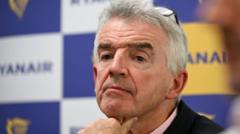
Michael O'Leary, the chief executive of Ryanair, has issued a formal apology for describing rival airlines as 'high-fare rapists,' a comment that sparked immediate criticism from victim advocacy groups. In a video statement released on Friday, O'Leary expressed regret for the language used during a media appearance earlier this month, ahead of the airline’s annual shareholder meeting. He stated that he is 'truly sorry' for the remarks, acknowledging that his choice of words caused considerable upset and offense to a wide number of people, particularly survivors of sexual assault.
The apology marks a significant shift in O'Leary’s stance. Following the initial backlash, he had refused to apologize to the Dublin Rape Crisis Centre (DRCC), which had written to him requesting an explanation and a formal expression of regret. At that time, O'Leary maintained that his comments were intended solely as a critique of competitor pricing strategies and did not diminish the severity of sexual violence. He argued that because he did not intend to trivialize the crime, he would not issue an apology or accept the center’s offer of educational training on the impact of sexual violence.
In his recent video address, O'Leary explained that he had spent the previous ten days engaging in conversations with family members and colleagues, both within and outside the company. These discussions led him to reconsider the implications of his language. He described his original phrasing as 'careless' and admitted that he failed to anticipate the distress it would cause. O'Leary emphasized that he intends to learn from this mistake and pledged that such language would not be used again in the future.
The controversy originated when O'Leary told journalists that some travelers are desperate for Ryanair’s low fares because they cannot afford to fly with competitors, whom he labeled 'high-fare rapists around Europe.' When pressed by a reporter from the Press Association on whether the terminology was appropriate, O'Leary initially defended his position. He stated that he would happily offend British Airways, Lufthansa, and other carriers on a regular basis due to their pricing structures. While acknowledging that rape is a 'terrible crime,' he insisted at the time that his remarks did not equate high ticket prices with sexual violence.
Rachel Morrogh, chief executive of the Dublin Rape Crisis Centre, had previously criticized O'Leary for what she described as an attempt to generate headlines through provocative language. In her correspondence with the airline boss, she noted that the center had received calls from rape victims who were upset and distressed by his comments. Morrogh urged O'Leary to understand the gravity of sexual violence, stating that he would likely avoid using such terms flippantly if he truly comprehended the experience of surviving rape. She offered training sessions to help him grasp the impact of his words, an offer he initially declined.
This incident is not an isolated example of O'Leary’s controversial public statements. The executive has a history of using provocative language in business disputes and media interactions. In 2004, during a dispute over airport charges at Stansted Airport, he reportedly referred to the airport owners as 'a bunch of overcharging rapists.' He has also made headlines for calling some of his own employees 'lazy bastards' and telling passengers seeking refunds that the company did not want to hear their 'sob stories.' These past remarks have contributed to a public perception of O'Leary as an unapologetic and confrontational figure in the aviation industry.
The airline has faced other regulatory and public relations challenges recently. In June, Ryanair announced it would reluctantly stop charging parents extra fees to sit next to their children on flights. This decision came after a watchdog investigation was opened into the practice. Despite the policy change, O'Leary insisted at the time that the previous seating arrangement had complied with all applicable laws. The company’s willingness to adjust policies under pressure contrasts with its initial resistance to apologizing for the 'high-fare rapists' comment, suggesting a complex approach to public relations and regulatory compliance.
The resolution of this controversy highlights the increasing sensitivity surrounding corporate language and its social impact. While O'Leary maintains that his intent was commercial criticism rather than trivialization of crime, the reaction from victim support groups underscores the potential harm of equating financial costs with violent acts. The apology serves as a corrective measure, but it also raises broader questions about accountability in executive communications. As Ryanair moves forward, the company will likely face continued scrutiny regarding how its leadership addresses public concerns and manages reputational risks.
Looking ahead, the airline must navigate the aftermath of this incident while maintaining its competitive positioning in the European market. The apology may help mitigate some of the negative publicity, but the long-term impact on brand perception remains uncertain. Stakeholders, including investors and customers, will be watching to see if this event leads to broader changes in corporate communication strategies. For now, O'Leary’s acknowledgment of error provides a degree of closure to the immediate controversy, though the underlying tensions between aggressive business tactics and social responsibility persist.
The case also illustrates the role of civil society organizations in holding corporate leaders accountable for their public statements. The Dublin Rape Crisis Centre’s intervention brought attention to the potential harm caused by careless language, prompting internal reflection within Ryanair. This dynamic suggests that advocacy groups can influence corporate behavior even when initial responses are defensive. As public awareness of social issues grows, executives may find themselves under greater pressure to align their rhetoric with broader societal values, regardless of their commercial intentions.
Sources behind this briefing
Go to the original reporting
- BBC Business↗Ryanair boss Michael O'Leary apologises over 'high-fare rapists' remarks