The short version
- President Vladimir Putin signed a decree allowing temporary state control over private infrastructure damaged by Ukrainian drones if owners neglect security or repairs.
- Officials describe the move as a targeted measure to compel businesses to fund their own air defense and restoration efforts rather than relying on government support.
- The policy emerges amid escalating attacks on Russian oil refineries and logistics hubs, which have caused significant economic disruption and public frustration.
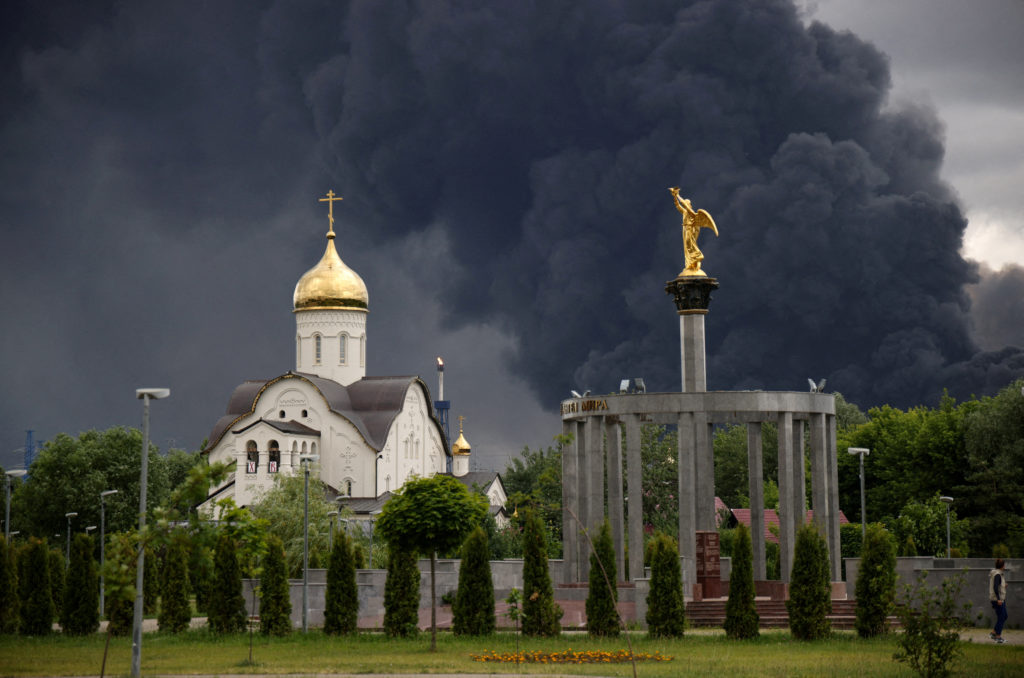
Russian President Vladimir Putin has issued a decree granting the state authority to temporarily assume control of critical infrastructure facilities. This power applies specifically when private owners fail to adequately protect these assets from Ukrainian drone attacks or neglect to rebuild them after strikes occur. The measure targets a broad range of sectors, including energy production, industrial operations, communications networks, and transportation logistics hubs.
The announcement arrives as Russia faces mounting economic pressure and public dissatisfaction following months of intensified Ukrainian aerial campaigns. These attacks have repeatedly struck oil refineries and major e-commerce distribution centers, leading to nationwide supply chain disruptions and fuel shortages. The Kremlin’s precise strategic objectives behind the decree remain somewhat opaque, but officials frame it as a necessary response to security failures by private entities.
Dmitry Peskov, spokesman for the Kremlin, stated that business owners frequently neglect sufficient measures to ensure safety against drone threats. He emphasized that the government must act to guarantee national security given the vulnerability of vital economic infrastructure. Deputy Prime Minister Denis Manturov clarified that the decree does not constitute nationalization or a permanent transfer of ownership. Instead, it involves state intervention in enterprise management solely to address specific security deficiencies.
Manturov added that the measure is not intended for widespread application. He indicated that decisions regarding which facilities fall under state control will be made carefully at the highest levels of government. This suggests a selective approach rather than a blanket seizure of private assets, aiming to minimize broader market disruption while addressing immediate security gaps in critical sectors.
Political analysts suggest the decree serves as a tactical lever to force compliance from business owners who have grown reluctant to invest in repairs. Abbas Gallyamov, a former speechwriter for Putin and current political analyst, noted that many oil refineries have been hit multiple times within a short period. He argued that owners may hesitate to spend billions on restoring facilities that could be destroyed again shortly after reopening.
Gallyamov characterized the government’s stance as an ultimatum: companies must finance their own restoration and security upgrades, or face state takeover. Chris Weafer, CEO of Macro-Advisory Ltd., echoed this interpretation, stating that the Kremlin aims to compel businesses to prioritize their own security expenditures. He noted that the state seeks to avoid additional budget burdens associated with repairing private businesses or providing direct security services.
Recent Ukrainian operations highlight the urgency driving this policy shift. Ukraine’s General Staff reported striking facilities at the Afipsky oil refinery in the Krasnodar region, causing significant fires. This marked the eighth time in a year that drones have targeted this specific site. Simultaneously, attacks damaged the Novoshakhtinsk oil refinery in the Rostov region, halting operations there for the fourth time in twelve months.
The broader economic context reveals deepening challenges for Russian businesses as the conflict enters its fifth year. The government has raised taxes and increased domestic borrowing to manage budget deficits, making additional state spending on private sector protection financially unattractive. Seizing damaged assets could theoretically generate revenue, but it also risks imposing new financial liabilities on the state if repairs are required.
In a parallel effort to stabilize key economic players, the Finance Ministry proposed extending deadlines for tax and insurance payments for Wildberries, Russia’s largest online retailer, and its thousands of partner sellers. These entities have suffered heavy losses from repeated strikes on warehouses. This relief measure contrasts with the stricter approach taken toward industrial infrastructure, indicating a nuanced strategy in managing war-related economic shocks.
President Putin recently told state television that Russia must improve its air defense system and enhance coordination between military, law enforcement, and civilian agencies. The new decree appears to be part of this broader directive, shifting some responsibility for air defense from the state to private owners while retaining the threat of intervention as a disciplinary tool. The long-term impact on investment confidence and operational continuity remains uncertain.
Sources behind this briefing
Go to the original reporting
- PBS NewsHour↗Putin decree lets Russia take control of infrastructure damaged in Ukrainian drone attacks

