The short version
- Russian forces deployed over two hundred drones and dozens of ballistic missiles against Ukrainian energy infrastructure, causing widespread blackouts and water shortages in the capital.
- President Zelenskyy condemned the timing of the assault as an attempt to coerce Ukraine into submission before upcoming peace negotiations in the United Arab Emirates.
- Deep skepticism remains regarding the proposed security framework, with Kyiv rejecting any arrangement that resembles a division of European influence or limits NATO expansion.
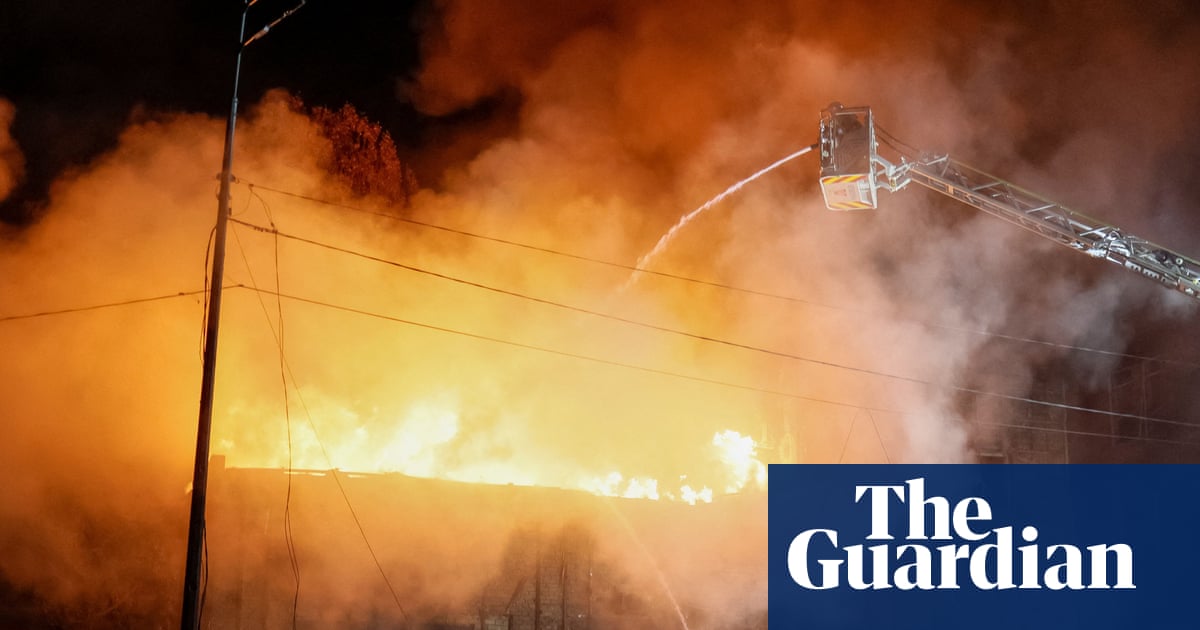
A massive aerial assault on Saturday morning severely disrupted essential services across Ukraine’s capital and surrounding regions, marking one of the most intense bombardments in recent weeks. Russian forces utilized a combined arsenal of 172 drones and 36 ballistic missiles to target electricity substations and critical transport infrastructure. The strikes resulted in significant damage to the power grid, leading to prolonged blackouts and interruptions in water and heating supplies for millions of residents.
The physical toll of the attack was immediate and severe. Five individuals were reported injured during the bombardment, including a fourteen-year-old girl. In Kyiv, the Northern Bridge, a vital transportation artery, was closed as emergency crews worked to repair damage to the road surface and overhead power lines. The attacks targeted substations in five different regions, including a facility that connects two nuclear power plants to the capital’s grid, highlighting the strategic intent behind the destruction.
President Volodymyr Zelenskyy accused Moscow of deliberately attempting to plunge the country into darkness as a tactic to force submission. He characterized the relentless bombardment as part of a broader Kremlin strategy to freeze civilians into compliance during the harsh winter months, a practice Ukrainian officials describe as a war crime. The president emphasized that Ukraine must not be abandoned and called for increased bilateral support from the United States, specifically appealing to the Democratic-controlled Congress to maintain focus on the conflict.
The escalation in violence comes at a precarious moment diplomatically. Negotiators from Russia, Ukraine, and the United States are scheduled to meet in Abu Dhabi later this week for talks aimed at ending the war. Zelenskyy expressed little confidence that these discussions would yield concrete results, particularly given the timing of the military offensive. He suggested that Moscow’s preparations for peace involved pummeling a city of millions with ballistic missiles, undermining any goodwill necessary for negotiation.
Tensions are also rising over the proposed framework for the talks. Zelenskyy described the blueprint presented by Jared Kushner, son-in-law of former President Donald Trump, as reminiscent of the Yalta Conference, where postwar Europe was divided among major powers. This comparison underscores Kyiv’s deep concern that the negotiations might result in a partition of influence rather than a genuine resolution to the conflict. Western diplomats have echoed these fears, noting that agreeing to Russia’s demands could effectively dismantle NATO’s current structure.
Kushner has indicated that the discussions would include a new security framework for Europe alongside guarantees for Ukraine. This proposal appears to align with longstanding Kremlin demands to reverse NATO’s expansion across the continent. President Trump recently suggested that a comprehensive agreement involving all of Europe could be imminent. However, such a prospect faces stiff resistance from Ukrainian and European partners who view any rollback of alliance structures as dangerous and unacceptable.
Zelenskyy made it clear that Moscow must end its war efforts first before any wider security architecture can be considered. He emphasized that Ukraine requires meaningful security guarantees and does not want to be divided by Russian influence. The skepticism in Kyiv is rooted in the belief that discussing European-Russian security infrastructure without preconditions could legitimize aggression and compromise national sovereignty.
The military context for these diplomatic maneuvers remains grim. Since the summer, Russia has dramatically stepped up air attacks on Ukrainian cities as its progress on the frontline has stalled. According to Kyiv, Russian forces lost 54,000 troops in the previous month alone, representing the highest monthly casualty count in the war. This intensification of aerial bombardment appears designed to compensate for ground stagnation and pressure Ukraine into concessions before winter conditions worsen.
As the Abu Dhabi talks approach, the disparity between diplomatic rhetoric and military reality remains stark. While US officials signal optimism about a potential agreement, Ukrainian leadership views the current violence as evidence of bad faith. The coming days will test whether the proposed security framework can address Ukraine’s need for protection without conceding to demands that would fundamentally alter the balance of power in Europe.
Sources behind this briefing
Go to the original reporting
- The Guardian US↗Blackouts and water shortages in Kyiv after Russia strikes Ukraine’s energy grid


