The short version
- Voting has begun for Russia's first parliamentary election since the full-scale invasion of Ukraine, with authorities aiming to demonstrate public support for the war.
- The process is heavily controlled, featuring no genuine opposition parties and including residents of illegally annexed Ukrainian regions where security threats have disrupted voting.
- While state media emphasizes unity and victory, some Russian citizens express desires for peace or economic stability, highlighting a gap between official narratives and public sentiment.
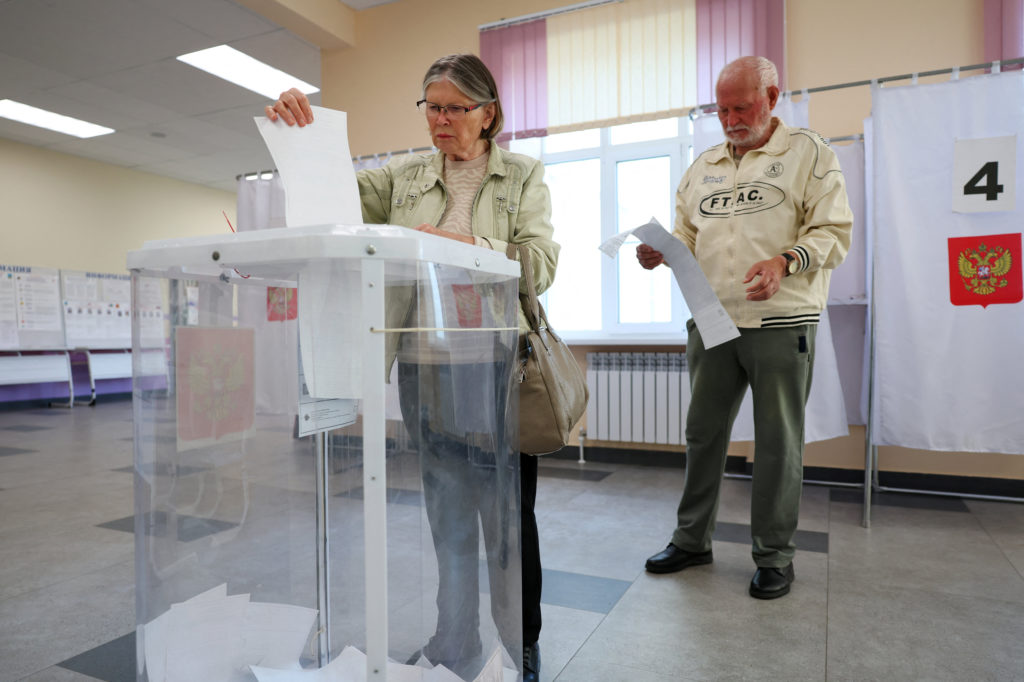
Russia has commenced a three-day parliamentary election, marking the first such vote since the launch of its full-scale invasion of Ukraine in 2022. The Kremlin views this contest as a critical mechanism to solidify its political dominance and project an image of national unity behind the ongoing military campaign. By extending the voting period over the weekend and permitting electronic balloting, authorities aim to maximize participation among the country's 111 million eligible voters. This logistical expansion is designed to ensure high turnout figures that can be cited as evidence of broad public endorsement for President Vladimir Putin’s policies.
The political landscape surrounding the election has been meticulously curated to eliminate dissent. The liberal Yabloko party, which had dared to criticize the war, was removed from the ballot by the Supreme Court last month. Other anti-war politicians have faced imprisonment or exile, leaving the field dominated by United Russia and smaller parties that consistently align with government positions on key issues. Consequently, the outcome is virtually predetermined, with United Russia expected to retain its overwhelming control of the State Duma. The election serves less as a democratic contest and more as a ritualistic affirmation of the current power structure.
President Putin addressed the nation before the vote began, framing the election as a demonstration of collective resolve and shared historical values. He emphasized that the results would show millions standing behind Russian fighters. State news agencies reported that Putin cast his own ballot online, releasing a video to underscore his participation. This narrative of unity is central to the Kremlin’s strategy, seeking to bind the population together through patriotic rhetoric while suppressing any alternative viewpoints that might challenge the official stance on the war.
Despite the tight control over the political process, interviews with Russian citizens reveal a range of expectations and concerns. Some voters, like Dmitry Kirillin in Moscow, expressed a desire for change and different leadership. Others, such as Alexander Vertukhin, felt that the existing platforms of United Russia and the Communist Party were sufficient. Pensioners Galina Vavilova and Lyudmila Kalinina highlighted more immediate personal concerns, with Vavilova prioritizing an end to the war to ensure the safety of soldiers, and Kalinina calling for economic stabilization and a reduction in wealth inequality. These individual perspectives suggest that while political opposition is suppressed, public anxiety about the war’s impact remains palpable.
The election takes place against a backdrop of escalating military pressure on Russian infrastructure. Ukraine has conducted long-range drone strikes on oil refineries, triggering a fuel crisis and damaging warehouses belonging to major online retailers like Wildberries and Ozon. These attacks have exacerbated economic difficulties for millions of Russians, bringing the consequences of the war closer to home. The disruption of supply chains and energy production serves as a stark reminder of the vulnerabilities within Russia’s wartime economy, contrasting sharply with the Kremlin’s portrayal of stability and strength.
Security concerns have directly impacted the voting process in territories that Moscow claims but does not fully control. In Sochi, polling stations were briefly closed due to drone attack threats. In the Krasnodar region, a station had to relocate after drones shattered windows. More severely, in the Russian-held Luhansk region, fourteen polling stations relied on backup power after Ukrainian drones damaged electrical lines. These incidents highlight the physical risks associated with holding elections in active conflict zones and underscore the challenges faced by election officials trying to maintain order under fire.
The inclusion of residents from four illegally annexed Ukrainian regions—Donetsk, Luhansk, Zaporizhzhia, and Kherson—as well as Crimea, marks a significant shift in Russia’s electoral geography. Voting in these areas is conducted under heavy military presence, with armed soldiers observed at polling stations in Donetsk. Russian officials reported that Ukrainian attacks killed a polling station chief and wounded another in Zaporizhzhia, though Ukraine has not commented on these specific accusations. Authorities in Kyiv have denounced the voting in these territories as illegal and urged international partners not to recognize the results, reinforcing the diplomatic isolation surrounding Russia’s actions.
As the three-day voting period concludes, the election will likely result in a State Duma that offers no meaningful check on executive power. The process reinforces the Kremlin’s narrative of a united nation while masking the underlying tensions and economic strains caused by the war. For the international community, the election serves as another indicator of Russia’s authoritarian consolidation and its determination to pursue military objectives despite mounting costs. The coming weeks will see the formal counting of votes, but the political implications are already clear: the Kremlin has successfully engineered a victory that reflects its control rather than the will of a free electorate.
Sources behind this briefing
Go to the original reporting
- PBS NewsHour↗Russia begins 3 days of voting in a parliamentary election set to cement the Kremlin's power

