The short version
- United Russia is projected to maintain its parliamentary dominance after authorities excluded Yabloko, the only remaining liberal party openly opposing the war in Ukraine.
- The campaign has been notably subdued, with candidates avoiding sensitive topics and televised debates suffering from low attendance, reflecting a strategy to minimize public engagement.
- Voters face growing anxiety about potential future mobilization efforts, with many fearing that a compliant legislature will enable the government to implement unpopular measures once the election concludes.
Russian citizens are casting ballots in a three-day parliamentary election that marks the first State Duma vote since the full-scale invasion of Ukraine began in 2022. The process is characterized by strict state control and a near-total absence of meaningful political competition. President Vladimir Putin’s United Russia party is widely expected to extend its twenty-three-year hold on parliament, securing another term alongside several nominal opposition groups that consistently align with Kremlin priorities on critical issues.
The electoral landscape has been further narrowed by the recent exclusion of Yabloko, a liberal party known for its stance against the war. Authorities barred the group from the ballot last month, effectively removing the only organized political force in Russia that had openly challenged the military campaign. Analysts suggest this move was prompted by polling data indicating rising support for anti-war platforms, which officials sought to prevent from materializing into an unscripted electoral outcome.
What remains on the ballot constitutes what is known as systemic opposition, including communist and far-right factions. These parties are permitted to offer marginal criticism of the government but invariably support United Russia on matters of national security and foreign policy. They function primarily as a political safety valve, allowing voters to express minor discontent without threatening the ruling party’s hegemony or the stability of the current political order.
The campaign itself has been strikingly lifeless, with many candidates actively avoiding public attention rather than seeking it. Political observers note that few politicians have engaged in substantive campaigning, and televised debates have often proceeded with empty seats as participants failed to appear. This lack of engagement has produced awkward media moments that have circulated online, underscoring the apathy or fear pervading the political class.
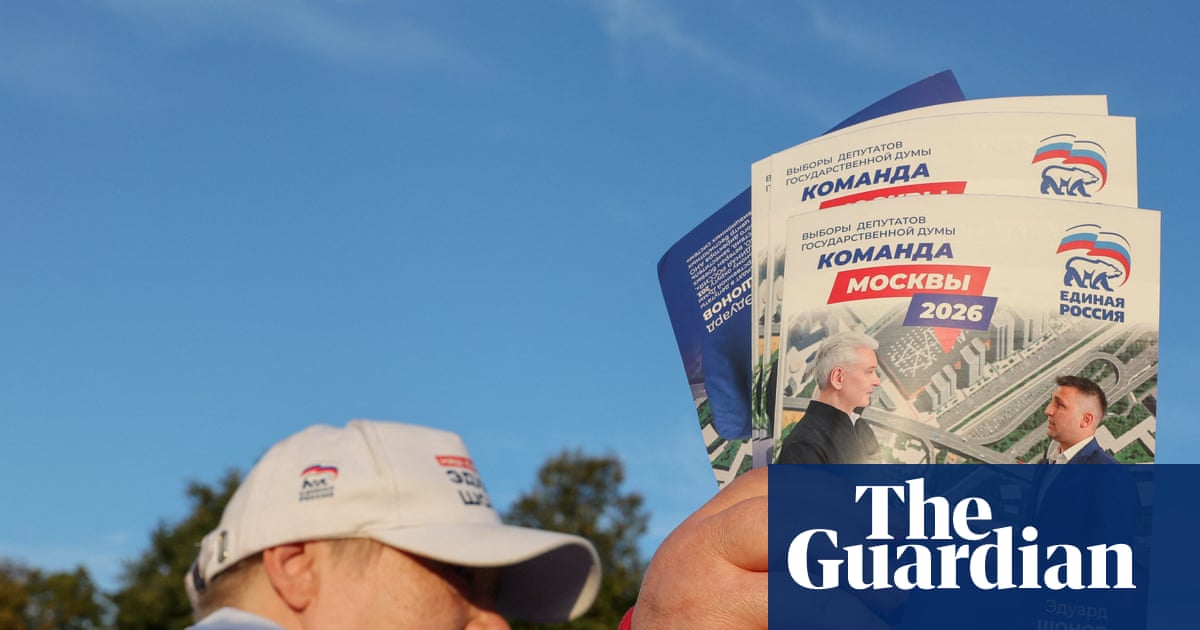
United Russia’s own promotional efforts have relied heavily on low-budget artificial intelligence-generated content, lacking memorable slogans or concrete policy promises. No major party has dared to address the war directly, despite its increasing intrusion into daily life for many Russians. Ukrainian drone strikes on oil refineries, factories, and logistics hubs across the country have heightened public anxiety about the conflict’s trajectory and its domestic consequences.
Officials appear to be deliberately keeping the election low-key to depress turnout among disaffected voters while ensuring loyalists participate. A person close to the Kremlin indicated that greater public interest would not benefit the authorities, who prefer to conclude the process quickly without discussing difficult issues. By minimizing the event’s profile, the state aims to avoid mobilizing opposition sentiment or drawing attention to the war’s costs.
Despite the controlled nature of the vote, the Kremlin views the election as a crucial source of legitimacy. Vladimir Gelman, a professor of Russian politics, noted that even without free and fair conditions, these elections provide the only remaining mechanism for demonstrating broad public consent behind the political system and its military actions. Putin explicitly linked voter participation to national unity in a recent address, framing the act of voting as support for soldiers and shared historical values.
For many Russians, the significance of this election lies less in the immediate results and more in what may follow. With Russian troops making limited progress in Ukraine at high cost, rumors of another large-scale mobilization have spread. There is widespread fear that once a compliant Duma is installed, the government will feel empowered to pursue unpopular measures it has previously avoided, prompting some young men to leave the country in anticipation of future conscription.
Sources behind this briefing
Go to the original reporting
- The Guardian US↗Russians go to polls against backdrop of Ukraine war and Putin’s tightening grip

