The short version
- Voting concluded in Russia's first parliamentary election since the full-scale invasion of Ukraine began, with United Russia poised to retain overwhelming control of the State Duma.
- The process was marked by the exclusion of genuine opposition, cyberattacks on electronic voting systems, and reports of observer harassment by security forces.
- Ukrainian forces launched a significant drone campaign against Russian targets overnight, coinciding with the final day of voting in Moscow and other regions.
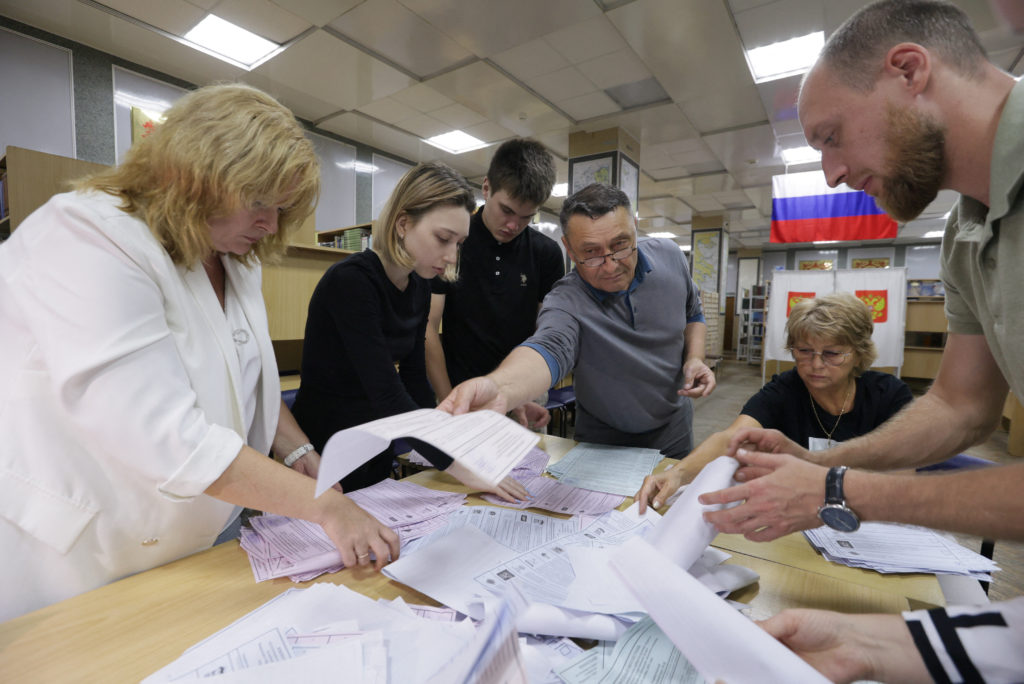
Russia has completed its first parliamentary election held during an active war, a process widely viewed as a mechanism to consolidate President Vladimir Putin’s authority rather than a genuine contest of political will. The three-day vote, which concluded on Sunday, was characterized by the systematic exclusion of dissenting voices and a state media campaign designed to demonstrate popular backing for the ongoing conflict in Ukraine. With no viable opposition permitted on the ballot, the outcome is effectively predetermined, ensuring that United Russia and its allied systemic parties will maintain their dominance in the lower house of parliament.
The timing of the election’s conclusion coincided with a significant escalation in military activity. Ukrainian forces launched more than 1,000 drones overnight, targeting locations across Russia including Moscow. This aerial assault represents one of the largest such operations to date and underscores the intensifying pressure on Russian infrastructure. The juxtaposition of domestic political ritual and external military aggression highlights the Kremlin’s attempt to project stability and unity despite mounting economic costs and security challenges.
For the first time, the electoral map included residents of four Ukrainian regions that Moscow claims to have annexed following the 2022 invasion, as well as Crimea, which was seized in 2014. These territories are not fully under Russian administrative control, raising questions about the logistics and legitimacy of the voting process there. Authorities in Kyiv have condemned the inclusion of these areas as illegal, urging international partners to reject the results. The European Union echoed this stance, describing the action as a blatant violation of international law.
The absence of independent oversight was a defining feature of the election. Russia declined to invite observers from the Organization for Security and Cooperation in Europe, with the Foreign Ministry accusing the body of double standards. This decision drew criticism from OSCE leadership, who noted it breached Russia’s commitments as a member state. Domestic monitoring efforts were also severely restricted. The Yabloko party, the only registered entity that publicly criticized the war, reported that its observers were frequently denied access to polling stations. In one incident in St. Petersburg, an observer reportedly lost consciousness after being arrested by police on charges of disrupting the election.
Technical irregularities further complicated the voting process, particularly in Moscow. Ella Pamfilova, head of the Central Election Commission, announced that the electronic voting system had been targeted by cyberattacks, blaming one of the systemic parties without specifying which. Independent reporting indicated widespread glitches in electronic registry systems, leading to situations where voters were denied paper ballots and pressured to use electronic terminals. Critics, including associates of the late opposition leader Alexei Navalny, suggested these failures may have been deliberate attempts to steer voters toward digital platforms, which are easier for authorities to manipulate or monitor.
The liberal Yabloko party faced significant hurdles beyond observer restrictions. Last month, Russia’s Supreme Court removed the party from the ballot entirely, limiting its participation to a small number of candidates in single-constituency races. Party leader Nikolai Rybakov urged supporters to spoil their ballots as a form of protest. Meanwhile, the Communist Party, which has criticized certain government policies but avoids challenging Putin directly, also reported difficulties with monitoring. Claims of procedural violations, such as unsecured polling stations and opened ballot boxes, could not be independently verified due to the lack of transparent oversight.
In Russian-held territories, the voting environment appeared heavily militarized. Reports from the Donetsk region described scenes where armed soldiers stood near voters casting ballots, creating an atmosphere of coercion rather than free choice. The Kremlin’s strategy relies on suppressing any political risk by eliminating competition and controlling the narrative through state media. This approach aims to legitimize the war effort domestically while projecting strength internationally, even as the conflict drags on with no clear resolution in sight.
Preliminary results are expected shortly after voting ended in western regions of Russia. United Russia is anticipated to secure an overwhelming majority, reinforcing its grip on legislative power. The systemic opposition parties, which align with Kremlin positions on key issues, are also expected to maintain their presence. As the dust settles, the election serves as a stark indicator of the political landscape in wartime Russia: tightly controlled, devoid of genuine choice, and increasingly isolated from international norms. The coming days will reveal how the government leverages these results to justify further military and economic policies.
The broader implications extend beyond domestic politics. By framing the election as a mandate for continued aggression, the Kremlin seeks to harden its stance in negotiations or conflicts with Ukraine and Western nations. Meanwhile, Ukrainian drone strikes demonstrate that the war remains dynamic and impactful on Russian soil. The combination of political consolidation and military escalation suggests that Russia is preparing for a prolonged confrontation, both internally and externally. International observers will likely view these developments as evidence of deepening authoritarianism and disregard for democratic principles.
As Russia moves forward from this electoral cycle, the focus shifts to how the new parliamentary composition influences policy decisions regarding the war. With dissent silenced and opposition marginalized, there is little expectation of internal pressure for de-escalation. Instead, the reinforced dominance of pro-war factions may embolden further military actions. For Ukraine and its allies, the election underscores the need for sustained support and strategic responses to counter Russian ambitions. The world watches closely as these dynamics unfold, aware that the stakes extend far beyond the borders of Europe.
Sources behind this briefing
Go to the original reporting
- PBS NewsHour↗Russia wraps up first wartime parliamentary election with Kremlin dominance all but assured

