The short version
- The Nancy Grace Roman Space Telescope is scheduled to launch from Kennedy Space Center, marking a significant milestone for NASA's deep space observation capabilities.
- The mission survived proposed budget cuts by the Trump administration, with Congress intervening to restore funding levels necessary for completion.
- Designed to complement Hubble and Webb, the telescope will focus on dark energy, exoplanets, and wide-field infrared imaging from a distant orbital position.
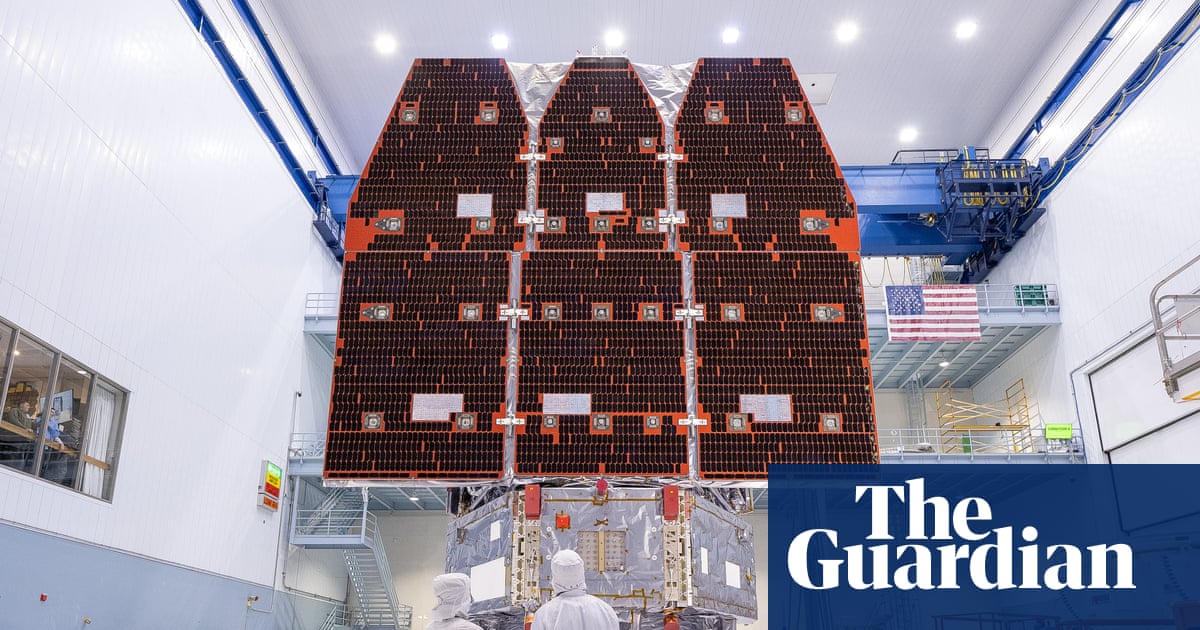
The Nancy Grace Roman Space Telescope is poised to lift off from Florida early Sunday morning, representing a major victory for scientific continuity amidst intense political pressure. The $4.3 billion instrument, which has been in development for nearly a decade, survived two separate rounds of proposed budget eliminations by the White House before Congress stepped in to protect its funding. This launch marks the beginning of a million-mile journey into deep space, positioning the observatory to join the ranks of NASA’s most historic exploration tools.
Named after Nancy Grace Roman, NASA’s first chief of astronomy who passed away in 2018, the telescope is engineered to be significantly more powerful than its predecessors. While it shares similar sharpness and resolution capabilities with the Hubble Space Telescope, Roman boasts a field of view that is at least one hundred times larger. Each image captured by its 300-megapixel infrared camera will encompass a patch of sky approximately 1.5 times the apparent size of a full moon, allowing for unprecedented panoramic surveys of the cosmos.
The mission’s primary scientific objectives include searching for exoplanets and gathering clues about planetary formation processes. A specialized instrument known as a coronagraph will block glare from stars, enabling detailed photography of planets orbiting them. NASA anticipates that these images will reveal giant worlds that are older, colder, and in closer orbits than the hot, young super-Jupiters typically identified by direct imaging methods to date.
Rather than replacing existing observatories, Roman is designed to work in concert with both Hubble and the James Webb Space Telescope. Its wide-field views will uncover interesting targets that Hubble can follow up on using infrared, visible, and ultraviolet light for a more comprehensive analysis. Meanwhile, Webb can utilize its larger mirror to deliver ultra-sharp observations of specific areas, while Roman provides broader context by viewing regions surrounding objects observed by the other telescopes.
The telescope will travel to Lagrange point 2, a stable orbital position roughly one million miles from Earth. This location serves as a parking spot in space where it will operate in a complex sun-Earth orbit similar to Webb’s, though the two instruments will remain far apart. The initial five-year mission could potentially be extended to ten years, with first images expected to arrive in early 2027 after months of calibration and testing in its final orbit.
Political challenges have loomed large over the project’s development. A 2025 White House proposal sought what analysts described as extinction-level cuts to NASA’s science budget, including the termination of the Roman project. Congress rejected this plan in January, restoring the agency’s 2026 funding level to $24.4 billion. However, the administration has renewed its efforts for the 2027 fiscal year, proposing a 23% reduction in NASA’s overall budget and a 46% cut to science projects.
Julie McEnery, NASA’s senior project scientist for the Roman mission, noted that the need for such an instrument was conceived at the end of the last century. Development began in 2016, with full approval and construction commencing in 2020. A key motivation for the telescope is addressing the mystery of the universe’s accelerating expansion, a phenomenon that defies current understanding of fundamental physics.
The launch represents the final flight of SpaceX’s Falcon Heavy rocket, as Elon Musk’s company phases out this vehicle along with its smaller Falcon 9 counterparts. Barring late technical issues or interference from Florida’s unpredictable summer weather, the telescope will depart at 7:26 a.m. ET. Once operational, the imagery produced by Roman will be made immediately public, offering professional researchers and amateur astronomers alike an unprecedented opportunity for analysis.
NASA describes the mission as purpose-built to address fundamental questions about the nature of the universe, from dark matter and dark energy to the formation of galaxies and black holes. The agency expects that very little will be beyond Roman’s reach, providing data critical to understanding why the universe is expanding at an accelerating rate rather than slowing down under gravitational pull.
As the telescope prepares for its journey, the contrast between scientific ambition and political restraint remains stark. While Congress has currently shielded this flagship mission from defunding, ongoing budget proposals suggest that future space exploration efforts may face continued scrutiny. The successful launch of Roman stands as a testament to the resilience of long-term scientific projects in the face of shifting administrative priorities.
Sources behind this briefing
Go to the original reporting
- The Guardian World↗Nasa space telescope set to launch after surviving Trump budget cuts

