The short version
- RoboStore is transitioning from distributing Chinese-made robots to manufacturing its own units in New York.
- The strategic pivot follows an FCC ban on importing new models of foreign-made robots, citing national security concerns.
- The company aims to launch specialized robotic products for healthcare and education by early 2027.
A major shift is underway in the American robotics distribution landscape as RoboStore, previously the primary North American supplier for China’s most popular humanoid robots, moves to manufacture its own hardware. The company announced plans to fully open a 66,000-square-foot facility on Long Island, New York, dedicated to producing commercial robots by the first fiscal quarter of 2027. This transition marks a significant departure from its earlier role as a distributor for Unitree Robotics, a Chinese firm known for affordable humanoid and quadruped models that had been widely adopted by academic institutions and technology companies.
The decision to pivot toward domestic production was accelerated by recent regulatory actions from the United States government. In July, the Federal Communications Commission implemented a ban on the importation of new models of foreign-made robots. This restriction covers a broad range of devices, including robot vacuum cleaners and the specific humanoid units previously sold by RoboStore. The agency justified the move on national security grounds, pointing to potential cybersecurity vulnerabilities associated with imported automation hardware. The ban also aligns with broader legislative efforts, such as the American Security Robotics Act introduced in the Senate and the GUARD Act proposed in the House of Representatives, which seek to curb reliance on foreign robotics technology.
Prior to the regulatory crackdown, RoboStore had established itself as a critical supply chain node for research and development. The company reported selling more than 1,500 robots to a diverse clientele that included major universities like Harvard and MIT, as well as tech giants such as Amazon, Nvidia, Cisco, and OpenAI. These institutions utilized the Chinese-made hardware for various experimental and developmental purposes. However, with the distribution channel effectively closed by the new import restrictions, RoboStore ceased its primary sales operations while maintaining support services for existing customers who require parts, repairs, and upgrades for their current inventory.
To oversee this new manufacturing venture, the company launched a subsidiary named Robo Inc. This entity will focus on robotics manufacturing and systems integration, leveraging insights gained from years of supporting customer deployments. Teddy Haggerty, the founder and CEO of RoboStore, indicated that the team had been considering independent manufacturing for approximately a year before the ban took effect. Their experience in helping clients integrate robots into specific workflows revealed a market preference for specialized solutions over general-purpose humanoid models. Haggerty noted that industry-specific robotic arms often serve business needs more effectively than versatile but complex humanoid designs.
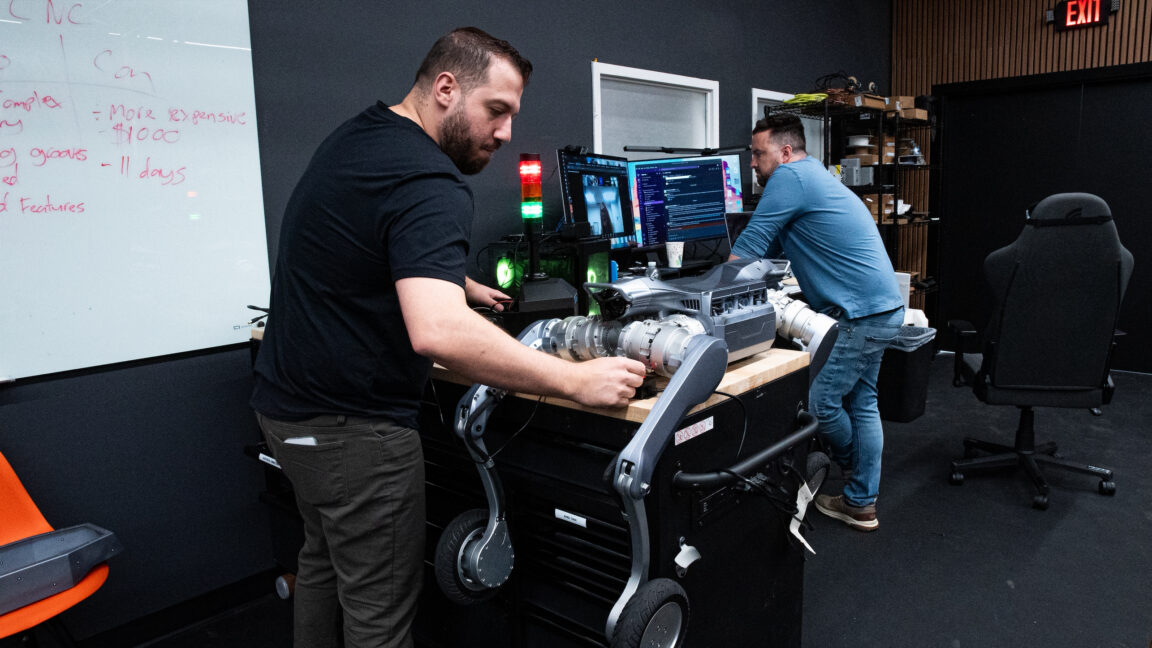
Under the Robo Inc. banner, engineers are currently developing and testing several distinct robotic products tailored to specific sectors. One prototype features a humanoid torso mounted on a wheeled chassis, designed primarily for healthcare applications and concierge services. This model is equipped with cameras and sensors capable of monitoring standard patient vital signs, including temperature and blood oxygen levels. Another initial product line includes a specialized quadruped robot intended for security applications. Additionally, the company is creating a humanoid robot platform specifically for educators and researchers, addressing the growing demand for United States-compliant hardware in academic settings.
The development process has already progressed to the testing phase, with engineers utilizing 3D printing technology to construct prototypes that are being evaluated by select customers. The team expects to begin producing commercial versions of these robots from their new Long Island facility by early 2027. This timeline suggests a rapid scaling effort, though significant challenges in commercialization and manufacturing expansion remain. The shift represents a broader trend of American companies adapting to geopolitical tensions and regulatory pressures by reshoring production capabilities.
Financially, the transition requires substantial capital investment. After operating as a bootstrapped business for years without outside investor funding, Robo Inc. is now seeking its first major round of financing. Haggerty reported strong interest from potential investors, noting that the company’s established relationships with previous customers have facilitated this process. The ability to demonstrate existing demand and technical expertise appears to be a key factor in attracting capital for the new manufacturing initiative.
The broader implications of this shift extend beyond a single company’s strategy. As regulatory barriers against foreign-made robots solidify, domestic manufacturers are poised to fill the void left by restricted imports. This dynamic may reshape the robotics industry in the United States, encouraging innovation in specialized applications while reducing dependence on international supply chains. The success of Robo Inc.’s venture could serve as a model for other distributors facing similar regulatory headwinds, highlighting the potential for rapid adaptation in the face of changing trade policies.
Looking ahead, the focus will be on whether Robo Inc. can successfully scale its manufacturing operations to meet market demand while maintaining the quality and functionality expected by its clients. The transition from distribution to production involves complex logistical and engineering challenges that will test the company’s capabilities. As the first fiscal quarter of 2027 approaches, the industry will watch closely to see if this pivot sets a precedent for how American businesses navigate the intersection of technology, trade policy, and national security.
Sources behind this briefing
Go to the original reporting
- Ars Technica↗US distributor of China’s most popular humanoid robots pivots after US ban

