The short version
- Ship-based surveys recorded a jump from zero humpback sightings in the region before 2006 to 150 by 2024, indicating rapid colonization of ice-free waters.
- Researchers estimate that thousands of baleen whales consumed nearly one million tonnes of fish and krill during the 2024 summer season alone.
- While opportunistic species thrive in warming seas, ice-dependent animals like narwhals face habitat loss and potential displacement by these larger competitors.
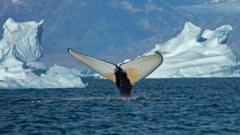
The coastal waters of East Greenland are undergoing a profound transformation as retreating sea ice allows massive baleen whales to access regions that were previously sealed off for much of the year. A long-term scientific study combining ship-based observations, aerial surveys, and satellite tracking data confirms that humpback, fin, and minke whales have established a significant presence in these subarctic waters during the summer months. This influx represents a major ecological regime shift, driven by rising sea temperatures and the consequent availability of new feeding grounds.
The pace of this change is striking when viewed through historical data. Prior to 2006, ship-based surveys in the area failed to record a single humpback whale sighting. The following year, researchers observed seven individuals. By 2024, that number had surged to 150 sightings from vessels alone. To gain a broader perspective, scientists conducted systematic aerial surveys in 2015 and 2024, supplementing these counts with data from fifteen satellite-tagged animals and insights from Inuit hunters. These combined efforts paint a picture of a rapidly changing marine environment.
Estimates suggest that the summer of 2024 saw approximately 4,000 humpback whales, 6,000 fin whales, and 6,000 minke whales visiting the Greenland Sea. These giants are engaging in what researchers describe as seasonal feeding frenzies, capitalizing on fish populations that have migrated into the warming waters. The caloric intake required to sustain such numbers is immense; scientists calculate that these three species alone consumed at least 800,000 tonnes of fish and krill during the single summer season.
Professor Mads Peter Heide-Jørgensen of the Greenland Institute of Natural Resources characterized the alterations in the region as potentially the most radical ecological changes observable anywhere in the subarctic. The primary drivers are clear: climate change is melting sea ice and raising water temperatures, which in turn alters the distribution of prey species. The whales appear to be highly adaptable, shifting their ranges to follow these food sources into areas that were historically inaccessible due to persistent ice cover.
However, the implications of this shift extend beyond simple population counts. It remains uncertain whether the increased sightings reflect a genuine growth in the overall populations of these whale species or merely a redistribution from other regions, such as West Greenland. This distinction is critical for local stakeholders. In Greenland, where certain whale species are hunted by indigenous communities, an influx of animals from elsewhere could have significant social and economic repercussions. Some experts worry that the study points to a migration from western waters, complicating management strategies for local fisheries and hunting quotas.
The benefits for these opportunistic baleen whales come at a cost to other Arctic inhabitants. Species that rely on stable ice conditions, such as narwhals and belugas, are experiencing habitat loss. The arrival of larger whale species may lead to competition for resources or direct displacement of these smaller, ice-dependent animals. Professor Heide-Jørgensen noted that while climate change opens new opportunities for some marine mammals, it simultaneously strips others of their essential living spaces.
The study, published in Frontiers in Marine Science, underscores the complexity of Arctic conservation in a warming world. It is not merely a story of species thriving or declining, but one of shifting dynamics and competitive pressures. As ice continues to disappear, the balance between opportunistic feeders and specialized ice-dwellers will likely continue to tilt. Understanding these interactions is vital for predicting future changes in the Arctic ecosystem.
Looking ahead, researchers will need to monitor whether this trend stabilizes or accelerates. The data collected through satellite tags and aerial surveys provides a baseline, but long-term observation is necessary to determine if these whales are establishing permanent residency or continuing their seasonal migrations. The interplay between rising temperatures, prey availability, and predator movement will define the future of East Greenland’s marine biodiversity.
For local communities, the changing landscape presents both challenges and uncertainties. While the presence of new whale species might offer different hunting opportunities, it also disrupts traditional knowledge and practices tied to specific ice conditions and animal behaviors. The scientific community emphasizes that these changes are part of a broader global pattern, yet their local impacts require nuanced understanding and careful management.
Ultimately, the retreat of sea ice in East Greenland serves as a stark indicator of climate change’s reach into even the most remote corners of the planet. The surge in giant whale activity is a visible symptom of deeper ecological restructuring. As scientists continue to track these movements, the findings will inform broader discussions about conservation, resource management, and the resilience of Arctic ecosystems in the face of rapid environmental change.
Sources behind this briefing
Go to the original reporting
- BBC World↗Giant whales move into Greenland waters as ice disappears

