The short version
- Woolston Eyes in Warrington now supports 64% of Britain's breeding black-necked grebe population following extensive habitat restoration.
- The site, formerly used for canal dredging waste, was converted into a mosaic of freshwater pools and reedbeds managed by the RSPB and local conservation groups.
- Ecologists highlight the project as evidence that targeted wetland management can rapidly reverse declines in rare bird species, though they call for wider implementation.
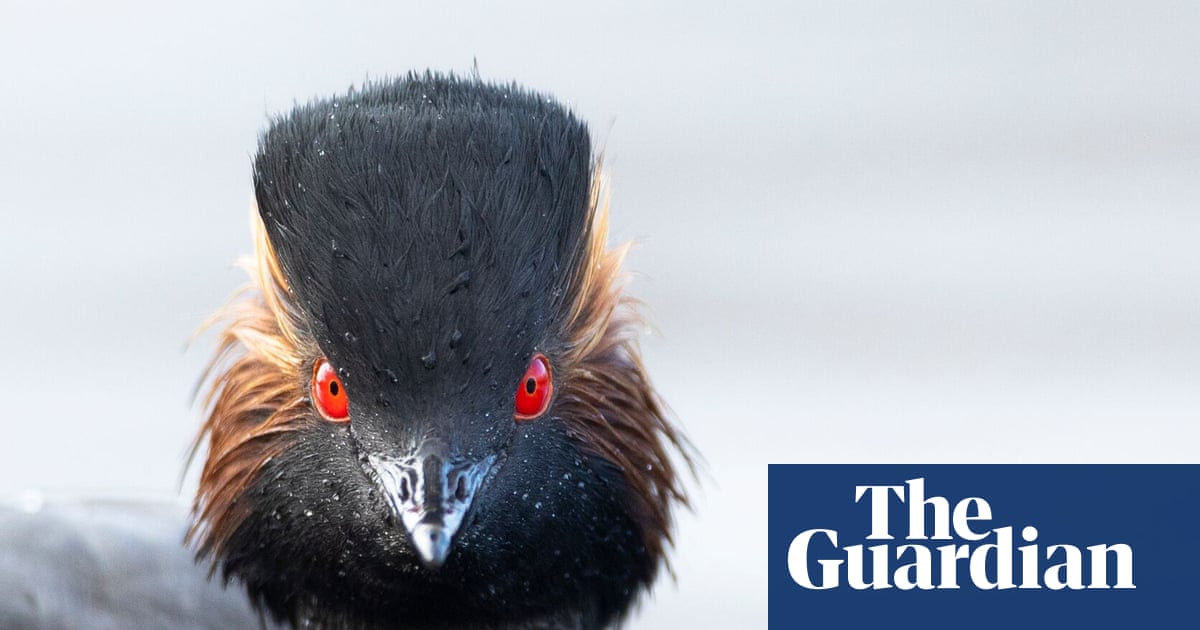
A former industrial dumping ground in Cheshire has emerged as the most important sanctuary in Britain for the black-necked grebe, a rare waterbird whose population relies heavily on this specific location. Woolston Eyes, situated in Warrington, now hosts approximately 64% of the United Kingdom’s breeding pairs of the species. This concentration represents a significant shift in the distribution of the bird, which is characterized by its glossy black and chestnut plumage, ruby-red eyes, and distinctive gold feather tufts.
The transformation of the site began in earnest in 2021, when conservationists initiated a major restoration project. Previously, the area served as a repository for dredgings from the Manchester Ship Canal, resulting in a dried-out and overgrown settlement lagoon that offered little ecological value. Through collaborative efforts between the Royal Society for the Protection of Birds (RSPB) and the Woolston Eyes Conservation Group, the landscape was reconfigured into a diverse mosaic of freshwater pools, dense reedbeds, willow scrub, and rough grassland.
A key component of the restoration strategy involved creating specific nesting islands designed to attract black-headed gulls. These gulls are not merely incidental visitors; their presence provides a protective buffer for the grebes against predators. By nesting alongside the more aggressive gulls, the smaller grebes gain a layer of security that enhances their breeding success. The newly created wetlands also generated an abundance of invertebrate food sources, which are essential for sustaining the glossy birds and their offspring.
The results of these interventions have been measurable and rapid. In 2023, just two years after restoration efforts commenced, four pairs of black-necked grebes successfully bred on the site, raising fifteen young. By 2025, the number of recorded pairs had surged to thirty-five. Of these, twenty-nine nested specifically within the newly restored wetland areas. This growth trajectory indicates that the habitat modifications directly addressed the specific needs of the species, allowing them to thrive in an environment that was previously inhospitable.
The management of Woolston Eyes requires careful hydrological control because the site relies entirely on rainfall for its water supply. To maintain optimal conditions, water is actively moved between different areas of the wetland. This process allows sections to be dried out, refreshed, and reflooded in a controlled rotation. Such dynamic management is crucial for the black-necked grebe, which tends to abandon wetlands that become too mature or stagnant. The ability to manipulate water levels ensures that the habitat remains fresh and productive.
Beyond its significance for the black-necked grebe, the site has become a stronghold for other rare and unusual species. The restored environment now supports populations of willow tits, pochards, and grasshopper warblers. This biodiversity underscores the broader ecological benefits of wetland restoration, demonstrating that interventions designed for one flagship species can yield positive outcomes for a wider community of wildlife.
Gavin Thomas, an ecologist with the RSPB, described the increase in grebe numbers as a testament to the effectiveness of targeted conservation action. He noted that the rapid growth observed at Woolston Eyes illustrates how nature can recover when given the opportunity and appropriate support. The success of the project highlights the importance of hard work by staff, volunteers, and partners in creating prime habitat for rare and attractive species.
Despite the local success, experts emphasize that this model needs to be expanded. Thomas pointed out that black-necked grebes are just one example among millions of breeding, wintering, and migratory birds that depend on the UK’s internationally important wetlands. The continued increase in grebe numbers at Woolston Eyes validates the effort but also serves as a call to action for scaling up similar restoration projects across the country. Delivering more sites like Woolston is viewed as vital for broader species recovery efforts.
The case of Woolston Eyes offers a clear example of how industrial legacy sites can be repurposed for ecological gain. By turning a dumping ground into a thriving wetland, conservationists have not only saved a rare bird from further decline but also created a resilient ecosystem that supports multiple species. The ongoing management and future expansion of such projects will likely determine the long-term viability of these habitats in the face of environmental pressures.
As the site continues to evolve, it stands as a benchmark for wetland conservation in the UK. The data from 2023 to 2025 provides concrete evidence that habitat restoration can yield quick and significant results for endangered species. The focus now shifts to replicating this success elsewhere, ensuring that other rare birds and wildlife have access to similarly managed and protected environments throughout the nation.
Sources behind this briefing
Go to the original reporting
- The Guardian World↗‘Nature thrives when given a chance’: restored Cheshire wetland now a haven for rare grebe

