The short version
- Rep. María Elvira Salazar publicly criticized President Trump’s immigration enforcement strategy, warning that advisers are compromising his political legacy by ignoring the impact on Hispanic voters.
- Recent polling indicates a shift among Hispanic constituents who supported Trump in 2024, with many now expressing dissatisfaction due to economic concerns and aggressive deportation measures targeting non-criminal undocumented immigrants.
- While House leadership acknowledges internal disagreements over border security tactics, President Trump dismissed Salazar’s comments, asserting her electoral success depended on his support.
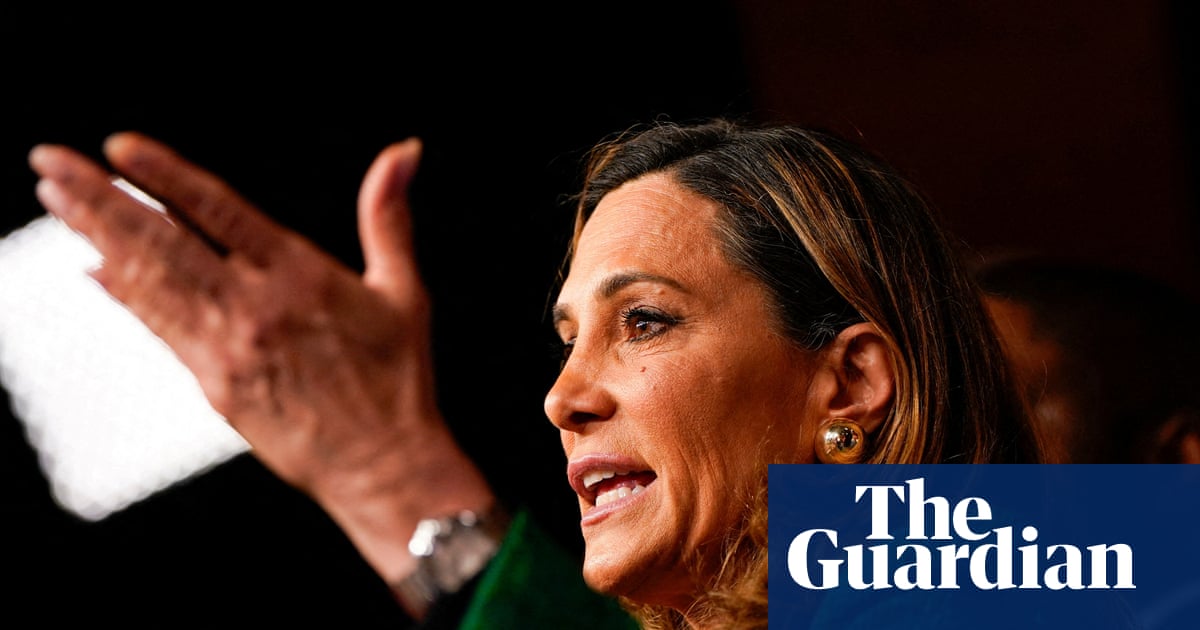
A growing fracture within the Republican Party has emerged regarding the administration’s aggressive immigration enforcement policies, highlighted by Florida Representative María Elvira Salazar’s public warning to President Donald Trump. In a recent interview with CBS News, Salazar cautioned that certain White House advisers are failing to present a complete picture of the political landscape, thereby risking the president’s long-term legacy. Her remarks mark a significant departure from the party’s unified front on border security and signal rising anxiety among GOP lawmakers about the electoral consequences of current enforcement strategies.
Salazar, who represents a Miami-area district that voted for Trump by fifteen points in 2024, argued that the administration is squandering its relationship with Hispanic voters. She emphasized that many in this demographic feel betrayed by the hardline approach, which has led to the detention and deportation of undocumented immigrants without criminal records. According to Salazar, the average American can distinguish between dangerous criminals and law-abiding workers, such as nannies or gardeners, suggesting that the current blanket enforcement strategy lacks necessary nuance.
The congresswoman’s criticism was bolstered by a thirty-second advertisement she released last week, which cited data showing that half of the fifty thousand people detained in July had no criminal history. The ad urged voters to consider whether advisers were providing accurate guidance on immigration policy. Salazar positioned herself as a proud Republican seeking to preserve core American values shared by Hispanic communities, framing her dissent not as a rejection of party principles but as a necessary correction to prevent alienating a key voting bloc.
Recent opinion polls support Salazar’s concerns, indicating that many Hispanic voters who contributed to Trump’s 2024 re-election are now turning away from the administration. This shift is attributed to a combination of factors, including rising living costs, economic dissatisfaction, and the visible impact of mass deportation efforts. The erosion of support among these voters raises serious questions for Republican strategists as they prepare for the midterm elections in November, where several competitive seats in states like Florida, Texas, Colorado, Nevada, and others could swing to Democratic candidates.
President Trump responded swiftly to Salazar’s public critique, dismissing her concerns on Saturday. He stated that she lacked a strong stance on border security compared to his own and reminded voters that her previous electoral success was largely due to his influence. This direct rebuke underscores the tension between the president’s uncompromising immigration agenda and the pragmatic concerns of lawmakers facing re-election in diverse districts. Trump’s response reinforces his administration’s commitment to mass deportation, regardless of internal party pushback.
The disagreement has also drawn attention from higher-ranking Republican officials. Steve Scalise, the second-most powerful member of the House GOP, acknowledged on ABC News that immigration policy is creating divisions within the party. While he did not fully endorse Salazar’s claim that Hispanic voters feel betrayed, he admitted that there are significant disagreements among Republicans regarding the methods used to achieve border security. This admission highlights the complexity of maintaining party unity while addressing a polarizing issue.
Salazar’s district presents a unique political landscape for this debate. Although she won her 2024 race by twenty points, she now faces a tight re-election battle against Democratic challenger Eliott Rodriguez. The narrowing margin reflects broader national trends where economic anxieties and policy disputes are reshaping voter allegiances. Her willingness to speak out suggests that the pressure on moderate Republicans is intensifying as they navigate the gap between presidential directives and constituent realities.
As the midterm elections approach, the Republican Party must reconcile its hardline immigration stance with the need to retain support from diverse voter groups. Salazar’s intervention serves as a warning sign that the administration’s current trajectory may carry significant electoral costs. With polls showing seventy percent of Americans favoring some form of immigration reform, the disconnect between policy implementation and public sentiment could prove decisive in November. The coming weeks will likely reveal whether this internal criticism remains an isolated incident or evolves into a broader challenge to the administration’s agenda.
The situation illustrates the delicate balance Republican lawmakers must maintain between loyalty to the president and responsiveness to their districts. While Trump views immigration enforcement as a core mandate, representatives like Salazar see it as a potential liability that could undermine the party’s legislative and electoral goals. The ongoing debate over who constitutes a threat versus a contributor to society remains unresolved, with practical implications for policy direction and political survival in the months ahead.
Sources behind this briefing
Go to the original reporting
- The Guardian US Politics↗House Republican doubles down on jab at Trump’s immigration enforcement