The short version
- Republican candidates for governor in Wisconsin, Pennsylvania, and Kansas are retreating from earlier endorsements of strict abortion restrictions.
- Polling data indicates that while cost-of-living concerns dominate voter priorities, pushing for new bans remains politically risky and unpopular with the majority of Americans.
- Democratic campaigns and allied groups are attempting to counter this retreat by highlighting past anti-abortion remarks to mobilize their base in competitive races.
Republican candidates running for governor across several key states are increasingly distancing themselves from strict abortion bans they previously endorsed. This rhetorical shift marks a notable departure from the hardline stances many of these politicians held just a few years ago, suggesting a calculated effort to navigate the complex political landscape surrounding reproductive rights. The retreat appears driven by a recognition that while the issue may have faded from the immediate national spotlight, its potential to mobilize voters remains potent and dangerous for GOP candidates in tight contests.
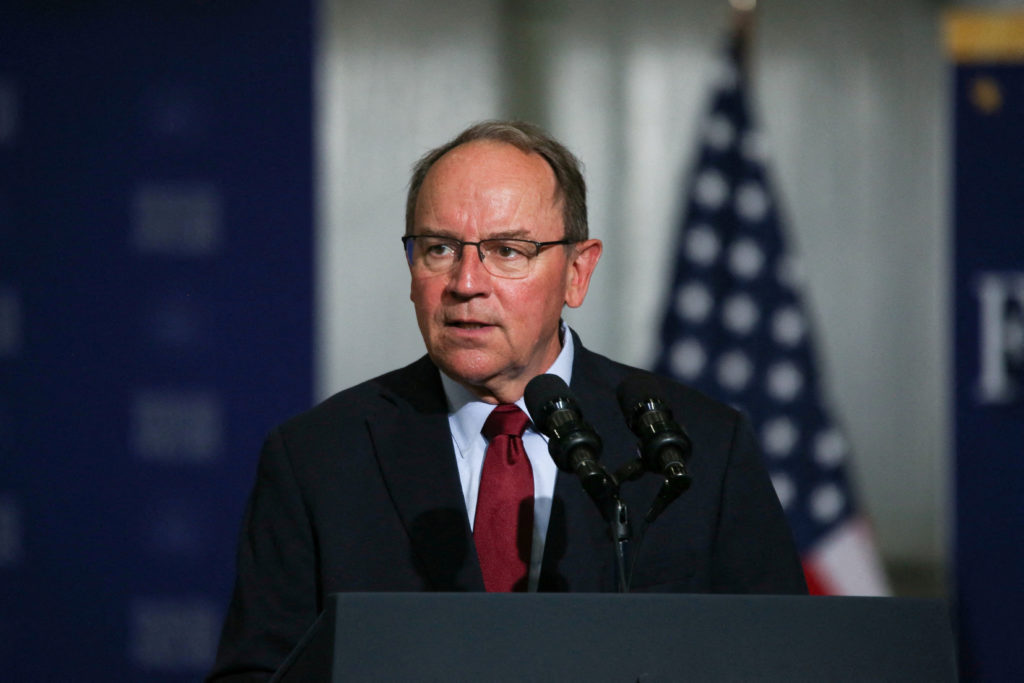
In Wisconsin, U.S. Representative Tom Tiffany, the Republican nominee for governor, has characterized the state’s existing 20-week abortion limit as settled law. This position stands in stark contrast to his legislative record from three years prior, when he co-sponsored legislation that would have prohibited abortion just six weeks into pregnancy. Similarly, Stacy Garrity, the GOP candidate in Pennsylvania, has stated during her campaign that she would respect the state’s current legal framework, which permits abortion until 24 weeks of gestation. Four years ago, Garrity had urged abortion opponents to actively engage in shaping state laws following the overturning of Roe v. Wade.
The pattern continues in Kansas, where Republican Ty Masterson has declined to commit to supporting a statewide referendum that would remove abortion protections from the state constitution. Abortion remains legal in Kansas until 22 weeks. Masterson’s current hesitation contrasts with his past activism, which included speaking at protests against reproductive rights and securing endorsements from prominent state and national anti-abortion organizations. These adjustments by candidates in Wisconsin, Pennsylvania, and Kansas suggest a broader trend among Republicans seeking to avoid the political liabilities associated with pushing for new restrictions.
Political analysts view this distancing as a strategic maneuver designed to demotivate Democratic turnout by removing abortion as a primary voting issue. Ashley Kirzinger, a pollster at the nonpartisan health policy research organization KFF, noted that this approach is particularly relevant in tighter races such as those in Wisconsin and Kansas. By downplaying the issue, Republican campaigns may hope to shift voter focus toward other concerns, thereby reducing the enthusiasm of Democratic supporters who are highly motivated by reproductive rights.
Public opinion data supports the notion that aggressive abortion restrictions carry significant political risk. A poll conducted by The 19th and YouGov found that approximately 60 percent of Americans believe abortion should be legal in most or all cases, including about two-thirds of independent voters. Molly Murphy, president of Impact Research, observed that even before the fall of Roe v. Wade, Republicans rarely campaigned overtly on abortion bans in general elections. Such positions were typically discussed in private donor meetings or endorsement questionnaires rather than featured prominently in public campaigns.
Despite the GOP’s attempt to sideline the issue, Democratic strategists argue that voters do not view abortion rights as secure. Celinda Lake, a longtime Democratic pollster, pointed out that opposition to abortion bans has grown since Roe was overturned, with many voters fearing that existing protections could be revoked again. In response, Democrats and their allies are working to bring reproductive rights back into focus, aiming to energize liberal voters who might otherwise stay home if the issue is perceived as resolved or irrelevant.
In Maine, a political action committee linked to the Democratic Governors Association has launched advertisements highlighting anti-abortion remarks made by Republican gubernatorial candidate Bobby Charles. The state’s Democratic nominee, Hannah Pingree, currently leads in polls by double digits. Meanwhile, in Michigan, Planned Parenthood’s super PAC is focusing resources on the race against Republican U.S. Representative John James, who has claimed abortion is a decided issue despite previously opposing it in all cases and comparing the practice to genocide.
Complicating matters in Michigan is the recent suggestion by James’ running mate, Jay DeBoyer, that the state should leverage a constitutional convention to enact a 12-week abortion ban. Although DeBoyer later stated publicly that abortion is settled in Michigan, where voters amended the constitution in 2022 to protect rights before fetal viability, the initial comments have drawn attention. These dynamics illustrate the ongoing tension between Republican candidates’ desire to appear moderate on abortion and their base’s expectations, as well as Democrats’ efforts to exploit any perceived inconsistency.
Sources behind this briefing
Go to the original reporting
- PBS NewsHour↗The Republican governor candidates walking back some of their abortion stances