The short version
- Private jet flights now account for roughly 16% of Federal Aviation Administration operations but contribute less than 0.6% of the Airport and Airway Trust Fund.
- Emissions from private aviation have risen by 50% in recent years, with per-passenger carbon output estimated to be up to 14 times higher than commercial travel.
- The median wealth of a private jet owner is reported at $190 million, while fractional ownership programs have seen a modest increase over the past six years.
A recent analysis by the Institute for Policy Studies reveals a significant imbalance in how private aviation utilizes public infrastructure compared to its financial contributions. The report, titled High Flyers 2026, highlights that while the number of private jet flights has increased sharply, these operations pay a disproportionately small share of the fees required to maintain the Federal Aviation Administration’s systems. This disparity has drawn attention from policy experts who argue that current tax structures fail to reflect the actual usage and environmental cost of luxury air travel.
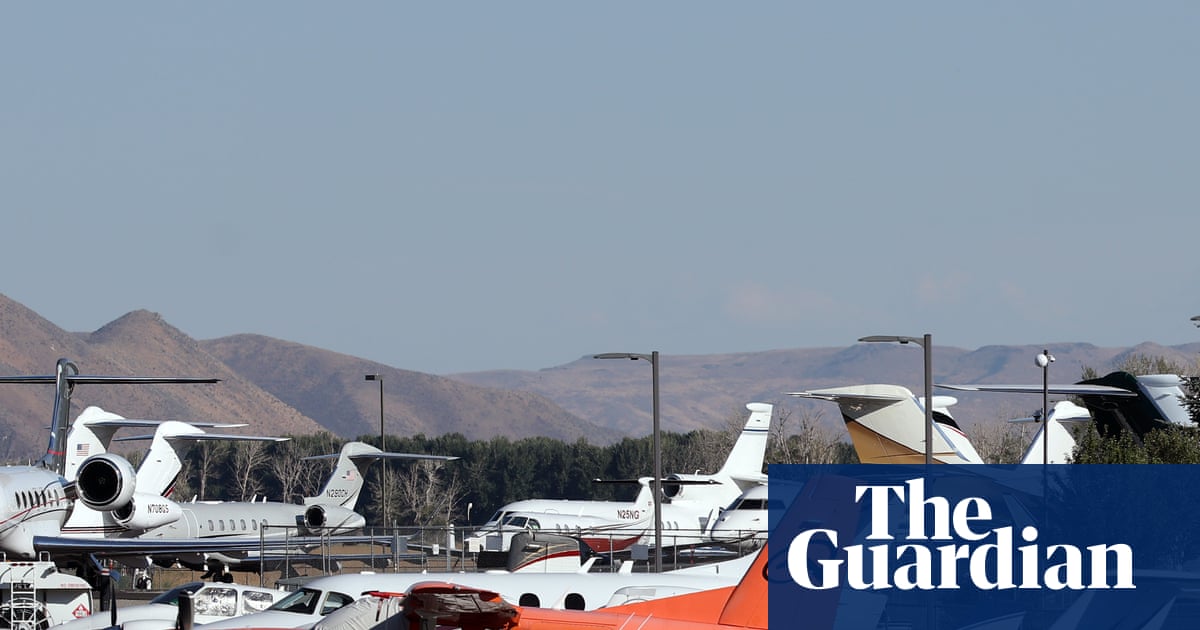
According to data cited in the report, private jets and charter services now handle approximately 16% of all flight operations managed by the FAA. Despite this substantial share of airspace activity, the US Department of Transportation estimates that noncommercial private jets contribute less than 0.6% of the taxes flowing into the Airport and Airway Trust Fund. This fund is critical for financing FAA operations, including air traffic control and airport safety improvements. The gap between usage and revenue suggests that other taxpayers may be subsidizing the costs associated with private aviation infrastructure.
The environmental impact of this growth is also a central focus of the findings. Climate-heating emissions linked to private jet travel have risen by 50% according to the most comprehensive global analysis available. The report states that private flights produce direct carbon emissions that are between 10 and 14 times greater per passenger than those from commercial aviation. This high emission rate is attributed to factors such as lower occupancy rates and the frequent use of smaller, less fuel-efficient aircraft for short distances that could otherwise be traveled by ground transport or larger commercial planes.
Ownership patterns indicate that this mode of travel remains concentrated among the ultra-wealthy. The median wealth of a private jet owner is estimated at $190 million, while those with fractional ownership stakes hold a median wealth of $140 million. Fractional ownership programs, which allow individuals to purchase equity shares in an aircraft in exchange for guaranteed flight hours, have increased by 6% between 2019 and 2025. This growth mirrors the broader expansion of wealth among top earners, suggesting that private aviation is becoming more accessible to a slightly wider segment of the affluent population, though it remains exclusive.
The surge in private jet activity is driving demand for additional infrastructure at local and regional airports. Operators are seeking expanded hangar space and greater runway capacity to accommodate the increasing volume of flights. This expansion places pressure on municipal resources and raises concerns about noise pollution and land use in communities near smaller airports that may not have been designed for high-frequency private traffic. The report notes that these infrastructure demands are often met through public funding mechanisms that do not adequately charge private operators for their specific impact.
Policy advocacy plays a role in maintaining the current tax landscape. The National Business Aviation Association spent approximately $2 million on lobbying efforts in 2025 to support legislation that provides significant tax breaks to private jet owners. These efforts aim to preserve favorable fiscal conditions for the industry, arguing that high taxes could stifle business travel and economic activity. However, critics contend that such policies allow wealthy individuals and corporations to avoid accountability for the environmental and infrastructural costs of their travel habits.
Chuck Collins, a co-author of the report, emphasized the equity implications of these findings. He argued that ordinary citizens should not bear the financial burden of supporting luxury travel that contributes disproportionately to climate change. The report suggests that reforming aviation taxes could help align private jet contributions with their actual usage and environmental impact. Such changes might involve increasing fees based on emissions or implementing stricter regulations on flight paths and frequencies.
Looking ahead, the debate over private aviation taxation is likely to intensify as public awareness of climate issues grows. The Institute for Policy Studies collaborated with a global network of open-source trackers to develop the Private Jet Emissions Tracker, which monitors flights during major events like the Super Bowl and the World Cup. This data provides a detailed view of how private jets are used in high-profile contexts, offering evidence that could inform future policy discussions. As lawmakers consider updates to aviation funding models, the balance between industry interests and public accountability will remain a key point of contention.
The findings underscore the need for a more transparent and equitable approach to aviation regulation. While private jets offer convenience and speed for a small fraction of the population, their environmental footprint and reliance on public infrastructure raise significant questions about sustainability and fairness. Addressing these issues may require comprehensive reforms that consider both economic impacts and ecological responsibilities. Until such changes are implemented, the disparity between private jet usage and tax contributions is likely to persist, leaving broader society to absorb the associated costs.
Sources behind this briefing
Go to the original reporting
- The Guardian US↗Private jets pollute up to 14 times as much as commercial planes and are undertaxed in US, report says

