The short version
- Federal regulators issued a formal warning to Holtec International regarding safety culture deficiencies and recent operational incidents at the Palisades nuclear plant in Michigan.
- The restart project, heavily supported by government funding and political advocacy for nuclear energy, faces scrutiny over whether financial pressures are compromising safety protocols.
- Investor confidence in the nuclear sector has waned recently, with billions in market value lost across major companies and Holtec postponing its planned initial public offering.
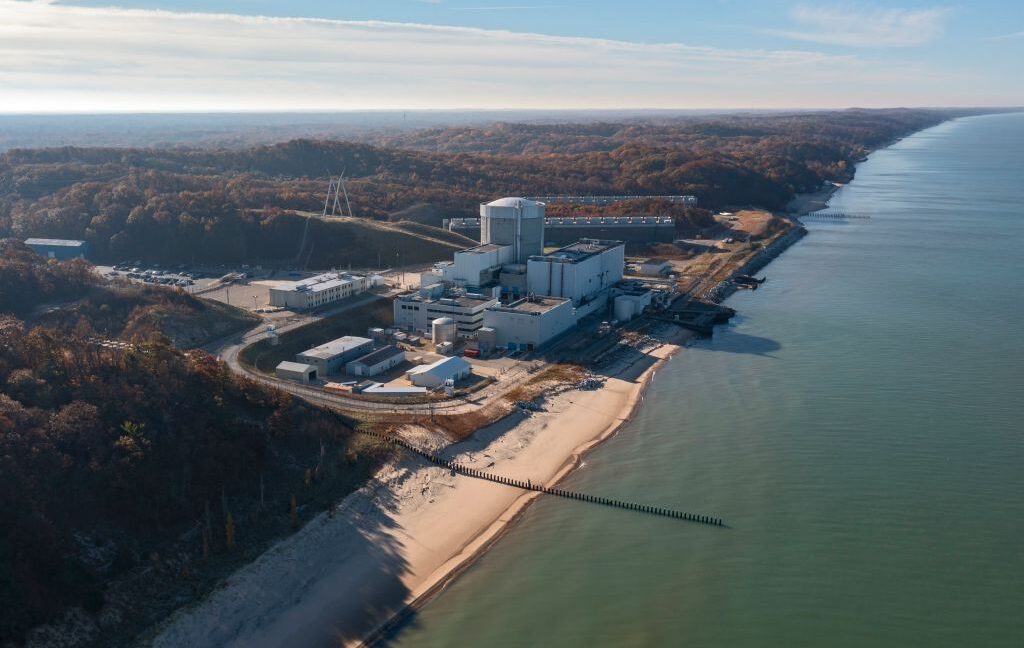
Federal regulators have issued a stern warning to Holtec International, the company leading the effort to restart the Palisades nuclear power plant in Michigan, citing serious concerns about workplace culture and safety awareness. The Nuclear Regulatory Commission (NRC) identified a 'chilled work environment' that has allegedly discouraged staff from raising safety issues without fear of retaliation. This regulatory action comes as the project is positioned as a flagship initiative for reviving the American nuclear industry, a goal strongly promoted by the Trump administration as part of a broader strategy to secure energy advantages in the artificial intelligence race against China.
The warning follows a series of operational setbacks that have delayed what was anticipated to be the first reopening of a shuttered reactor in the United States. In July, the NRC conducted an inspection prompted by safety awareness concerns, which traced back to an incident from the previous year where a contractor fell into the reactor cavity. That worker ingested water and required off-site medical attention, with radiation protection personnel detecting 300 counts per minute in their hair before decontamination. More recently, in August, a bundle of nuclear fuel rods tilted over during a refueling operation, causing further delays. Holtec stated that the fuel assembly was recovered without spilling, describing it as a demonstration of technical ingenuity.
Beyond physical incidents, the NRC highlighted significant personnel challenges at the facility. Nine of the fifteen reactor operators at Palisades failed their initial license examinations administered in July and August, resulting in only six individuals receiving operator licenses. The regulator emphasized that these issues must be addressed promptly to prevent further cultural decline within affected departments. Holtec has been given thirty days to submit a corrective plan for review. While the NRC downplayed any immediate risk to the public, noting that mitigating measures ensured plant safety was not compromised, the agency stressed the need for a robust safety-conscious environment.
Holtec International, which has never previously operated a nuclear power plant, is attempting to transition from a supplier of components and services into a reactor designer and operator. The company has secured approximately $2.2 billion in government support for the Palisades project, including a $1.5 billion loan from the Department of Energy awarded in 2024. This financial backing is part of a larger political push to slash regulations and reverse what officials describe as a culture of risk aversion at the NRC. The administration has provided tens of billions of dollars in funds to accelerate nuclear projects, arguing that speed is necessary to meet booming energy demands driven by AI development.
Critics argue that this accelerated timeline may be increasing the risk of accidents. Allison Macfarlane, former NRC chair from 2012 to 2014, noted that Holtec appears to be under significant financial and political pressure to complete the restart quickly. She expressed concern that the warning about a chilled work environment suggests staff do not feel empowered to speak up, which could prevent the identification of potential hazards. Macfarlane contrasted the current 'move fast and break things' mentality with the traditional nuclear industry standard of going slowly and carefully to ensure safety.
The Palisades plant, which first became operational in 1971, was decommissioned in 2022 before receiving federal funding for restoration. Holtec faces a contractual deadline of March 2027 to begin supplying power to customers, who have secured an additional $1.3 billion in government funds to purchase electricity from the facility. The success of this project is seen as symbolic for the broader nuclear resurgence, with owners of two other plants slated for decommissioning—Three Mile Island in Pennsylvania and Duane Arnold in Iowa—announcing restarts shortly after Palisades began work.
Despite the political and financial momentum behind nuclear revival, investor interest in the sector has cooled. Over $30 billion has been wiped off the market value of five major US-listed nuclear energy companies—including Oklo, Centrus Energy, BWX Technologies, NuScale, and Nano Nuclear—over the last year. This decline is partly attributed to concerns that the AI-driven energy boom may be slowing. Holtec itself was forced to postpone a planned initial public offering expected to raise $900 million and value the New Jersey-based company at up to $10 billion.
Holtec has faced governance questions in the past, including a whistleblower lawsuit and legal disputes involving former executives. In response to the NRC's latest warning, the company stated it takes the identified issues seriously and is addressing them to ensure safe operations. Holtec countered assertions that it has rushed the project, pointing to the work accomplished as evidence of careful execution. The NRC will review Holtec’s corrective plan within thirty days, marking a critical juncture for the plant's restart timeline and the broader narrative of nuclear energy's comeback in the United States.
The situation at Palisades underscores the tension between rapid industrial deployment and rigorous safety oversight. As the NRC monitors Holtec's response, the outcome will likely influence how regulators approach other nuclear restart projects supported by federal funds. The incident highlights the complexities of revitalizing aging infrastructure while managing political expectations and market pressures. Whether the company can restore a culture of open communication and strict adherence to safety protocols remains uncertain, but the stakes are high for both the industry's reputation and its future growth.
Sources behind this briefing
Go to the original reporting
- Ars Technica↗The reactor meant to showcase nuclear’s comeback keeps hitting problems


