The short version
- High-level delegations from Saudi Arabia, Turkey, and Pakistan are in Tehran to negotiate a reduction in regional tensions before upcoming elections in Israel and the United States.
- Israeli Prime Minister Benjamin Netanyahu warned of potential Iranian attacks aimed at disrupting the vote, though his defense minister denied any Israeli intent to strike first.
- The diplomatic push follows the collapse of a June agreement regarding the Strait of Hormuz, with Yemen emerging as an increasingly volatile front involving Houthi strikes on Saudi targets.
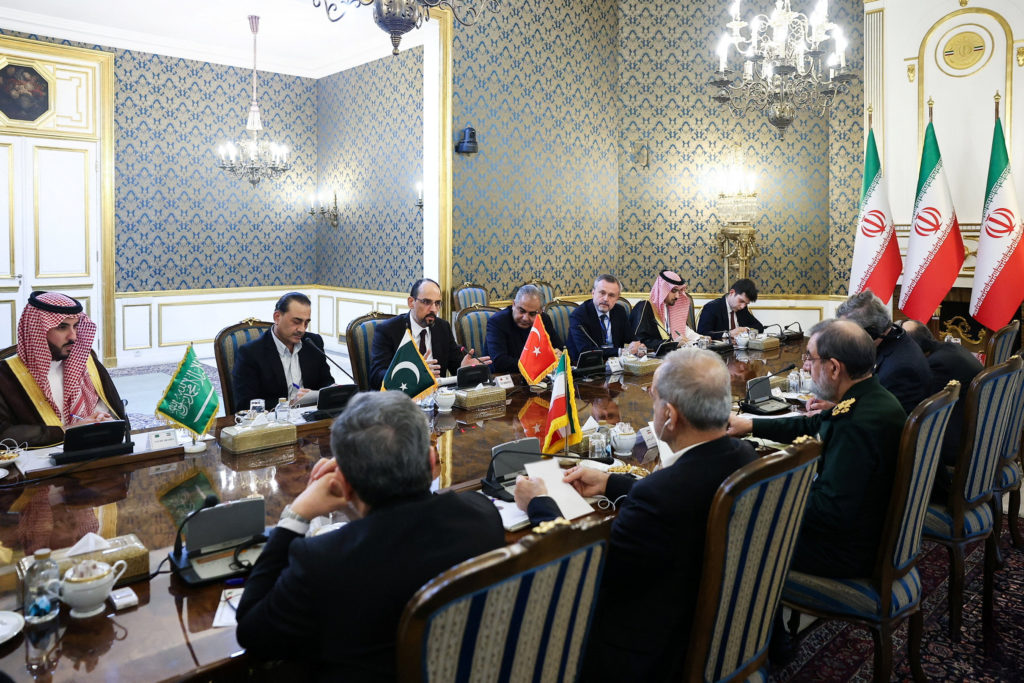
High-level diplomatic missions from Saudi Arabia, Pakistan, and Turkey arrived in Tehran on Monday to engage with Iranian authorities in an effort to prevent a resurgence of full-scale conflict. The meetings coincide with a period of heightened anxiety across the region, driven by approaching elections in both Israel and the United States. Leaders in Washington and Jerusalem have intensified their rhetorical threats in recent weeks, while Iranian officials have maintained a defiant posture, creating a volatile atmosphere that regional powers are attempting to stabilize through direct dialogue.
The delegation included Saudi Defense Minister Khalid bin Salman, Pakistani Army Chief Field Marshal Asim Munir, and Ibrahim Kalin, the head of Turkey’s National Intelligence Organization. These figures met with top Iranian security officials and negotiators to advocate for a settlement between Tehran and Washington. According to regional officials familiar with the discussions, the agenda also encompassed the ongoing war in Yemen and the escalating strikes by Iran-backed Houthi rebels against Saudi Arabian territory. While the Iranian Foreign Ministry stated that no fixed agenda was set, it confirmed that the talks would address urgent threats to regional security.
Saudi Arabia emphasized its desire to find pathways for de-escalation and enhanced stability in a public statement. Iranian President Masoud Pezeshkian expressed support for any agreement that could deepen cooperation among Islamic nations and resolve existing differences. Meanwhile, Qatari mediators traveled to Tehran on Sunday, working in coordination with the United States to further these de-escalation efforts. This multilateral approach underscores the growing concern among Arab states about the potential for a broader regional conflagration.
These diplomatic overcomes follow the rapid unraveling of a June agreement brokered by Pakistan and Qatar. That deal had aimed to reopen the Strait of Hormuz to shipping, end the U.S. blockade of Iranian ports, and initiate negotiations on Iran’s nuclear program. However, hostilities resumed shortly after the accord was signed, leaving both sides entrenched in renewed attacks. Iranian Foreign Ministry spokesperson Esmail Baghaei noted that while diplomacy remains open, the United States appears to be insisting on unilateral demands, including what he described as calls for complete surrender, a stance Iran rejects outright.
Tensions are further complicated by internal dynamics within Israel’s leadership. Prime Minister Benjamin Netanyahu warned on Sunday that Iran or its proxies might launch an attack before the close of the Israeli election to disrupt the voting process. He asserted that the military was prepared to defend Israel and strike back with disproportionate force if attacked. However, reports emerged suggesting a clash between Netanyahu and his military chief of staff over an instruction to carry out an action that the army believed could trigger a wider war with Iran.
The Israeli Defense Ministry and Prime Minister’s office dismissed these reports as false. Defense Minister Israel Katz stated unequivocally that there was no intention for Israel to initiate an attack on Iran before the elections. He reiterated that Israel would respond with great force only if attacked by Iran or its proxies. In Tehran, Baghaei countered accusations of Iranian aggression by accusing the Israeli regime of conducting false-flag operations and affirming Iran’s right to self-defense to protect its sovereignty.
The conflict in Yemen has become a significant flashpoint in this broader geopolitical struggle. Since February, the war has expanded, with Houthi rebels increasingly targeting Saudi Arabia due to its support for the internationally recognized Yemeni government. The situation deteriorated further after airstrikes on Sanaa International Airport in July shattered a 2022 ceasefire deal. Early Monday, Houthi military spokesperson Yahya Saree announced that the group had fired ballistic missiles at military gatherings and weapons depots belonging to Saudi-backed forces, highlighting the persistent instability on this front.
As the election dates approach—Tuesday for Israel and November 3 for the U.S. midterms—the window for diplomatic resolution narrows. Regional officials indicate that messages continue to be passed between Tehran and Washington through intermediaries, but progress remains stalled. The convergence of political timelines, military posturing, and unresolved grievances creates a precarious environment where miscalculation could easily lead to renewed fighting. The success of the current talks in Tehran will likely determine whether the region can avoid a major escalation in the coming weeks.
Sources behind this briefing
Go to the original reporting
- PBS NewsHour↗Delegations meet in Iran with the Middle East on edge over potential for renewed fighting