The short version
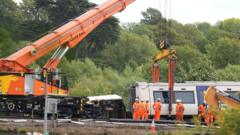
- Heavy machinery has begun clearing derailed carriages near Lewes following a preliminary report identifying a track defect as the likely cause.
- Thirty individuals sustained injuries in the incident, with two requiring serious medical attention, while passengers described difficult evacuation conditions.
- Local officials and travelers have raised concerns about the line's stability prior to the crash, prompting scrutiny of inspection protocols.
Recovery operations have commenced at the site of a significant rail accident near Lewes, with heavy lifting equipment deployed to remove derailed carriages. The incident involved a Southern service traveling from London Victoria to Eastbourne, which left the tracks last Thursday carrying approximately one hundred fifty passengers. Thirty people were injured in the crash, including two who suffered serious harm. As the physical cleanup begins, investigators are intensifying their examination of the infrastructure failures that led to the event.
A preliminary assessment by the Rail Accident Investigation Branch has identified a defect in the track as the primary factor in the derailment. This finding shifts immediate attention toward how the line was maintained and inspected prior to the accident. Network Rail and Greater Thameslink Railway, the operator of the Southern brand, have stated they will review the investigation's recommendations and work to implement necessary changes. Both organizations emphasized the importance of understanding the precise sequence of events to prevent future occurrences.
The scope of the ongoing inquiry extends beyond the immediate mechanical failure. Investigators are currently evaluating the condition of the embankment supporting the tracks and assessing whether recent hot weather conditions contributed to the structural instability. The probe will also review the performance of the train itself and the effectiveness of the emergency response. This comprehensive approach aims to determine if multiple factors converged to create the hazardous situation.
Local representatives and regular commuters have expressed deep concern regarding the known issues with this specific stretch of railway. James MacCleary, the Member of Parliament for Lewes, described the preliminary findings as troubling, noting that the bumpy nature of the line was well-known within the community. He stated that he had previously raised concerns with the train operator about the track's condition, highlighting a gap between reported issues and operational safety.
Passengers familiar with the route echoed these sentiments, describing the journey as consistently unstable. Rob Bradley, an Eastbourne resident who was traveling with his daughter at the time of the crash, noted that the line often felt jostly and exhibited noticeable movement. He admitted that while he expected some bumps, he never anticipated such a severe accident could result from the routine discomfort associated with the route.
The aftermath of the derailment presented significant challenges for those on board. Passenger John May recounted how individuals were trapped in carriages that had come to rest on their sides. While some managed to escape independently, many others remained stuck in hot conditions until firefighters arrived with ladders to assist them. The evacuation process was complicated by the position of the train and the urgency required to ensure passenger safety.
In response to the incident, senior executives from Network Rail and Greater Thameslink Railway issued a joint statement reaffirming that Britain's railway system remains one of the safest in the world. They acknowledged the severity of the event but stressed the need for a thorough understanding of what went wrong. The focus now turns to implementing lessons learned from this tragedy to strengthen safety protocols across the network.
As the physical site is cleared, the broader implications of the derailment continue to unfold. The combination of a confirmed track defect, prior complaints about line stability, and questions regarding maintenance oversight suggests systemic issues that may require wider reform. The coming weeks will likely see detailed reports on inspection failures and potential regulatory changes aimed at preventing similar incidents on other parts of the rail network.
Sources behind this briefing
Go to the original reporting
- BBC News↗Train derailment carriages moved amid track probe

