The short version
- Multiple countries are battling wildfires fueled by historic droughts and record-breaking temperatures that have parched landscapes across the continent.
- Infrastructure challenges include the shutdown of French nuclear reactors due to heat and jellyfish blooms, alongside significant property damage in the United Kingdom.
- Public health impacts are severe, with Germany recording its highest number of heat-related deaths for this time period and thousands evacuated from their homes.
Firefighters across Europe faced a complex operational challenge on Friday as a new wave of record-breaking heat intensified multiple wildfires. The extreme weather conditions have baked large swaths of the continent, creating exceptionally dry landscapes that complicate containment efforts. This surge in temperature is occurring in nations historically designed for long, cold seasons, leaving many communities ill-equipped to handle such intense thermal stress due to limited air conditioning infrastructure.
In France, the situation has reached critical levels as the country experiences its driest year on record. A new blaze erupted overnight in the Landes region along the southwest coast, forcing more than 500 residents of Luglon to evacuate their homes. Hundreds of firefighters were deployed to the area to combat the fire, which is part of a broader pattern of forest fires scorching normally cooler and wetter regions, including Brittany and northern France. This follows a historic fire near Bordeaux last month that displaced approximately 250,000 people.
The extreme heat has also strained critical energy infrastructure in France. The utility company EDF reported shutting down six nuclear reactors in recent days due to the combination of high temperatures, drought conditions, and an unusual mass of jellyfish washing up outside a power plant on the English Channel coast. While large numbers of jellyfish are appearing on French beaches linked to warm sea temperatures, EDF stated that these shutdowns had minimal impact on overall electricity production and posed no safety risks to the reactors themselves.
In the United Kingdom, a major wildfire in Stourbridge, central England, caused significant residential destruction. Television footage showed flames consuming houses, leaving many without roofs as fires burned within charred walls. Local lawmaker Cat Eccles estimated that 20 to 30 homes were completely destroyed. Residents described urgent evacuation orders issued by police who feared the fire was changing direction unpredictably. Simon Tuhill, chief fire officer for West Midlands Fire Service, indicated that an investigation would follow, though initial assessments suggest the fire started in grassland before spreading to nearby properties.
Weather data underscores the severity of the conditions in the UK. The Met Office recorded a temperature of 38.1 degrees Celsius (100.6 degrees Fahrenheit) in west London on Thursday, marking the hottest day of the year. Although temperatures cooled slightly by Friday, many parts of the country have seen little to no rain for weeks. July was confirmed as the driest month in England and Wales since records began in 1836, highlighting the unprecedented nature of the current drought.
Spain faced both cultural preservation challenges and large-scale evacuations. Authorities transferred the remains of three 11th-century kings from a monastery in the northeastern Aragón region to a museum about 80 kilometers south, away from an active wildfire. The 10th-century San Juan de la Peña monastery remained unharmed, but paintings, liturgical objects, and historical clothing were moved for safety. Meanwhile, a separate, much larger wildfire in southern Spain’s Huelva province burned more than 300 square kilometers, forcing additional evacuations as temperatures were expected to cool slightly by Saturday.
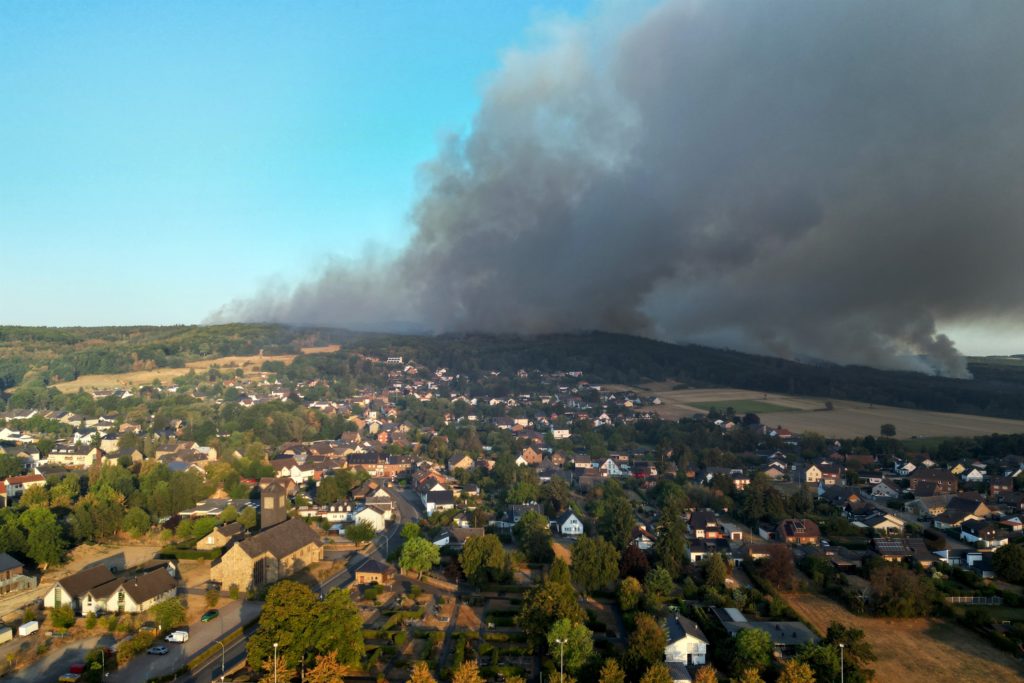
In Germany, all 1,800 residents of the village of Gey were evacuated after a wildfire with shifting winds threatened their homes. The fire, located in the nearby Hürtgen forest near the Belgian border, burned nearly 300 hectares of land. Firefighting efforts were hampered by the presence of unexploded ordnance from World War II within the forest. The cause of the blaze remains unknown, but the proximity to residential areas necessitated a full evacuation as flames advanced to within 300 meters of the village.
The human toll of this heat wave is becoming increasingly apparent in mortality statistics. Germany has set a new record for heat-related deaths so far this year, surpassing the total for the entire year of 2018. The Robert Koch Institute estimated that approximately 12,500 people died from heat-related causes between January 1 and August 2. In Croatia, a fire near the coastal town of Omis resulted in one death and hospitalized 14 people, seven of whom remained in life-threatening condition. More than 1,000 people were evacuated from their homes as the fire raged overnight.
These events collectively illustrate the growing vulnerability of European infrastructure and communities to extreme weather events linked to human-caused climate change. As temperatures remain elevated and drought conditions persist, authorities across multiple nations are struggling to balance immediate emergency response with long-term adaptation strategies. The convergence of wildfires, energy disruptions, and public health crises highlights the multifaceted nature of the challenges posed by this historic heat wave.
Sources behind this briefing
Go to the original reporting
- PBS NewsHour↗European countries battle multiple wildfires as record heat grips the continent

