/https://tf-cmsv2-smithsonianmag-media.s3.amazonaws.com/filer_public/9e/b4/9eb46769-8da1-4938-b8ae-725c4989cf6f/psilocybin-mushrooms.jpg)
The short version
- Mice treated with psilocybin before chemotherapy did not develop nerve damage or pain sensitivity, unlike untreated controls.
- The compound appears to protect mitochondria within nerve cells, maintaining their movement and function despite toxic drug exposure.
- Researchers plan to launch a mid-stage clinical trial in November to determine if these protective effects translate to human patients.
A compound found in psilocybin mushrooms may offer protection against the severe nerve damage often caused by chemotherapy, according to new research published in the journal Science. The study indicates that administering the psychedelic substance shortly before cancer treatment prevented mice from developing pain hypersensitivity and other signs of peripheral neuropathy. This condition affects up to seventy percent of patients undergoing chemotherapy, causing long-lasting numbness, tingling, and movement issues in the hands and feet. Currently, there are no effective preventative or therapeutic treatments for this debilitating side effect.
The discovery emerged unexpectedly during laboratory work at the University of Texas M.D. Anderson Cancer Center. A researcher observed that mice receiving psilocybin prior to chemotherapy showed no signs of nerve damage. Skeptical of the initial finding, study co-author Moran Amit instructed her to repeat the experiment multiple times using different tumor types and chemotherapy drugs. In every instance, the animals treated with the psychedelic compound avoided developing neuropathy, while those receiving only saline injections suffered significant nerve impairment.
To validate these observations, the research team conducted a controlled experiment involving mice with abdominal tumors. One group received two doses of psilocybin one week apart, followed by six monthly rounds of cisplatin, a chemotherapy drug known to cause nerve damage. Another group received saline injections before the same chemotherapy regimen. A third control group received neither treatment. The results showed that mice treated with psilocybin responded to touch similarly to healthy controls, whereas those receiving only cisplatin exhibited heightened sensitivity to tactile stimuli.
Crucially, the study found that psilocybin did not interfere with the efficacy of the chemotherapy. The drug continued to shrink tumors effectively in all groups, suggesting that the psychedelic compound could be added to treatment protocols without compromising cancer care. This separation of protective effects from therapeutic outcomes is significant for potential clinical applications, as it implies patients might avoid side effects without risking their primary treatment success.
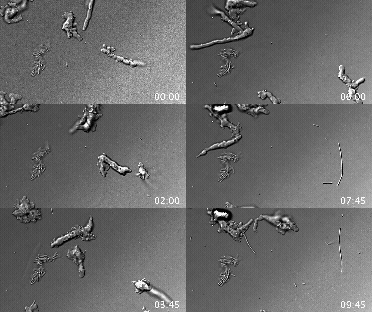
Investigating the biological mechanism behind this protection, researchers examined nerve cells from the mice and found that psilocybin helped maintain the movement of mitochondria along nerve fibers. Mitochondria are organelles responsible for providing energy to cells, and their transportation is typically disrupted by cisplatin. By preserving mitochondrial function, the compound allowed nerve endings to remain functional despite the toxic exposure. Further experiments using nerve cells from human patients undergoing surgery suggested that psilocybin may have a similar protective effect on human mitochondria.
Experts outside the research team have expressed cautious optimism about the findings. Maria Maiaru, a pharmacologist at the University of Reading, noted that if replicated in clinical trials, the implications could be substantial for patients who often suffer from chronic pain and sensory problems long after their cancer has been successfully treated. However, she emphasized the need for verification, as preclinical success does not always translate to human therapies.
Susanna Park, a neuroscientist at the University of Sydney, highlighted the historical gap between successful animal models and effective human treatments for chemotherapy-induced pain. She pointed out that more data is needed regarding psilocybin’s impact on larger nerve fibers to fully confirm its protective capabilities. The complexity of human nervous systems means that results observed in mice may not directly mirror outcomes in patients, necessitating rigorous testing.
Despite these uncertainties, the research team plans to launch a mid-stage clinical trial in November to test whether psilocybin prevents neuropathy in people. The trial is expected to conclude approximately four years later. Early human experiences with psilocybin have already shown promise in managing both physical and emotional aspects of cancer treatment side effects. One patient reported that the compound helped ease her pain and aided her in coping with other consequences of treatment, such as infertility.
The potential use of psychedelics in oncology builds on previous research into cannabis-derived treatments for chemotherapy-induced nausea and vomiting. The FDA has already approved synthetic cannabinoids to manage these symptoms. If psilocybin proves effective in preventing nerve damage, it could represent a significant advancement in supportive cancer care, addressing a major quality-of-life issue that currently lacks medical solutions.
As the field moves toward human trials, the focus will shift from mechanistic studies in animals to safety and efficacy data in patients. The outcome of these trials will determine whether psilocybin can become a standard adjunct therapy for chemotherapy recipients. Until then, the findings remain preliminary but offer a compelling avenue for addressing one of the most persistent side effects of cancer treatment.
Sources behind this briefing
Go to the original reporting
- Smithsonian Magazine↗A Psychedelic Compound Found in 'Magic' Mushrooms Might Prevent Debilitating Nerve Damage and Pain Caused by Chemotherapy