The short version
- Proposals to release dozens of white-tailed eagles in Wales and England have divided conservation groups, with some fearing catastrophic losses for seabird populations.
- Critics argue that the presence of these apex predators can cause adult birds to abandon nests, leaving chicks vulnerable to other scavengers even if direct predation is low.
- Supporters contend that careful management will restore ecological balance without significantly harming specific species, citing evidence that eagles primarily consume carrion and fish.
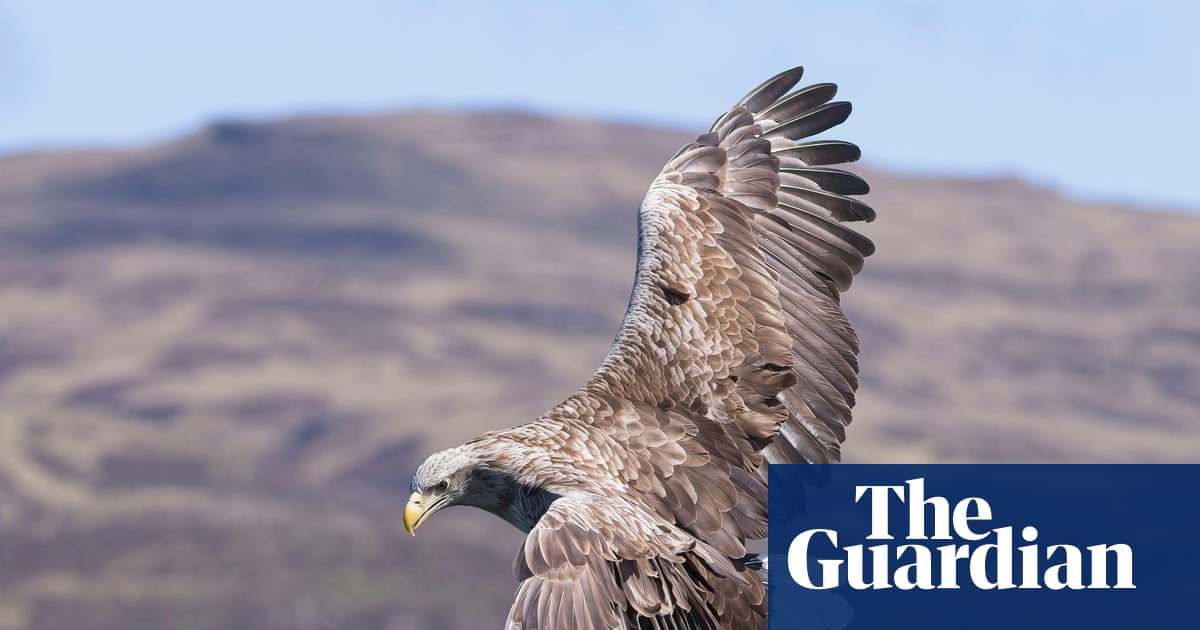
A significant rift has emerged within the British conservation community regarding plans to expand the population of white-tailed eagles in England and Wales. While the return of this large raptor is widely celebrated as a major ecological achievement, new proposals to release additional birds are raising alarms among experts who warn that seabird colonies could face severe decline or even local extinction. The debate centers on whether the benefits of restoring an apex predator outweigh the potential risks to other species that have already suffered substantial population drops in recent years.
The immediate flashpoint involves a plan by the Gwent Wildlife Trust to introduce up to sixty eagles into south Wales, alongside a separate initiative to release twenty young birds over three years on Exmoor in England. These efforts aim to build on previous successes, such as the reintroduction program in Scotland that began in 1975 and has resulted in approximately two hundred breeding pairs. More recently, forty-five birds were released on the Isle of Wight starting in 2019, leading to the first English-born wild eagle fledging from a nest in East Sussex in 2023. However, Wales has not yet seen a self-sustaining population, prompting these new interventions.
Opposition to the expansion is led by organizations such as the Wildlife Trust of South & West Wales, which argues that the timing and scale of the releases are dangerous for seabirds. Species including puffins, guillemots, razorbills, fulmars, and kittiwakes are particularly at risk, according to critics. These birds have experienced some of the steepest declines among all avian groups in Britain over the past five years, with overall populations dropping by twenty percent. Although seabird numbers in south Wales remain relatively robust compared to other regions, conservationists fear that added pressure could tip the balance toward collapse for specific colonies.
The concern extends beyond direct predation. Researchers highlight that white-tailed eagles can exert a profound indirect influence on seabird behavior through what is known as the 'ecology of fear.' The mere presence of these large raptors can cause adult seabirds to temporarily desert their nesting sites to avoid disturbance. This abandonment leaves eggs and chicks exposed to other predators, such as gulls and corvids, which may exploit the vulnerability. Some academics suggest that these indirect effects could be far more damaging to breeding success than the eagles actually killing the birds themselves.
Tim Birkhead, an emeritus professor of ecology at the University of Sheffield, expressed deep concern that the potential devastation to seabird colonies has been overlooked in the enthusiasm for eagle reintroduction. He noted that while he personally supports the return of white-tailed eagles, scientific evidence from Scandinavia indicates that these predators can accelerate the decline of seabird populations. A 2023 study found that increasing numbers of eagles in northern Norway hastened the loss of a kittiwake colony by several years, particularly when fish availability was low. This suggests that environmental stressors combined with predation pressure can create a lethal combination for already struggling bird species.
Conversely, proponents of the reintroduction argue that the risks are manageable and that the ecological benefits justify the action. Geoff Hilton, head of wetland evidence at the Wildfowl and Wetlands Trust, which is leading the Gwent project, emphasized that conservation inherently involves risk but must be guided by robust evidence. He pointed to research from east of the Baltic Sea showing that birds of conservation concern made up only about one percent of identified prey in long-term studies of eagle diets. Hilton stated that the goal is to establish seven to nine breeding pairs over the next decade, a scale he believes will not significantly reduce any single species' population.
The division is evident even among local wildlife trusts. While the Gwent Wildlife Trust supports the proposed releases, the Wildlife Trust of South & West Wales has formally opposed them, citing an obligation to protect globally important seabird sanctuaries like Skomer and Skokholm islands. These sites are renowned for their biodiversity and have been featured in major natural history documentaries. Sarah Kessell, chief executive of the opposing trust, highlighted that these islands are already under threat and that additional disturbance could have significant negative impacts on breeding success.
Recent sightings underscore the proximity of the issue to sensitive areas. An eagle from the Exmoor release was recently spotted over Skomer island, a location famous for its puffin and shearwater populations. This movement demonstrates that released birds can travel considerable distances, potentially reaching colonies that were not initially targeted by the reintroduction plans. As the debate continues, experts agree that careful monitoring and phased implementation are essential to evaluate the actual impact on seabirds. The outcome of these projects will likely influence future conservation strategies across the UK, balancing the desire for apex predator recovery with the need to protect vulnerable prey species.
The broader context involves a complex web of ecological interactions that scientists are still working to fully understand. White-tailed eagles are generalist feeders, consuming carrion, fish, and small mammals, which suggests they may not rely heavily on seabirds for sustenance. However, the behavioral disruption they cause can have cascading effects on colony dynamics. As more data becomes available from ongoing releases in Scotland and England, conservationists hope to refine their understanding of how these predators integrate into existing ecosystems without causing unintended harm to other protected species.
Sources behind this briefing
Go to the original reporting
- The Guardian World↗Reintroduction of white-tailed eagles puts seabird colonies at risk of wipeout, say experts


