The short version
- Afeef Ahmed won the Premier’s Spelling Bee finals in Sydney after outlasting three other competitors in a tense sudden-death format.
- The finalists represented the top 0.03 percent of approximately 200,000 students who participated across more than 1,000 public schools in New South Wales.
- Maximilian Lumley secured second place and Alesha Kahfandi took third after a prolonged tiebreaker sequence that tested the endurance of all remaining contestants.
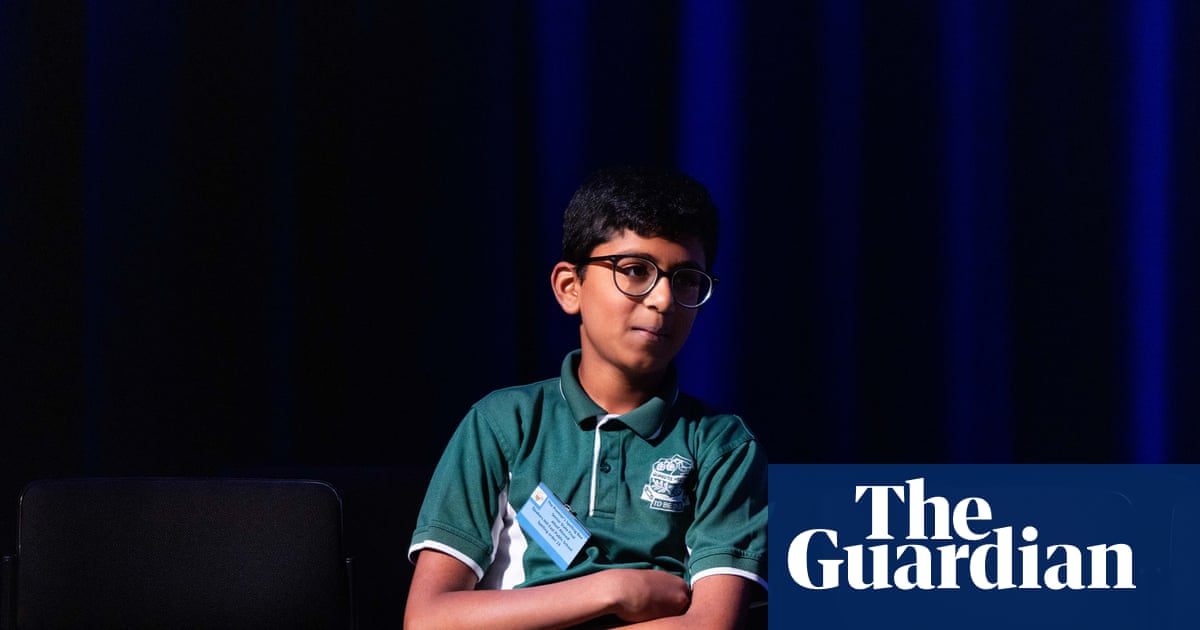
The conclusion of the Premier’s Spelling Bee finals in Sydney marked the end of a high-stakes academic competition that began with hundreds of thousands of participants across New South Wales. Afeef Ahmed, a Year 6 student, was declared the winner after navigating a series of increasingly difficult words in a sudden-death format. The event took place in a theater hall in western Sydney, where thirty-four finalists faced intense scrutiny and pressure to demonstrate their linguistic precision.
The path to the final stage involved rigorous elimination processes at regional levels. Approximately 200,000 students competed in spelling bees across 1,070 public schools throughout the state. The thirty-four individuals who reached the finals represented roughly 0.03 percent of the total participant pool. These finalists had previously won online regional competitions held in August, securing their spots for the state-level event based on consistent performance and accuracy.
The competition structure required contestants to first spell words they had practiced beforehand, known as seen words, before facing unseen terms that tested broader vocabulary knowledge and composure under pressure. ABC presenter Rae Johnston hosted the event, introducing each student with personal details to humanize the high-pressure environment. The finalists displayed diverse backgrounds, with twenty-three speaking a language other than English at home and eighteen traveling from locations outside Sydney.
Early rounds saw significant attrition among the competitors. Seven students were eliminated in the first round after struggling with terms such as tourmaline and malapropism. Another seven fell in the second round, which included challenging words like lepidopterist. Over the subsequent four rounds, thirteen more contestants were removed from contention. The remaining participants demonstrated varying levels of experience, with five students competing for a third time at this level.
By the ninth round, only five students remained: Afeef Ahmed, Bobby Ivaneza, Alesha Kahfandi, Caroline Wang, and Maximilian Lumley. All were in Year 6, and two had previously reached the final stage. Ivaneza, a former runner-up, made an error on the word unserviceable by omitting a letter. He was visibly distressed by the elimination, leaving the stage to comfort from his family. The remaining four contestants continued to spell correctly, extending the competition.
The field narrowed further as Ahmed correctly spelled immemorial, while Kahfandi, Wang, and Lumley were eliminated on subsequent turns. Kahfandi missed antepenultimate, Wang struggled with parmigiana, and Lumley erred on genealogy. This left Ahmed as the sole remaining competitor, securing his victory. His mother noted that he had trained for months, spending thirty minutes each night preparing for such challenges.
With the winner decided, the competition shifted to determining the runner-up. Wang was eliminated quickly after failing to spell grandiloquent. Kahfandi and Lumley then entered a prolonged tiebreaker sequence, matching each other’s performance over five rounds. The tension mounted as both students either succeeded or failed simultaneously, creating an extended stalemate that tested their endurance.
Kahfandi eventually missed the word vociferous, leaving Lumley to face the final challenge. He correctly spelled apocalypse, securing second place. Kahfandi accepted third place, expressing disappointment at not advancing further but acknowledging the difficulty of the event. Ahmed expressed surprise at his victory, noting that he did not immediately realize he had won until the announcement was made.
The event highlighted the rigorous preparation and mental fortitude required to succeed in competitive spelling. Participants like Lumley received support from family members who observed the intense atmosphere. His grandmother noted his calm demeanor despite the stress of the competition. The diverse backgrounds of the finalists reflected the broad reach of educational competitions across the state.
Looking ahead, the results of this year’s Premier’s Spelling Bee will likely influence future participation and training methods in schools across New South Wales. The success of returning competitors suggests that sustained practice and experience play crucial roles in achieving top placements. The event served as a showcase for young academic talent, emphasizing the value of linguistic proficiency and resilience.
Sources behind this briefing
Go to the original reporting
- The Guardian World↗When a single vowel stands in the path to victory, the stakes could not be higher for these spelling bee champions


