The short version
- One to two fatalities have been confirmed following a shallow 7.7-magnitude earthquake in eastern Indonesia's Flores region.
- Structural damage includes collapsed port terminals and cracked hospital walls, prompting mass evacuations to higher ground.
- Tsunami warnings were issued but subsequently lifted after monitoring showed no significant sea level threats.
A powerful seismic event struck eastern Indonesia early on Saturday morning, triggering widespread panic and structural damage across the Flores region. The earthquake, registered at magnitude 7.7, occurred with a shallow depth that amplified its impact on the surface. Initial reports from disaster management agencies indicated fatalities, though the exact number remains under verification as rescue teams assess the remote and mountainous terrain.
The epicenter was located off the north coast of Flores island, approximately 68 kilometers northwest of the coastal town of Ende. The United States Geological Survey recorded the quake at a depth of 10 kilometers, while Indonesian authorities cited a depth of 15 kilometers. This shallow positioning contributed to the intensity of the shaking felt across the region, which is situated along the Pacific Ring of Fire and prone to such geological activity.
Casualty figures have fluctuated as officials verify data on the ground. The National Disaster Management Agency initially reported two deaths but later revised this number to one confirmed fatality and four injuries after validation by personnel in the field. A spokesperson for the agency stated that a man and a woman were among those reported dead, emphasizing that the full extent of the damage is still being determined.
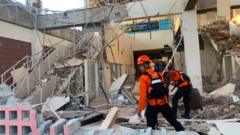
Significant structural damage was reported in Maumere, the main town on Flores island. Video footage from the Lorens Say Port showed large sections of concrete breaking off the terminal building onto passengers waiting to board ferries. The collapse of a gangway threw some individuals into the sea, while others fled inland on motorbikes. Residents described seeing cracks in hospital walls and other buildings, leading to immediate evacuations.
Authorities issued a tsunami warning shortly after the quake struck, prompting thousands of residents to flee coastal areas for higher ground. In Nagekeo regency, which is closest to the epicenter, people raced toward hills as panic spread through markets and neighborhoods. Some residents noted that the sea receded significantly, heightening fears of an incoming wave, although no major tsunami event materialized.
The tsunami warning was later lifted after Indonesia’s meteorology, climatology, and geophysics agency monitored sea levels and found no significant changes posing a threat to coastal communities. Officials stated they would continue monitoring the situation but declared the immediate danger over. Australia’s tsunami warning center also confirmed that there was no threat to its mainland or territories from the undersea earthquake.
Strong aftershocks followed the initial tremor, including one with a magnitude of 6.1, which kept residents on edge and discouraged them from returning to damaged homes. Many people chose to remain outdoors due to fear of further structural collapse. Disaster management agencies advised the public to stay calm, avoid coastal zones, and steer clear of buildings showing signs of cracks or instability.
Search and rescue operations are underway in Maumere and surrounding areas to free anyone trapped in rubble. The remote nature of the region is expected to slow the assessment process, requiring time to determine the full scope of casualties and infrastructure loss. Authorities have prioritized public safety and preventing additional injuries from aftershocks and related hazards.
Local residents described the sudden onset of violent shaking that startled them from sleep or daily activities. One resident recounted running to his child’s room before heading outside, where he saw neighbors already fleeing toward the hills. Another individual noted that patients fled a local hospital as walls cracked under the strain of the quake. These accounts highlight the immediate chaos and fear experienced by communities in the path of the disaster.
As verification efforts continue, officials have promised to provide updated information once data is fully validated. The incident underscores the vulnerability of Indonesia’s archipelago to seismic events, given its location on a volatile tectonic boundary. While the immediate tsunami threat has passed, the focus remains on rescue operations and assessing long-term damage in the affected regions.
Sources behind this briefing
Go to the original reporting
- BBC News↗One dead after 7.7 magnitude earthquake strikes Indonesia
- The Guardian World↗Strong 7.7-magnitude earthquake strikes eastern Indonesia, killing two

