The short version
- A power failure at the Manchester Rail Operating Centre triggered significant travel chaos across northern England on Thursday afternoon.
- The disruption was exacerbated by a separate incident involving an unexploded bomb found near tracks between Tamworth and Burton-on-Trent.
- Passengers faced hours of delays, forced evacuations, and additional costs for alternative transport, with compensation options available through various rail operators.
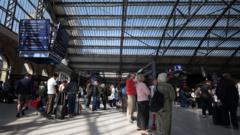
Thousands of rail travelers in northern England encountered severe disruptions on Thursday following an electrical failure at a critical signaling hub. The incident originated at the Manchester Rail Operating Centre, a facility responsible for managing train movements across a vast region stretching from Crewe to Carlisle and from Todmorden to the Welsh border. Transport for Greater Manchester confirmed that the outage occurred just before 2:00 p.m. BST and was linked to a broader power supply issue in the Ardwick area. The failure immediately impacted operations at major hubs, including Liverpool Lime Street, causing a cascade of delays and cancellations that rippled outward.
The scope of the disruption extended beyond the immediate vicinity of Manchester. National Rail reported that at least eight train operators were affected by Thursday evening, with initial reports suggesting the Midlands were also impacted. While some trains outside the direct zone of failure experienced knock-on effects, the primary chaos was concentrated in the North West. Transport Secretary Heidi Alexander acknowledged the severity of the situation, advising passengers to verify service status before attempting travel and expressing regret for the inconvenience caused to those affected by the outage.
Compounding the electrical failure, Network Rail announced that an unexploded bomb from World War II had been discovered near railway tracks between Tamworth and Burton-on-Trent. This separate incident forced the closure of all lines between the two stations for a period on Thursday. Although Network Rail stated that this specific blockage had since been resolved, the combination of the signaling failure and the track closure created a complex logistical nightmare for commuters and long-distance travelers alike.
Passengers described their experiences as frustrating and costly. Sarah Nelson, who was attempting to reach work in Manchester, found herself stuck on a train at Horwich Parkway for more than 90 minutes before eventually undertaking a five-hour round trip to return home to Blackpool. Chris, a technology consultant traveling from Scotland for business, faced similar difficulties. He reported that trains remained without power and that no services were expected to resume until the end of the day. Consequently, he decided to book a hotel in Manchester, citing the expense and inconvenience as significant burdens.
Other travelers faced unexpected financial hits due to the breakdown. A couple returning from Gibraltar to Clitheroe, Lancashire, found their train plans unworkable after landing at Manchester Airport. They were forced to hire an Uber for the journey home, describing the cost as exorbitant. Stacey, an office worker traveling from Deansgate to Leyland, experienced a premature stop when signals failed. She was evacuated from the train on a viaduct and paid £60 for a taxi home. Despite the chaos, she praised the railway staff for their calm and professional handling of the evacuation.
The operational impact varied by operator. Avanti West Coast warned that services between London Euston and Manchester Piccadilly faced potential delays, cancellations, or diversions. CrossCountry indicated that while some services could run from Manchester, residual delays remained likely. East Midlands Railway advised against travel between Sheffield and Liverpool Lime Street, noting ongoing disruption between Liverpool and destinations such as Nottingham and Norwich. London Northwestern Railway deployed replacement buses on key routes, including those connecting Liverpool Lime Street to Crewe and Birmingham New Street.
Northern Rail issued a stark warning for its customers, advising them not to travel as services were unable to operate on all routes within its network. Lumo reported that its 1:19 p.m. train from London Euston to Stirling was running more than 40 minutes late after being delayed at Preston. The widespread nature of the failure meant that even passengers whose journeys did not directly involve the Manchester hub faced uncertainty and potential delays due to the ripple effect on the national rail network.
For those affected, compensation may be available. National Rail noted that while each train company has its own specific scheme and threshold for payouts, all operators offer some form of reimbursement for significant delays or cancellations. The amount recoverable depends on factors such as ticket type and the duration of the delay. Passengers can submit claims online or by post using forms available from individual train company websites or staffed stations. Additionally, the nationwide Delay Repay scheme offers another avenue for seeking redress.
The Manchester Rail Operating Centre, which opened in July 2014, plays a central role in the safety and efficiency of rail travel in the region. Its failure highlights the vulnerability of centralized infrastructure to localized power issues. As services began to slowly recover late Thursday evening, officials continued to monitor the situation. The incident serves as a reminder of the interconnectedness of the UK rail network, where a single point of failure can disrupt travel for thousands of people across multiple regions.
Looking ahead, passengers are encouraged to remain vigilant regarding service updates. While the immediate crisis appears to be subsiding, residual delays may persist into Friday morning. The dual impact of technical failure and historical infrastructure hazards underscores the complex challenges facing modern rail operations. Authorities have not yet released a detailed timeline for full restoration of normal services, but the focus remains on clearing backlogs and ensuring safe passage for remaining travelers.
Sources behind this briefing
Go to the original reporting
- BBC News↗Thousands of rail passengers hit by power failure disruption

