The short version
- Democratic lawmakers are launching immediate oversight efforts targeting the Trump administration following significant midterm election victories.
- The White House and Justice Department have adopted a combative posture, with officials warning of potential criminal probes against Democratic investigators.
- Internal party tensions persist regarding whether to prioritize impeachment proceedings or focus on legislative achievements aimed at lowering living costs.
The political landscape in Washington has shifted sharply following the midterm elections, setting the stage for a prolonged and intense conflict between the newly empowered Democratic Congress and the Trump White House. President Donald Trump and his administration have adopted a defiant stance toward incoming congressional oversight, framing early investigative requests from Democrats as acts of high-level extortion. This combative posture signals that the remaining two years of the current term will likely be defined by institutional friction rather than legislative cooperation.
Attorney General Todd Blanche reinforced this aggressive defense during Sunday news appearances, suggesting that criminal investigations could be launched against Democratic lawmakers if they continue what he described as threatening behavior toward administration members and associated companies. Blanche argued that the president’s concerns about these tactics were justified, emphasizing that officials should not be allowed to intimidate existing government personnel. This rhetoric establishes a high-stakes environment where legal threats may become a tool in the broader political struggle.
On the other side of the aisle, Democratic leaders are preparing for an immediate and rigorous examination of executive branch actions. Representative Robert Garcia, who is set to chair the House Oversight Committee in the next Congress, has vowed to pursue investigations into what he terms the Trump crime family. Garcia stated that the era of passive acceptance is over, indicating a mandate from voters to hold the administration accountable. This approach aligns with broader Democratic sentiments that constitutional checks on presidential power are necessary and overdue.
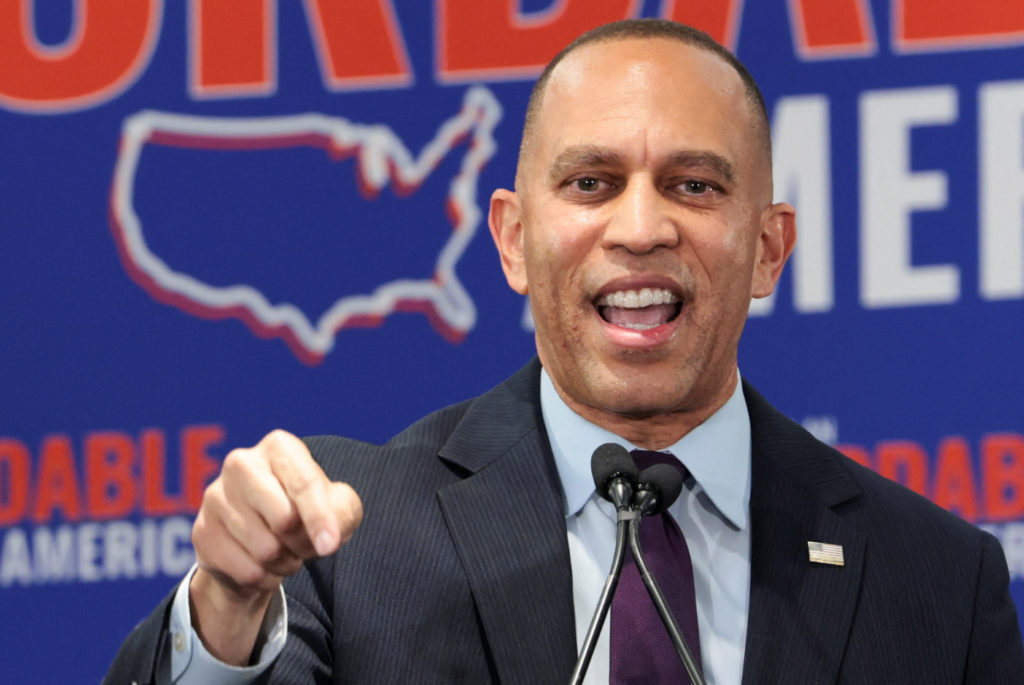
House Minority Leader Hakeem Jeffries, who is poised to become the first Black speaker of the House, has indicated that impeachment remains a viable option if evidence emerges of officials stealing from or defrauding the American public. Jeffries emphasized that accountability must be consistent with Congress’s constitutional role. However, he also expressed willingness to collaborate across the aisle whenever possible to deliver tangible results for constituents, suggesting a nuanced strategy that balances confrontation with pragmatic governance.
Despite the unified front on oversight, significant internal divisions exist within the Democratic coalition regarding the prioritization of investigations versus legislative achievements. Many lawmakers worry that an excessive focus on conflict with the White House could undermine their central campaign promise to reduce the cost of living for everyday Americans. There is a palpable concern that the electoral gains secured in the midterms might prove temporary if the party’s agenda becomes defined primarily by partisan warfare rather than substantive policy improvements.
Senator-elect Adam Hamilton, the first Democrat elected from Kansas to the Senate in nearly a century, voiced skepticism about pursuing impeachment proceedings. He argued that his campaign was rooted in bringing people together rather than deepening national divisions. While acknowledging the necessity of some oversight, Hamilton emphasized the importance of establishing guardrails and avoiding further polarization. His perspective reflects a broader caution among moderate Democrats who fear that aggressive tactics could alienate swing voters in future elections.
Independent Senator Bernie Sanders echoed these concerns, warning that the party cannot devote all its energy to investigating the president. He stressed the need to stand up for working-class families and make meaningful differences in their lives. This sentiment highlights a strategic dilemma facing Democratic leadership: how to satisfy the demand for accountability without neglecting the legislative agenda that motivated voters to support them in the first place.
Tensions have been further exacerbated by President Trump’s appointment of Stephen Miller as chief of staff, replacing Susie Wiles. Jeffries criticized this choice as awful and cast doubt on any possibility of cooperation with Miller, whom he described as representing extremism. Miller, known for his role in designing strict immigration enforcement policies, has become a focal point of Democratic criticism. National polling indicates that a majority of voters believe the administration’s actions on immigration have gone too far, adding pressure on Democrats to address these issues.
The impeachment resolution targeting Defense Secretary Pete Hegseth, introduced by Republican Representative Thomas Massie, has garnered support from Jeffries, who stated unequivocally that Hegseth must be removed. Hegseth dismissed the push as politically motivated personal destruction, asserting that it would not succeed. This cross-aisle alliance on specific removal efforts underscores the complex dynamics at play, where partisan lines occasionally blur in opposition to particular administration figures.
Public opinion appears to favor increased congressional oversight, with approximately 70% of voters believing that Congress is not doing enough to check presidential power. This sentiment provides a mandate for Democratic investigations but also raises the stakes for their effectiveness. As both sides prepare for what promises to be a contentious period, the balance between accountability and governance will remain a central theme in American politics.
Sources behind this briefing
Go to the original reporting
- PBS NewsHour↗Trump and his Justice Department stand defiant as Democrats ready an investigative blitz


