The short version
- Pope Leo XIV visited a care facility for people with disabilities in Claypole, emphasizing that human dignity must take precedence over fiscal austerity.
- The visit underscores growing friction between the Vatican and President Javier Milei’s administration regarding cuts to healthcare, pensions, and disability support programs.
- Legislative battles continue as Argentina’s Congress attempts to secure funding for vulnerable groups while the executive branch resists measures it claims threaten fiscal balance.
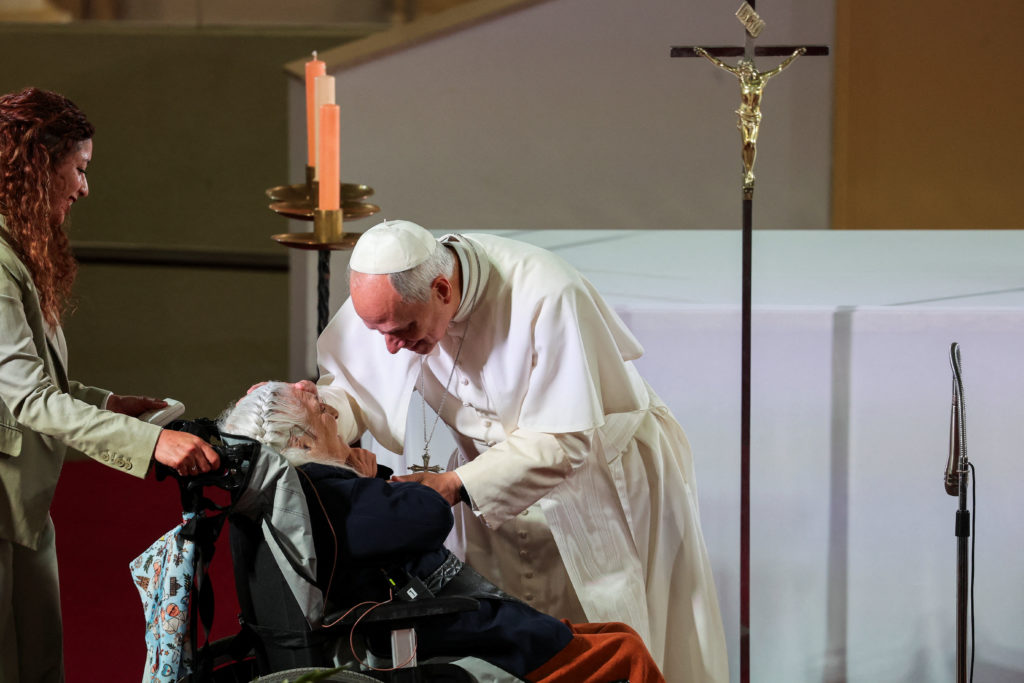
Pope Leo XIV began his first full day in Argentina with a visit to a care home for people with disabilities, using the occasion to renew his appeal for the protection of society’s most vulnerable members. The pilgrimage to the Cottolengo Don Orione center in Claypole, located south of Buenos Aires, served as a pointed reminder of the human cost associated with President Javier Milei’s aggressive austerity agenda. By choosing this location to launch his public itinerary, the pontiff signaled that economic policy must be evaluated through the lens of social justice and human dignity.
The Cottolengo facility, established in 1935 by an Italian priest, spans more than 120 acres and provides housing and care for over 400 individuals with disabilities. Often referred to as a city of charity, the institution has faced severe financial strain due to recent government cuts. Milei’s administration has dismantled specialized therapy programs that have long served as a critical safety net for Argentina’s estimated five million people with disabilities. These measures include freezing payments and reducing support structures, actions that advocates argue have left many residents without essential care.
During his time at the center, Leo engaged directly with residents and staff, offering blessings and affirming that individuals with disabilities are a gift to society rather than a burden. In the facility’s chapel, he urged Argentines to shift their focus away from the pursuit of economic success and outward appearances toward acts of charity. He emphasized that a nation’s true progress is measured by how it treats those with special needs, reinforcing Catholic social teaching that places the weakest at the center of policy decisions.
The visit occurs against a backdrop of intense political conflict between the executive and legislative branches. Last year, Argentina’s Congress overrode Milei’s veto to pass legislation increasing funding for disability care. However, the administration has resisted implementing these provisions, arguing that doing so would undermine the fiscal balance achieved through strict spending controls. As a result, facilities like Cottolengo remain owed significant sums, creating uncertainty about their long-term viability.
Tensions are expected to escalate in the coming days as the Senate prepares to consider new legislation earmarking funds for disability benefits in the upcoming budget. Milei has opposed this measure, maintaining that such expenditures conflict with his broader economic reform strategy. His government has framed the cuts to social programs as necessary steps to eliminate fraud and waste within the federal bureaucracy, aligning with a global conservative movement that prioritizes fiscal discipline over expansive social safety nets.
Leo’s message extends beyond disability care to encompass broader concerns about poverty and inequality. Upon his arrival in Argentina, he reiterated a theme frequently associated with his predecessor, Pope Francis: the economy must serve people, not the other way around. This principle is likely to feature prominently in his upcoming meetings with business leaders, union representatives, and social movement organizers at the Catholic University of Argentina. These groups have expressed deep concern over job losses, shrinking wages, and the impact of scrapped trade barriers on domestic manufacturers.
Public reaction to the papal visit has been mixed but largely hopeful among those affected by austerity measures. Thousands gathered for Leo’s Mass at the Monumento a los Españoles, a site that hosted St. John Paul II nearly four decades ago. Many attendees, including pensioners and low-income families, viewed the pope’s presence as a potential catalyst for change. One parishioner noted that the weakest members of society should not bear the brunt of economic adjustments, expressing hope that the pontiff could influence Milei to reconsider his stance.
The economic context remains dire for many Argentines. The minimum pension stands at approximately $300, a figure that falls short of covering basic needs such as housing, food, and medicine. As Leo continues his tour, which includes stops in Uruguay and Peru, the contrast between his message of compassion and the government’s strict fiscal policies will likely remain a central theme. The outcome of these interactions may shape the future of social policy in Argentina and offer insights into the Vatican’s role in global economic debates.
Observers note that Leo’s itinerary reflects an unfinished legacy from Pope Francis, who was also Argentine. By emphasizing the moral dimensions of economic policy, the current pontiff seeks to bridge the gap between theological principles and practical governance. Whether this approach will sway political leaders or merely highlight existing divisions remains to be seen. The coming weeks will test the resilience of social programs and the willingness of policymakers to prioritize human welfare over strict budgetary constraints.
As the visit concludes, the focus will shift to how these symbolic gestures translate into tangible policy changes. The Senate’s upcoming vote on disability funding represents a critical juncture in this ongoing struggle. If passed, it could provide much-needed relief to care facilities and their residents. If blocked, it may deepen the rift between the government and civil society organizations advocating for greater social protection. The eyes of the nation, and indeed the world, will be watching to see how these competing priorities are resolved.
Sources behind this briefing
Go to the original reporting
- PBS NewsHour↗Pope visits care home in Argentina for people with disabilities, renewing call to protect the vulnerable


